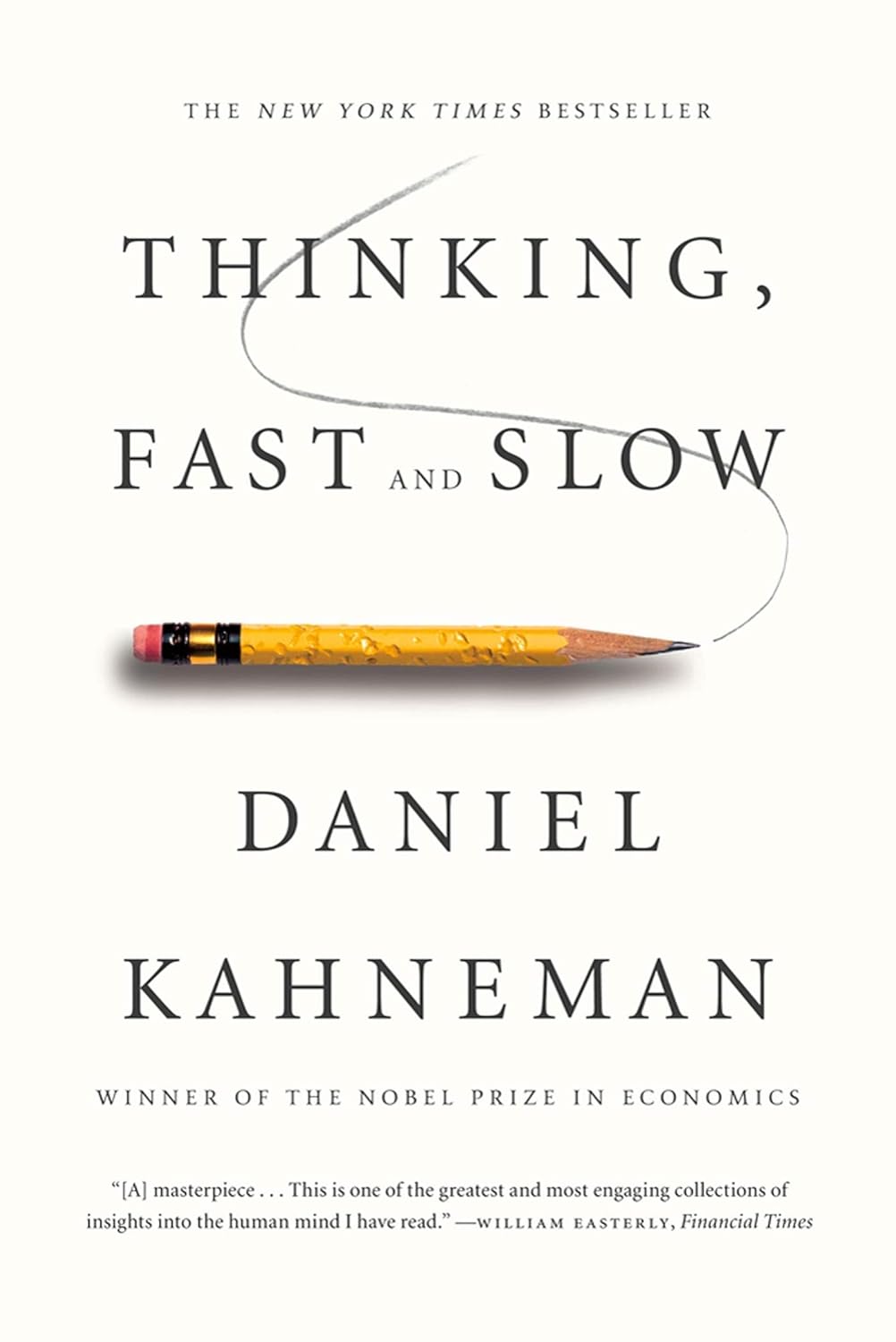
ReadSprintBooksThinking, Fast and SlowThinking, Fast and Slow Quotes, Summary Highlights, and Memorable Ideas
Thinking, Fast and Slow
Thinking, Fast and Slow Quotes, Summary Highlights, and Memorable Ideas

Thinking, Fast and Slow Quotes, Summary Highlights, and Memorable Ideas

by Daniel Kahneman

Review Thinking, Fast and Slow by Daniel Kahneman through memorable summary highlights, key ideas, related books, and active recall prompts from ReadSprint.

This page pulls together the most memorable summary lines and idea snapshots from Thinking, Fast and Slow. They are designed to help you revisit the book’s logic quickly, not to replace deeper review.

Built for retention

ReadSprint combines concise summaries, quizzes, active recall, and related reading paths so the useful part of the book is easier to keep.

Open full summary

34

Chapter summaries

5

Quiz questions

12

Key takeaways

6

Related books

Thinking, Fast and Slow quotes and summary highlights

This page gathers memorable summary highlights from Thinking, Fast and Slow. These are review-friendly idea captures based on the summary content, not verified verbatim lines from the printed edition.

Share this quote

Thinking, Fast and Slow

by Daniel Kahneman

“System 1 operates automatically and quickly with little or no effort and no sense of voluntary control, while System 2 allocates attention to effortful mental activities and is associated with subjective experiences of agency and choice.”

Memorable ideas travel further when they come with context.

ReadSprint
System 1 operates automatically and quickly with little or no effort and no sense of voluntary control, while System 2 allocates attention to effortful mental activities and is associated with subjective experiences of agency and choice.

System 1 and System 2.

Post to X

Native share opens first on mobile, with copy-link fallback when it is unavailable.

Open full summary
Share this quote

Thinking, Fast and Slow

by Daniel Kahneman

“Their interaction produces most of our thoughts and decisions: System 1 generates impressions and feelings that System 2 can endorse, modify, or override.”

Memorable ideas travel further when they come with context.

ReadSprint
Their interaction produces most of our thoughts and decisions: System 1 generates impressions and feelings that System 2 can endorse, modify, or override.

It is fast and automatic.

Post to X

Native share opens first on mobile, with copy-link fallback when it is unavailable.

Open full summary
Share this quote

Thinking, Fast and Slow

by Daniel Kahneman

“System 1 and System 2.”

Memorable ideas travel further when they come with context.

ReadSprint
System 1 and System 2.

Ease of recalling examples.

Post to X

Native share opens first on mobile, with copy-link fallback when it is unavailable.

Open full summary
Share this quote

Thinking, Fast and Slow

by Daniel Kahneman

“It is fast and automatic.”

Memorable ideas travel further when they come with context.

ReadSprint
It is fast and automatic.

Assuming specific conditions are more probable than general ones.

Post to X

Native share opens first on mobile, with copy-link fallback when it is unavailable.

Open full summary
Share this quote

Thinking, Fast and Slow

by Daniel Kahneman

“Ease of recalling examples.”

Memorable ideas travel further when they come with context.

ReadSprint
Ease of recalling examples.

Overemphasizing certain aspects of life.

Post to X

Native share opens first on mobile, with copy-link fallback when it is unavailable.

Open full summary
Share this quote

Thinking, Fast and Slow

by Daniel Kahneman

“Assuming specific conditions are more probable than general ones.”

Memorable ideas travel further when they come with context.

ReadSprint
Assuming specific conditions are more probable than general ones.

System 1 operates automatically and quickly with little or no effort and no sense of voluntary control, while System 2 allocates attention to effortful mental activities and is associated with subjective experiences of agency and choice. Their interaction produces most of our thoughts and decisions: System 1 generates impressions and feelings that System 2 can endorse, modify, or override.

Post to X

Native share opens first on mobile, with copy-link fallback when it is unavailable.

Open full summary

Use these quotes to review the book

Which quote from Thinking, Fast and Slow changes how you would explain the book to someone else?

Which lesson here is worth testing in a real decision this week?

Which highlight feels memorable but less actionable once you slow down and examine it?

Quiz checkpoints

Question 1

What are the two systems of thought described in the book?

Question 2

What is the main characteristic of System 1?

Question 3

What does the availability heuristic rely on?

Practice retrieval

Key concepts

The Two Systems

Understanding the two-system model explains why people reliably make predictable errors and how bias and intuition shape judgment in everyday life and policy. It provides a framework for improving decisions by recognizi…

Attention and Effort

Recognizing the costs of effort explains why people rely on heuristics and why designs that reduce unnecessary cognitive load improve performance and decision quality. It also informs task design, education, and policy…

The Lazy Controller

The lazy-controller idea highlights the behavioral roots of bias and overconfidence and suggests practical levers (incentives, structure, nudges) to encourage deliberation where needed.

Open concept map
Turn Reading Into Recall

Keep Thinking, Fast and Slow review-ready instead of letting it fade.

This page is strongest when it becomes part of a review habit: save the summary, revisit the key takeaways, and use recall prompts before the next meeting, study block, or decision.

Save one strong takeaway instead of over-highlighting.
Use the questions page to test what actually stuck.
Return when the book becomes relevant again, not just when motivation is high.
See pricing
Get Book Review Notes

Get practical notes on remembering and reusing ideas from nonfiction books without building an overly heavy note system.

Retention workflow

Turn this page into a repeatable study loop

Move from summary to takeaways, test yourself with questions, revisit the concept map, and then continue into related books. That keeps Thinking, Fast and Slowconnected instead of turning into a one-time skim.

Frequently asked questions

Are these direct quotes from Thinking, Fast and Slow?

These are memorable lines and summary highlights derived from the ReadSprint breakdown. They are intended to help with review and recall, not to act as a verbatim quote archive.

How should I use Thinking, Fast and Slow quote highlights?

Use them as quick review cues. Read one line, explain the idea in your own words, then connect it to a real decision or behavior change.

What should I read after Thinking, Fast and Slow?

Use the related books and topical links on this page to keep the reading path connected instead of jumping randomly to unrelated titles.