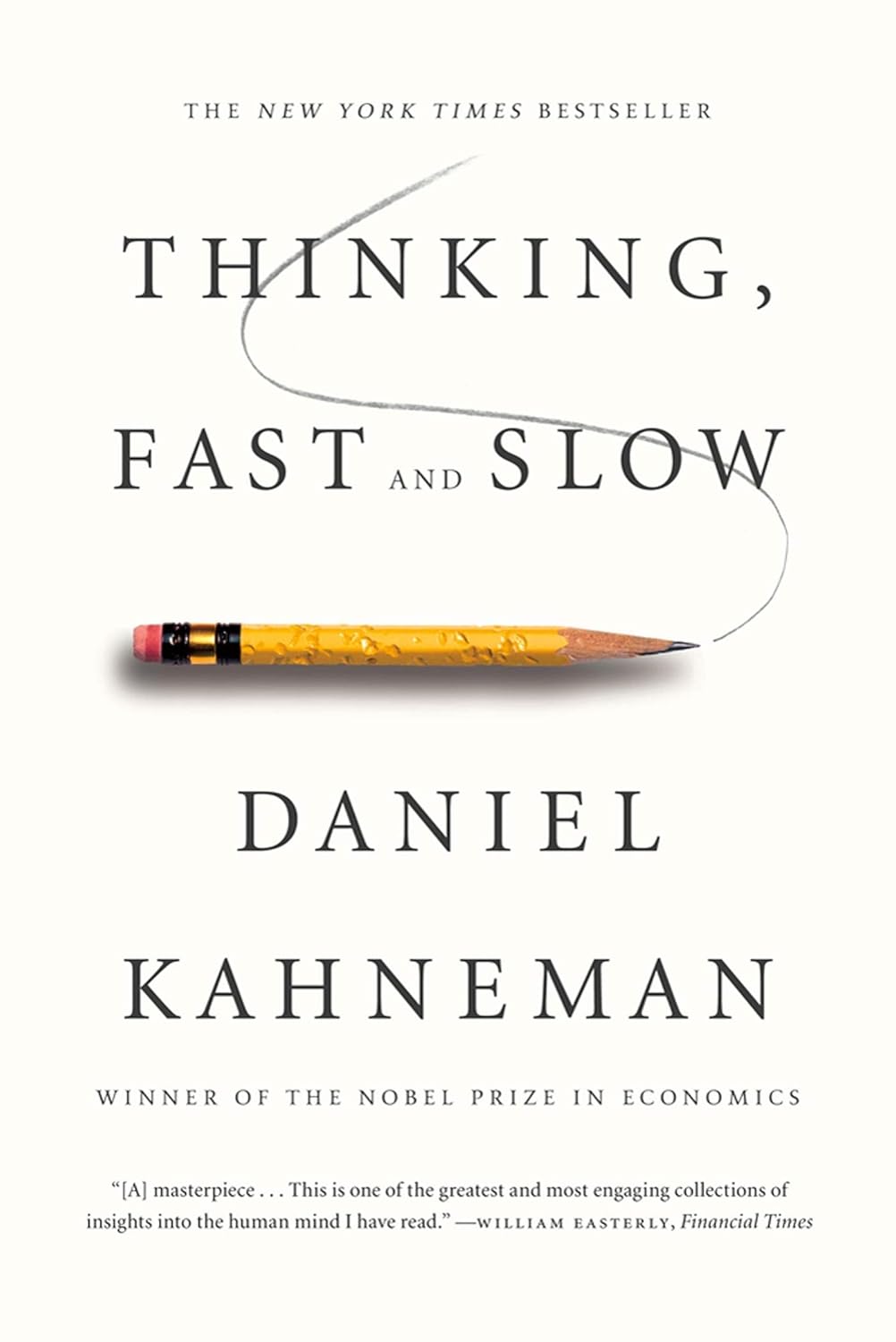
Thinking, Fast and Slow: ReadSprint summary highlights
ReadSprint paraphrases for review. These highlights are not verbatim quotations from the book or its author. Check the original edition for exact wording and context.
Thinking, Fast and Slow
by Daniel Kahneman
System 1 operates automatically and quickly with little or no effort and no sense of voluntary control, while System 2 allocates attention to effortful mental activities and is associated with subjective experiences of agency and choice.
ReadSprint paraphrase · Not a quotation from the author.
System 1 operates automatically and quickly with little or no effort and no sense of voluntary control, while System 2 allocates attention to effortful mental activities and is associated with subjective experiences of agency and choice.
System 1 and System 2.
Share with the ReadSprint source so others can read the context.
Thinking, Fast and Slow
by Daniel Kahneman
Their interaction produces most of our thoughts and decisions: System 1 generates impressions and feelings that System 2 can endorse, modify, or override.
ReadSprint paraphrase · Not a quotation from the author.
Their interaction produces most of our thoughts and decisions: System 1 generates impressions and feelings that System 2 can endorse, modify, or override.
It is fast and automatic.
Share with the ReadSprint source so others can read the context.
Thinking, Fast and Slow
by Daniel Kahneman
System 1 and System 2.
ReadSprint paraphrase · Not a quotation from the author.
System 1 and System 2.
Ease of recalling examples.
Share with the ReadSprint source so others can read the context.
Thinking, Fast and Slow
by Daniel Kahneman
It is fast and automatic.
ReadSprint paraphrase · Not a quotation from the author.
It is fast and automatic.
Assuming specific conditions are more probable than general ones.
Share with the ReadSprint source so others can read the context.
Thinking, Fast and Slow
by Daniel Kahneman
Ease of recalling examples.
ReadSprint paraphrase · Not a quotation from the author.
Ease of recalling examples.
Overemphasizing certain aspects of life.
Share with the ReadSprint source so others can read the context.
Thinking, Fast and Slow
by Daniel Kahneman
Assuming specific conditions are more probable than general ones.
ReadSprint paraphrase · Not a quotation from the author.
Assuming specific conditions are more probable than general ones.
System 1 operates automatically and quickly with little or no effort and no sense of voluntary control, while System 2 allocates attention to effortful mental activities and is associated with subjective experiences of agency and choice. Their interaction produces most of our thoughts and decisions: System 1 generates impressions and feelings that System 2 can endorse, modify, or override.
Share with the ReadSprint source so others can read the context.
Use these highlights to review the book
Which highlight from Thinking, Fast and Slow changes how you would explain the book to someone else?
Which lesson here is worth testing in a real decision this week?
Which highlight feels memorable but less actionable once you slow down and examine it?