Takeaways people can pass on
These cards are tuned for social discoverability: one clean idea, one strong visual treatment, and one tap to share on mobile.
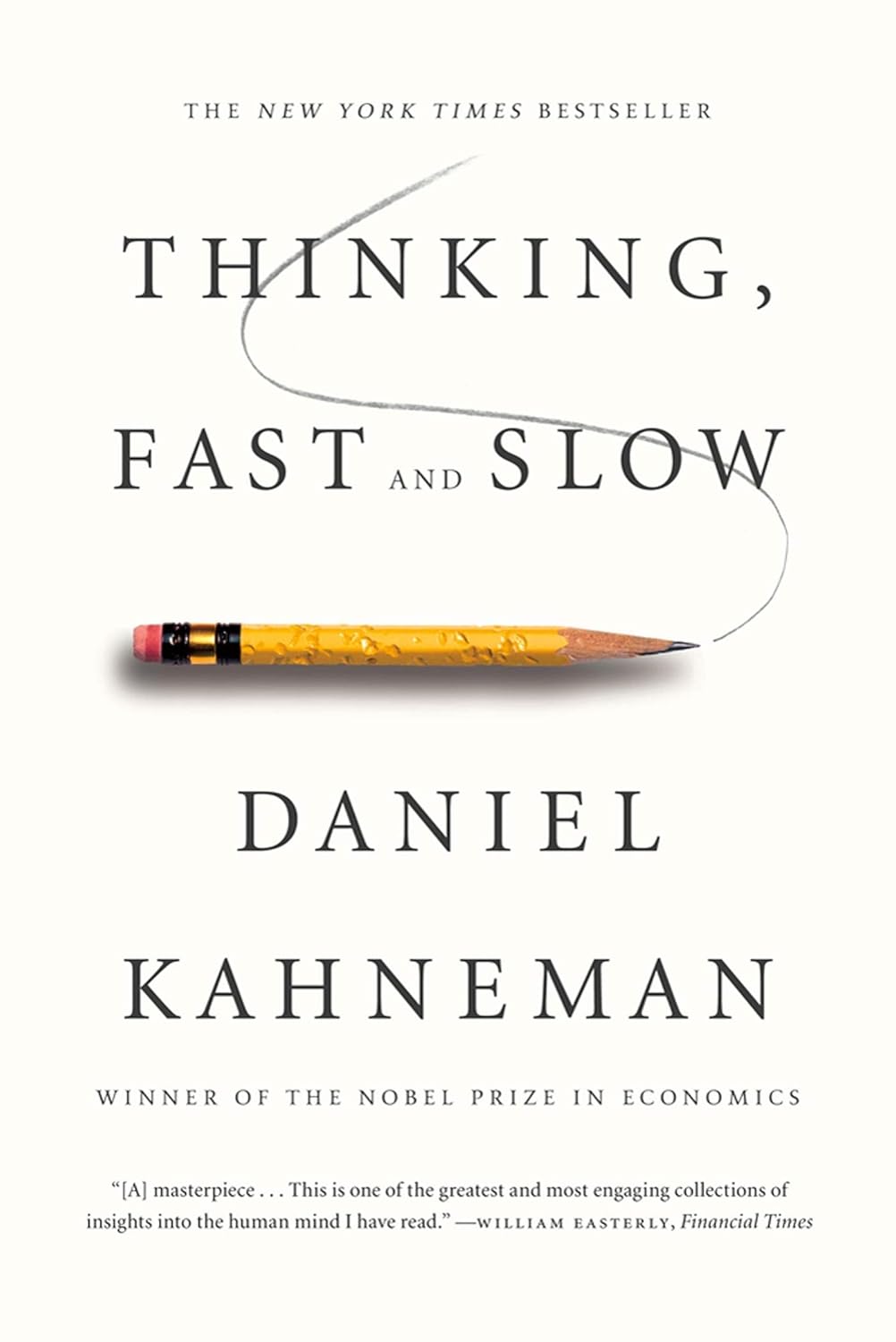
Thinking, Fast and Slow
by Daniel Kahneman
System 1 = fast, automatic, intuitive; System 2 = slow, deliberate, effortful.
Turn the useful part of the book into something worth passing on.
System 1 = fast, automatic, intuitive; System 2 = slow, deliberate, effortful.
Share with the ReadSprint source so others can read the context.
Thinking, Fast and Slow
by Daniel Kahneman
System 1 continuously generates suggestions (impressions, intuitions, impulses) that System 2 may monitor.
Turn the useful part of the book into something worth passing on.
System 1 continuously generates suggestions (impressions, intuitions, impulses) that System 2 may monitor.
Share with the ReadSprint source so others can read the context.
Thinking, Fast and Slow
by Daniel Kahneman
System 2 has limited capacity and is often lazy, accepting System 1’s outputs unless a reason to intervene appears.
Turn the useful part of the book into something worth passing on.
System 2 has limited capacity and is often lazy, accepting System 1’s outputs unless a reason to intervene appears.
Share with the ReadSprint source so others can read the context.
Thinking, Fast and Slow
by Daniel Kahneman
Many errors arise when System 1’s shortcuts are applied inappropriately and System 2 fails to correct them.
Turn the useful part of the book into something worth passing on.
Many errors arise when System 1’s shortcuts are applied inappropriately and System 2 fails to correct them.
Share with the ReadSprint source so others can read the context.
Thinking, Fast and Slow
by Daniel Kahneman
Be mindful of when a quick intuition might need deliberate, System 2 scrutiny.
Turn the useful part of the book into something worth passing on.
Be mindful of when a quick intuition might need deliberate, System 2 scrutiny.
Share with the ReadSprint source so others can read the context.
Thinking, Fast and Slow
by Daniel Kahneman
Understanding the two-system model explains why people reliably make predictable errors and how bias and intuition shape judgment in everyday life and policy. It provides a framework for improving decisions by recognizing when to engage de…
Turn the useful part of the book into something worth passing on.
Understanding the two-system model explains why people reliably make predictable errors and how bias and intuition shape judgment in everyday life and policy. It provides a framework for improving decisions by recognizing when to engage deliberate thinking.
Share with the ReadSprint source so others can read the context.
Thinking, Fast and Slow
by Daniel Kahneman
System 1 operates automatically and quickly with little or no effort and no sense of voluntary control, while System 2 allocates attention to effortful mental activities and is associated with subjective experiences of agency and choice. T…
Turn the useful part of the book into something worth passing on.
System 1 operates automatically and quickly with little or no effort and no sense of voluntary control, while System 2 allocates attention to effortful mental activities and is associated with subjective experiences of agency and choice. Their interaction produces most of our thoughts and decisions: System 1 generates impressions and feelings that System 2 can endorse, modify, or override.
Share with the ReadSprint source so others can read the context.
Thinking, Fast and Slow
by Daniel Kahneman
Attention is a limited resource; demanding tasks consume cognitive capacity and reduce performance on concurrent tasks.
Turn the useful part of the book into something worth passing on.
Attention is a limited resource; demanding tasks consume cognitive capacity and reduce performance on concurrent tasks.
Share with the ReadSprint source so others can read the context.
Thinking, Fast and Slow
by Daniel Kahneman
Effortful tasks feel tiring and demand endorsement by System 2, making them unpleasant and often avoided.
Turn the useful part of the book into something worth passing on.
Effortful tasks feel tiring and demand endorsement by System 2, making them unpleasant and often avoided.
Share with the ReadSprint source so others can read the context.
Thinking, Fast and Slow
by Daniel Kahneman
Performing mental work involves trade-offs: accuracy and depth require time and energy.
Turn the useful part of the book into something worth passing on.
Performing mental work involves trade-offs: accuracy and depth require time and energy.
Share with the ReadSprint source so others can read the context.
Thinking, Fast and Slow
by Daniel Kahneman
Self-control and executive functions depend on this limited attentional capacity and can be depleted by prolonged use (discussed as 'ego depletion' in related work).
Turn the useful part of the book into something worth passing on.
Self-control and executive functions depend on this limited attentional capacity and can be depleted by prolonged use (discussed as 'ego depletion' in related work).
Share with the ReadSprint source so others can read the context.
Thinking, Fast and Slow
by Daniel Kahneman
Allocate focused attention deliberately and reduce distractions when accuracy matters.
Turn the useful part of the book into something worth passing on.
Allocate focused attention deliberately and reduce distractions when accuracy matters.
Share with the ReadSprint source so others can read the context.