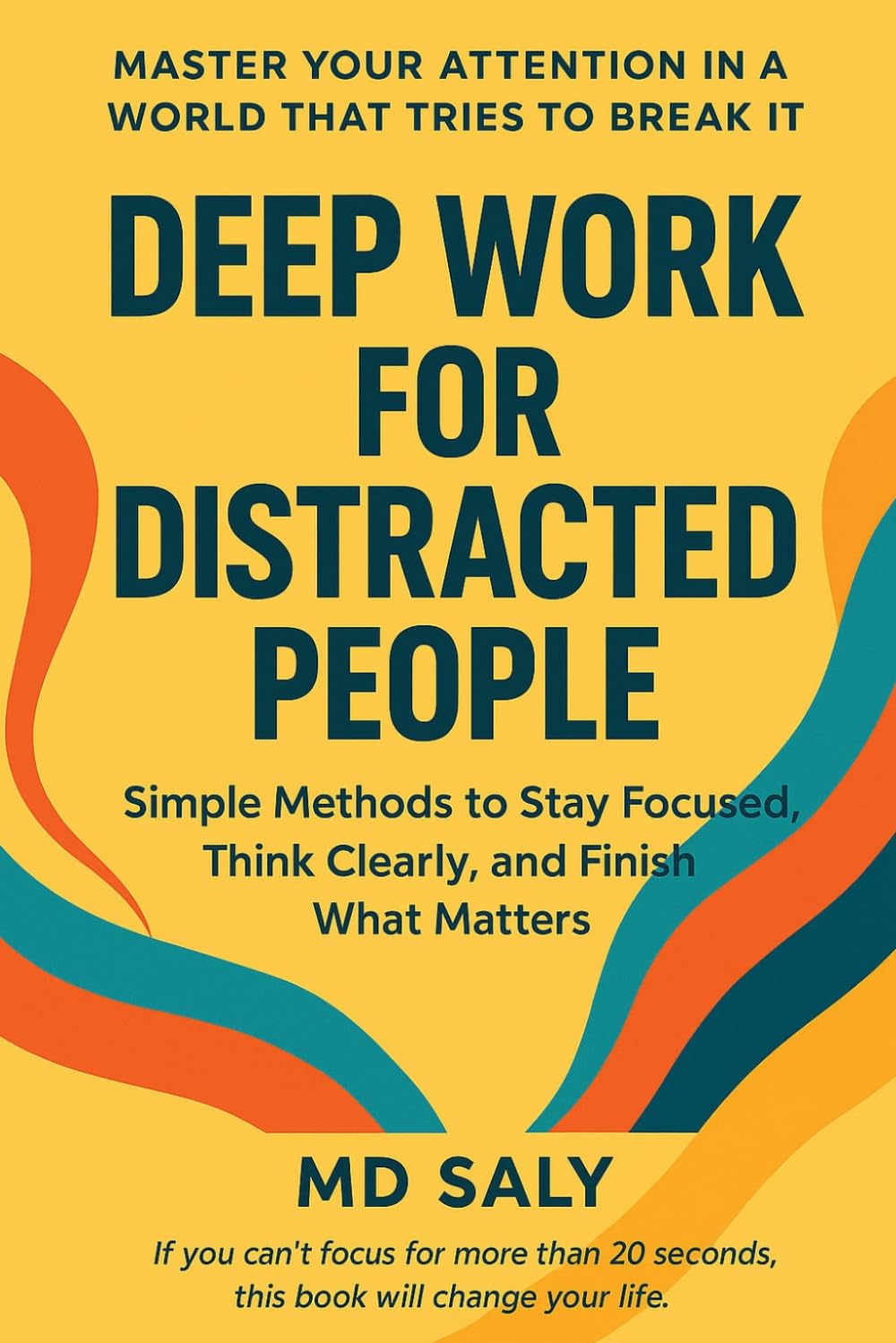
Book overview
Deep Work for Distracted People makes the case that sustained, focused work is the most valuable skill in an age of constant interruptions. It argues that deliberate focus produces higher-quality output, faster learning, and deeper satisfaction than fragmented attention.
This page is built to be a compact learning hub for Deep Work for Distracted People: Simple Methods to Stay Focused, Think Clearly, and Finish What Matters. You can move from the high-level summary into takeaways, quiz prompts, chapter review, and related books without breaking the reading flow.
Best takeaways to keep
Deep work is defined as cognitively demanding, distraction
free work that pushes your abilities to their limits.
The modern attention economy rewards shallow responsiveness, making deep work a rare and valuable differentiator.
Shallow work (emails, meetings, routines) consumes time but produces little long
term value.
Reclaiming focus requires intentional habits and systemic changes to your schedule and environment.
Retrieval practice
What is the central claim of Deep Work for Distracted People about focused work?
According to the book, which set of factors most explains why focus often fails?
Which scheduling method does the book recommend to protect and structure focused work time?
Which strategy best reflects the book's advice for managing digital distractions?
Quiz preview
What is the central claim of Deep Work for Distracted People about focused work?
- Sustained, uninterrupted deep work is the most valuable skill in an age of constant interruptions
- Multitasking and frequent context switches increase overall productivity
- Busywork and shallow tasks are equivalent to deep work in learning value
According to the book, which set of factors most explains why focus often fails?
- Lack of technical skills and training
- Habitual attention capture by notifications, decision fatigue, and social expectations
- Physical office layout alone (no digital factors)
Which scheduling method does the book recommend to protect and structure focused work time?
- Time-blocking — assigning dedicated blocks for uninterrupted deep work
- Randomly switching tasks whenever energy dips
- Working longer sessions without planned breaks
Which strategy best reflects the book's advice for managing digital distractions?
- Delete all apps and stop using the internet entirely
- Turn off nonessential notifications and schedule specific times to check email and social media
- Keep notifications on but ignore them manually
Chapter map
Introduction: The Case for Deep Work
Deep Work for Distracted People makes the case that sustained, focused work is the most valuable skill in an age of constant interruptions. It argues that deliberate focus produces higher-quality output, faster learning, and deeper satisfaction than fragmented attention.
Why Focus Fails: Understanding Distraction
This chapter examines the cognitive, environmental, and social causes of distraction that derail focus. It shows how attention is hijacked by habits, notifications, decision fatigue, and social expectations, and how these factors compound over time.
The Science of Attention and Productivity
This chapter summarizes research on attention, memory, and cognitive load to explain why uninterrupted focus boosts learning and output. It links neuroscience and behavioral studies to practical recommendations for managing mental energy and optimizing work periods.
Clarifying What Matters: Prioritizing Deep Work
This chapter helps readers define which tasks deserve deep work and which are shallow but necessary. It offers frameworks for aligning daily activities with long-term goals so focused effort yields the most meaningful results.
Designing Your Deep Work Schedule
This chapter provides templates and principles for building a sustainable deep work schedule tailored to personal rhythms and responsibilities. It discusses block lengths, frequency, and integrating deep sessions into a realistic calendar.
Next best step
Move next into the questions page if you want better retention, or into the takeaways page if you want the shortest useful review loop for this book.