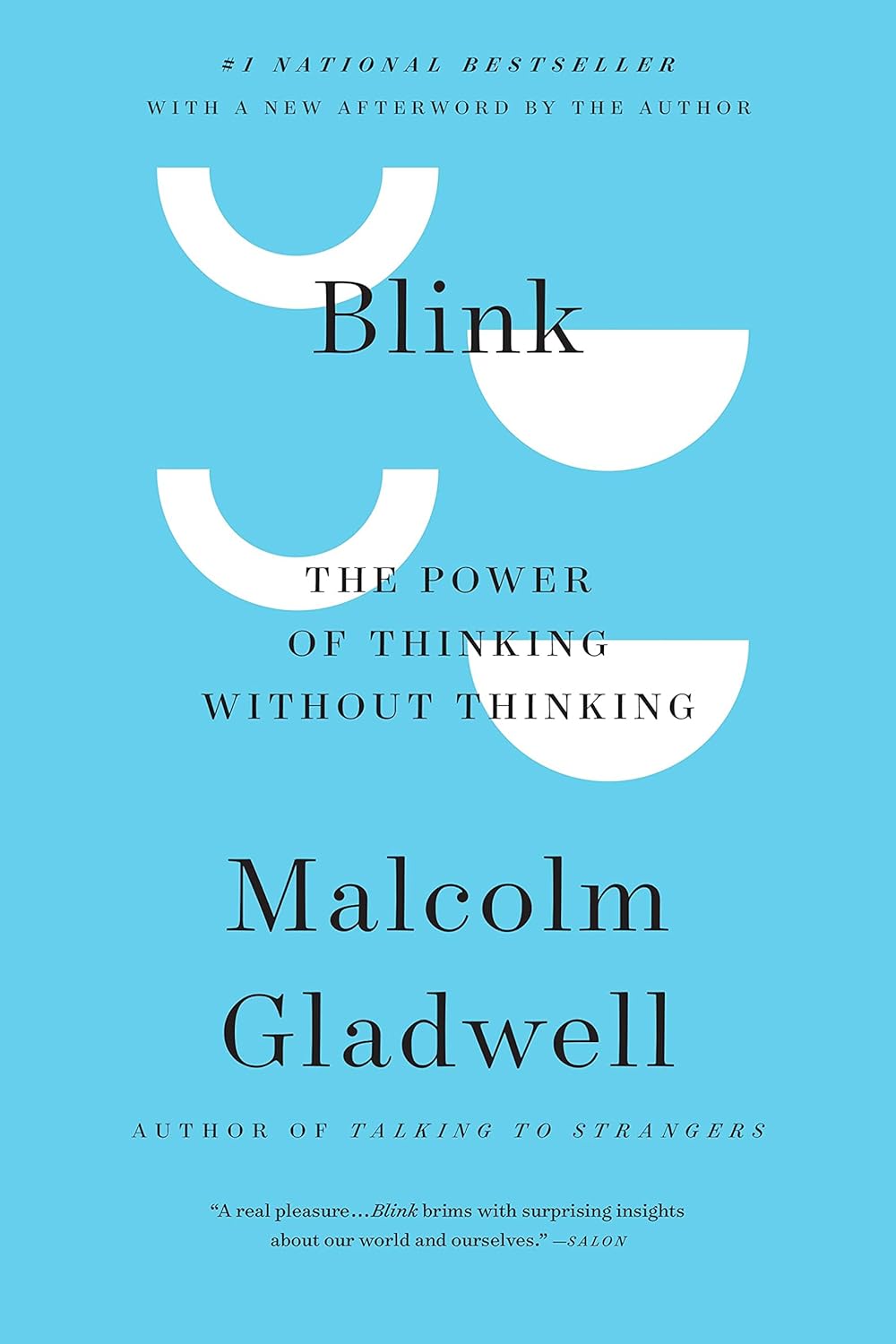
Book overview
Thin-slicing is the ability of our unconscious to find patterns and make rapid judgments from very limited information. Gladwell argues these snap judgments can be surprisingly accurate and useful, often rivaling more deliberate analysis when conditions are right.
This page is built to be a compact learning hub for Blink: The Power of Thinking Without Thinking. You can move from the high-level summary into takeaways, quiz prompts, chapter review, and related books without breaking the reading flow.
Best takeaways to keep
Thin
slicing refers to making quick inferences from narrow slices of experience.
The unconscious processes relevant information fast and filters out noise.
Accuracy of thin
slicing depends on experience, context, and what information is sampled.
Overthinking can sometimes degrade judgments that would be better made intuitively.
Retrieval practice
What is 'thin-slicing' as described in Blink?
What key point does 'The Locked Door' chapter make about snap judgments?
What lesson does 'The Warren Harding Error' illustrate?
What does the Paul Van Riper example demonstrate about rapid cognition?
Quiz preview
What is 'thin-slicing' as described in Blink?
- A deliberate, long-term analytical process
- Random guessing based on incomplete information
- The unconscious ability to make quick judgments from limited information
What key point does 'The Locked Door' chapter make about snap judgments?
- Snap judgments are always conscious and explainable
- Critical elements of snap judgments are unconscious and inaccessible to introspection
- Locking doors prevents snap judgments
What lesson does 'The Warren Harding Error' illustrate?
- It shows that appearances and superficial cues can lead to systematic misjudgments (the 'Warren Harding Error')
- It proves that charismatic leaders are always competent
- It suggests long deliberation reliably prevents bad choices
What does the Paul Van Riper example demonstrate about rapid cognition?
- That slow, data-driven planning always outperforms intuition
- That rapid, experience-based decision-making can outperform high-tech analysis in certain conditions
- That intuition only works for generals
Chapter map
The Theory of Thin Slices
Thin-slicing is the ability of our unconscious to find patterns and make rapid judgments from very limited information. Gladwell argues these snap judgments can be surprisingly accurate and useful, often rivaling more deliberate analysis when conditions are right.
The Locked Door: The Secret Life of Snap Decisions
Many of the most important elements of snap judgments operate behind an internal "locked door"—they are unconscious and inaccessible to introspection. Gladwell shows that even when people arrive at correct conclusions, they often cannot explain how, and attempts to verbalize can harm decision quality.
The Warren Harding Error
Gladwell recounts Warren Harding's political rise as an example of how appearances and superficial cues can mislead decision-making. The chapter shows how thin slicing can produce systematic errors—people make confident but wrong judgments based on looks and other surface features.
Paul Van Riper and the Art of Rapid Cognition
This chapter tells how Marine Corps General Paul Van Riper used rapid, intuitive decision-making to outmaneuver a high tech wargame opponent in the Millennium Challenge. It demonstrates that under certain conditions, quick, experience-based moves can outperform slower, more data heavy approaches.
Kenna's Dilemma
Kenna's Dilemma explores how taste, context, and social dynamics can make it hard to predict cultural success despite favorable expert reactions. Gladwell uses the case of musician Kenna to show that market testing and focus groups can fail because they alter the very preferences they aim to measure.
Next best step
Move next into the questions page if you want better retention, or into the takeaways page if you want the shortest useful review loop for this book.