ReadSprintBooksInfluence: The Psychology of PersuasionInfluence: The Psychology of Persuasion Questions, Quiz, and Active Recall Prompts
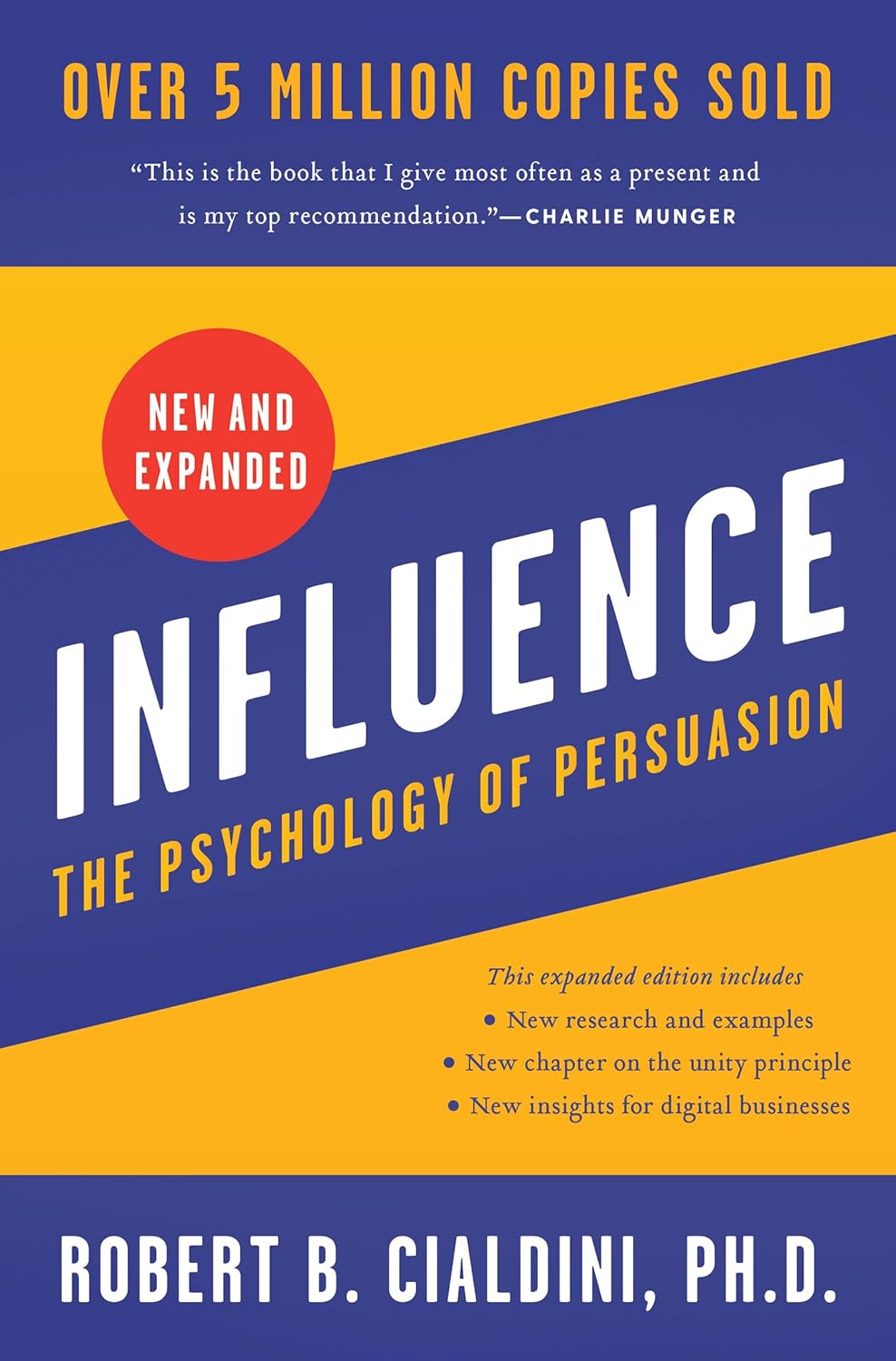
Influence: The Psychology of Persuasion
Influence: The Psychology of Persuasion Questions, Quiz, and Active Recall Prompts

Influence: The Psychology of Persuasion Questions, Quiz, and Active Recall Prompts

by Robert B. Cialdini, Ph.D.

Test your understanding of Influence: The Psychology of Persuasion by Robert B. Cialdini, Ph.D. with quiz questions, active recall prompts, and related learning resources.

Reading without retrieval fades fast. Use these Influence: The Psychology of Persuasion questions and active recall prompts to pressure-test what you understood and keep the book usable later.

Built for retention

ReadSprint combines concise summaries, quizzes, active recall, and related reading paths so the useful part of the book is easier to keep.

Open full summary

8

Chapter summaries

5

Quiz questions

12

Key takeaways

6

Related books

Quiz questions

Question 1

Which persuasion principle describes a social rule where people feel obliged to repay gifts, favors, or concessions?

  • Reciprocation
  • Scarcity
  • Authority
  • Liking
Question 2

Which tactic relies on getting someone to make a small initial commitment so they'll later behave consistently with it?

  • Commitment and Consistency
  • Social Proof
  • Reciprocation
  • Scarcity
Question 3

Cialdini's 'click, whirr' metaphor refers to what psychological process?

  • Automatic fixed-action patterns that trigger predictable responses
  • Deliberate cost-benefit analysis
  • Conscious resistance to persuasion
  • Emotional appeals based on fear
Question 4

Which principle states that people look to others' behavior to decide how to act in uncertain situations?

  • Social Proof
  • Authority
  • Unity
  • Commitment and Consistency
Question 5

Which principle is based on shared identity or the 'we' factor, making people more influenced by those they see as part of their group?

  • Unity
  • Liking
  • Reciprocation
  • Scarcity

Active recall prompts

Which persuasion principle describes a social rule where people feel obliged to repay gifts, favors, or concessions?

Which tactic relies on getting someone to make a small initial commitment so they'll later behave consistently with it?

Cialdini's 'click, whirr' metaphor refers to what psychological process?

Which principle states that people look to others' behavior to decide how to act in uncertain situations?

What is the main idea of "Weapons of Influence", and how would you explain it without looking back?

What is the main idea of "Reciprocation: The Old Give and Take", and how would you explain it without looking back?

What is the main idea of "Commitment and Consistency: Hobgoblins of the Mind", and how would you explain it without looking back?

What is the main idea of "Social Proof: Truths Are Us", and how would you explain it without looking back?

Quiz checkpoints

Question 1

Which persuasion principle describes a social rule where people feel obliged to repay gifts, favors, or concessions?

Question 2

Which tactic relies on getting someone to make a small initial commitment so they'll later behave consistently with it?

Question 3

Cialdini's 'click, whirr' metaphor refers to what psychological process?

Practice retrieval

Key concepts

Weapons of Influence

The chapter frames persuasion as largely driven by psychological shortcuts rather than rational deliberation, making the insights relevant to anyone who wants to resist manipulation or design ethical influence strategie…

Reciprocation: The Old Give and Take

The reciprocity principle highlights how moral rules that bind societies can be manipulated in everyday persuasion, making it crucial for consumers, negotiators, and marketers to recognize and manage obligations. It rem…

Commitment and Consistency: Hobgoblins of the Mind

Commitment and consistency explain many real-world phenomena—brand loyalty, escalation of commitment, and compliance techniques—and are relevant to anyone designing long term behavior change or resisting stepwise manipu…

Open concept map
Turn Reading Into Recall

Keep Influence: The Psychology of Persuasion review-ready instead of letting it fade.

This page is strongest when it becomes part of a review habit: save the summary, revisit the key takeaways, and use recall prompts before the next meeting, study block, or decision.

Save one strong takeaway instead of over-highlighting.
Use the questions page to test what actually stuck.
Return when the book becomes relevant again, not just when motivation is high.
See pricing
Get Book Review Notes

Get practical notes on remembering and reusing ideas from nonfiction books without building an overly heavy note system.

Retention workflow

Turn this page into a repeatable study loop

Move from summary to takeaways, test yourself with questions, revisit the concept map, and then continue into related books. That keeps Influence: The Psychology of Persuasionconnected instead of turning into a one-time skim.

Frequently asked questions

Why use quiz questions for Influence: The Psychology of Persuasion?

Quiz-style recall is more durable than passive rereading because it forces you to retrieve the idea instead of merely recognizing it.

How should I answer active recall prompts?

Answer from memory first, then review the relevant chapter summary only after you have tried to explain the idea on your own.

What if I miss several questions about Influence: The Psychology of Persuasion?

That usually means the book needs a shorter review loop. Revisit the chapter summaries, keep only a few high-value takeaways, and test yourself again later.