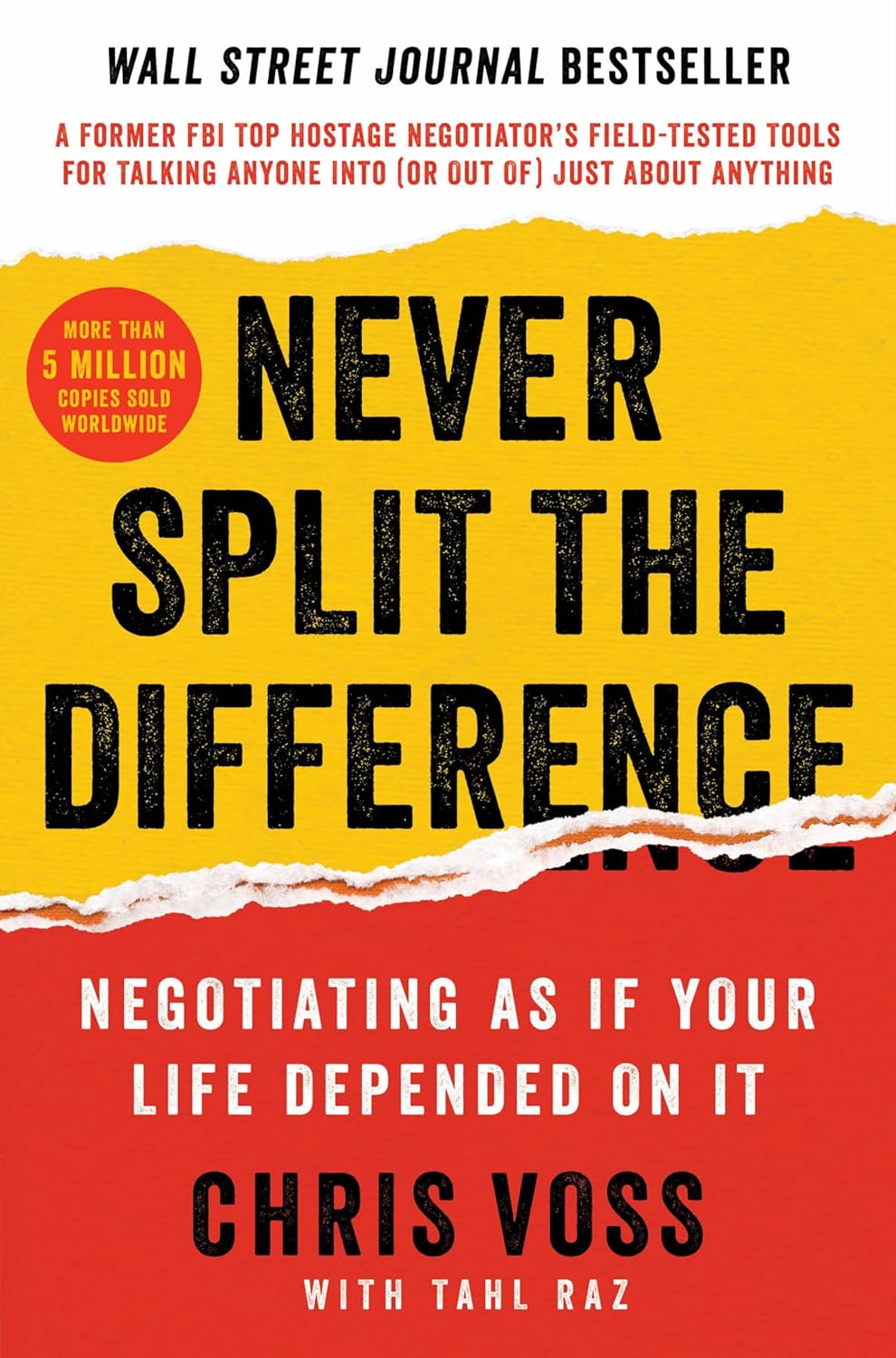
Never Split the Difference: Negotiating As If Your Life Depended On It
Book ecosystem page

Never Split the Difference: Negotiating As If Your Life Depended On It Summary, Takeaways, Quiz, and Chapter Guide

by Chris Voss with Tahl Raz

ReadSprint’s Never Split the Difference: Negotiating As If Your Life Depended On It by Chris Voss with Tahl Raz page combines summary, takeaways, quizzes, active recall, and related books to help you learn faster and retain more.

This chapter introduces the concept of negotiation as a critical skill in everyday life, emphasizing the importance of emotional intelligence and empathy. Chris Voss shares his background as an FBI negotiator and sets the stage for the techniques he will discuss.

Built for retention

ReadSprint combines concise summaries, quizzes, active recall, and related reading paths so the useful part of the book is easier to keep.

Open full summary

10

Chapter summaries

5

Quiz questions

12

Key takeaways

6

Related books

Book overview

This chapter introduces the concept of negotiation as a critical skill in everyday life, emphasizing the importance of emotional intelligence and empathy. Chris Voss shares his background as an FBI negotiator and sets the stage for the techniques he will discuss.

This page is built to be a compact learning hub for Never Split the Difference: Negotiating As If Your Life Depended On It. You can move from the high-level summary into takeaways, quiz prompts, chapter review, and related books without breaking the reading flow.

Best takeaways to keep

Negotiation is a part of daily life

Emotional intelligence is crucial

Empathy can be a powerful tool

The author's background in FBI negotiations

Approach negotiations with empathy and emotional awareness.

The chapter sets the foundation for understanding negotiation as a life skill, highlighting the importance of empathy and emotional intelligence.

Open all takeaways

Retrieval practice

What is the main focus of the book?

What technique does Voss suggest for building rapport?

Which phrase indicates true understanding in a negotiation?

What is the "Rule of Three" used for?

Open questions and quiz

Quiz preview

What is the main focus of the book?

  • Financial investment strategies
  • Effective negotiation techniques
  • Personal development

What technique does Voss suggest for building rapport?

  • Mirroring
  • Ignoring
  • Arguing

Which phrase indicates true understanding in a negotiation?

  • I agree
  • That's right
  • You're wrong

What is the "Rule of Three" used for?

  • Ensuring execution
  • Increasing sales
  • Time management

Chapter map

Chapter 1

The New Rules

This chapter introduces the concept of negotiation as a critical skill in everyday life, emphasizing the importance of emotional intelligence and empathy. Chris Voss shares his background as an FBI negotiator and sets the stage for the techniques he will discuss.

Chapter 2

Be a Mirror

Voss explains the technique of mirroring, a simple yet effective way to build rapport and trust. By repeating the last few words your counterpart says, you can encourage them to elaborate and feel understood.

Chapter 3

Don't Feel Their Pain, Label It

This chapter focuses on labeling emotions to diffuse tension and create a connection. By identifying and verbalizing the emotions of others, you can help them feel acknowledged and reduce conflict.

Chapter 4

Beware 'Yes'—Master 'No'

Voss discusses the power of 'No' and how it can be more valuable than 'Yes' in negotiations. Understanding the reasons behind a 'No' can lead to more meaningful conversations and solutions.

Chapter 5

Trigger the Two Words That Immediately Transform Any Negotiation

The chapter reveals the power of getting your counterpart to say "That's right." This phrase indicates true understanding and agreement, moving the negotiation forward.

Open chapter summaries

Next best step

Move next into the questions page if you want better retention, or into the takeaways page if you want the shortest useful review loop for this book.

Quiz checkpoints

Question 1

What is the main focus of the book?

Question 2

What technique does Voss suggest for building rapport?

Question 3

Which phrase indicates true understanding in a negotiation?

Practice retrieval

Key concepts

The New Rules

The chapter sets the foundation for understanding negotiation as a life skill, highlighting the importance of empathy and emotional intelligence.

Be a Mirror

Mirroring is presented as a foundational technique for effective communication, emphasizing the importance of making others feel heard.

Don't Feel Their Pain, Label It

Labeling emotions is a key strategy in negotiation, reinforcing the theme of empathy and understanding.

Open concept map
Turn Reading Into Recall

Keep Never Split the Difference: Negotiating As If Your Life Depended On It review-ready instead of letting it fade.

This page is strongest when it becomes part of a review habit: save the summary, revisit the key takeaways, and use recall prompts before the next meeting, study block, or decision.

Save one strong takeaway instead of over-highlighting.
Use the questions page to test what actually stuck.
Return when the book becomes relevant again, not just when motivation is high.
See pricing
Get Book Review Notes

Get practical notes on remembering and reusing ideas from nonfiction books without building an overly heavy note system.

Retention workflow

Turn this page into a repeatable study loop

Move from summary to takeaways, test yourself with questions, revisit the concept map, and then continue into related books. That keeps Never Split the Difference: Negotiating As If Your Life Depended On Itconnected instead of turning into a one-time skim.

Frequently asked questions

What is Never Split the Difference: Negotiating As If Your Life Depended On It about?

This page summarizes the book’s core argument, chapter flow, takeaways, and review prompts so you can understand it faster and revisit the useful parts later.

How does ReadSprint make Never Split the Difference: Negotiating As If Your Life Depended On It easier to remember?

By pairing concise summaries with quizzes, active recall prompts, and related reading paths instead of stopping at a generic summary page.

What should I read after Never Split the Difference: Negotiating As If Your Life Depended On It?

Use the related books, books-like pages, and topical reading links here to move into a stronger next step instead of guessing what to read next.