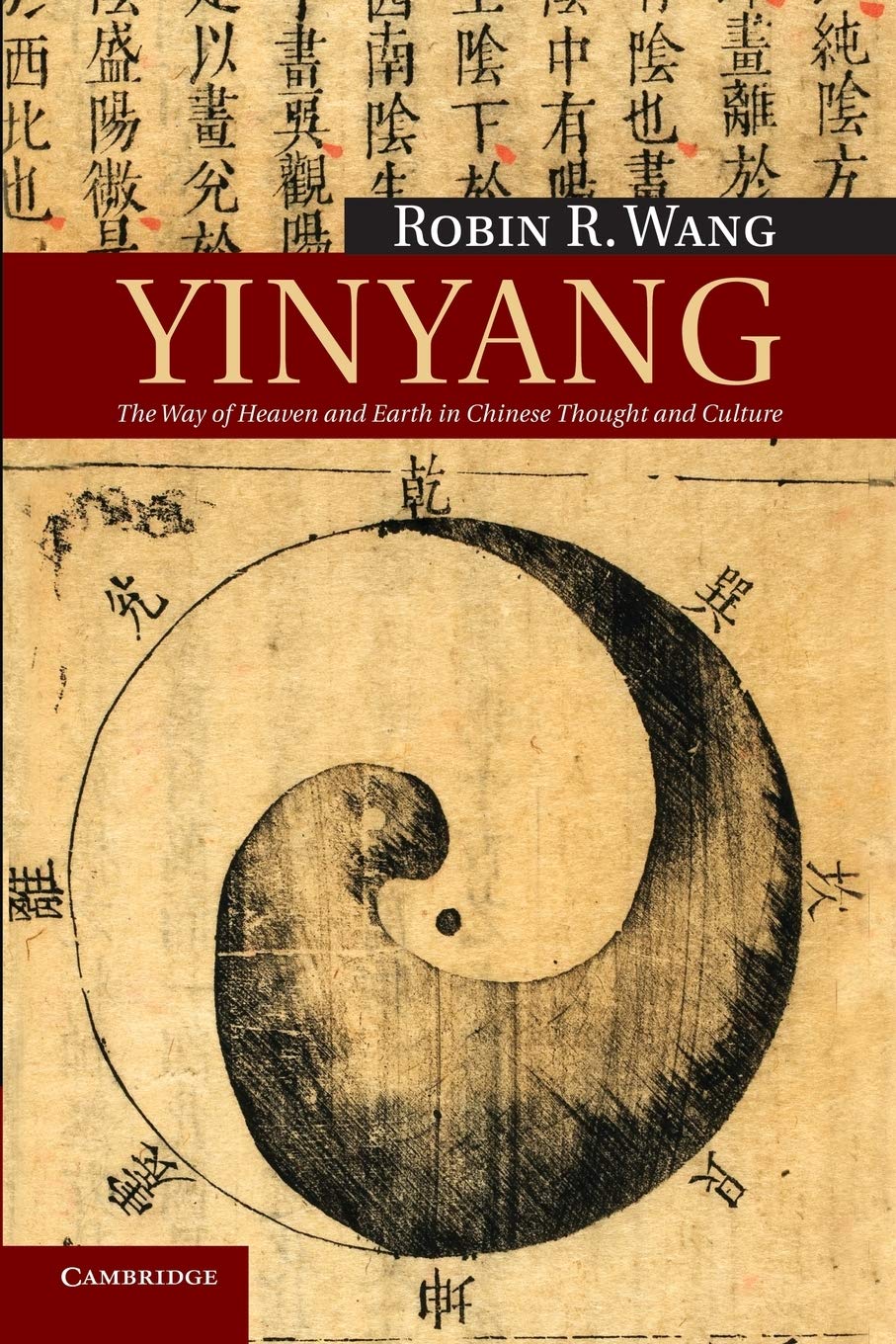
Book overview
Yinyang is presented as a central organizing principle in Chinese thought that describes complementary, interdependent forces shaping the cosmos, nature, and human life. The introduction outlines the book's aim to trace the concept's historical development, expressions across disciplines, and enduring cultural influence.
This page is built to be a compact learning hub for Yinyang: The Way of Heaven and Earth in Chinese Thought and Culture. You can move from the high-level summary into takeaways, quiz prompts, chapter review, and related books without breaking the reading flow.
Best takeaways to keep
Yinyang defines complementary polarities (yin as receptive/dark, yang as active/light) that interact dynamically.
It functions as a cosmological and explanatory framework rather than a rigid binary.
The concept permeates philosophy, ritual, medicine, calendrics, and governance.
The book adopts an interdisciplinary approach, combining textual, ritual, and material evidence.
Use yinyang as a lens for comparing dynamic complementarities in systems and practices.
Yinyang is framed as a flexible heuristic for understanding change, balance, and relational structure in both ancient and continuing Chinese practices; its study illuminates how metaphors shape practical life.
Retrieval practice
According to the book’s introduction, what best describes the yin-yang principle in Chinese thought?
How does the chapter on the meaning and formation of yinyang explain its origin?
In which early sources does the book say yinyang is prominently used to shape cosmological models?
What role do numbers and calendrical systems play in the book’s account of yinyang?
Quiz preview
According to the book’s introduction, what best describes the yin-yang principle in Chinese thought?
- Complementary, interdependent forces that shape the cosmos, nature, and human life
- Two opposing, mutually exclusive forces in constant conflict
- A static hierarchy with yang always superior to yin
How does the chapter on the meaning and formation of yinyang explain its origin?
- It began exclusively as a mathematical or technical system
- It grew from observable contrasts (light/dark, hot/cold) into a unified relational theory
- It was introduced into China by foreign traders
In which early sources does the book say yinyang is prominently used to shape cosmological models?
- Primarily in legal codes and administrative records
- Texts such as the I Ching, early cosmological writings, and ritual manuals
- Only in late imperial poetry and novels
What role do numbers and calendrical systems play in the book’s account of yinyang?
- Numerical and calendrical schemes (cycles, stems-and-branches, five phases) codify and embody yinyang relations
- They are irrelevant; yinyang is purely metaphorical and not systematized numerically
- They were adopted from Western astronomy during the Ming dynasty
Chapter map
Introduction: The Way of Heaven and Earth
Yinyang is presented as a central organizing principle in Chinese thought that describes complementary, interdependent forces shaping the cosmos, nature, and human life. The introduction outlines the book's aim to trace the concept's historical development, expressions across disciplines, and enduring cultural influence.
1. The Meaning and Formation of Yinyang
This chapter analyzes the semantic and symbolic roots of yin and yang and explains how the pair grew from observable contrasts into a unified theory of relational dynamics. It traces linguistic, cosmological, and early philosophical moves that transformed simple oppositions into an integrative model of process.
2. Yinyang in Early Texts and Cosmology
The chapter surveys early textual uses of yinyang in sources such as the I Ching, early cosmological writings, and ritual manuals, showing how the idea shaped models of heaven, earth, and human agency. It demonstrates that yinyang served both explanatory and prescriptive functions in early Chinese cosmology.
3. Yinyang, Numbers, and Time
This chapter explores the numerical and calendrical systems that codified yinyang relations—cycles, stems and branches, and the five phases—demonstrating how quantitative schemes embodied qualitative balances. It argues that counting and timing were ways to operationalize yinyang for agriculture, divination, and governance.
4. Yinyang and the Human Body: Medicine and Physiology
This chapter examines how yinyang became central to Chinese medical theory, informing ideas of organ pairing, disease causation, diagnosis, and therapeutic balance. It shows medicine as an applied field where cosmological metaphors guide practical interventions to restore harmony.
Next best step
Move next into the questions page if you want better retention, or into the takeaways page if you want the shortest useful review loop for this book.