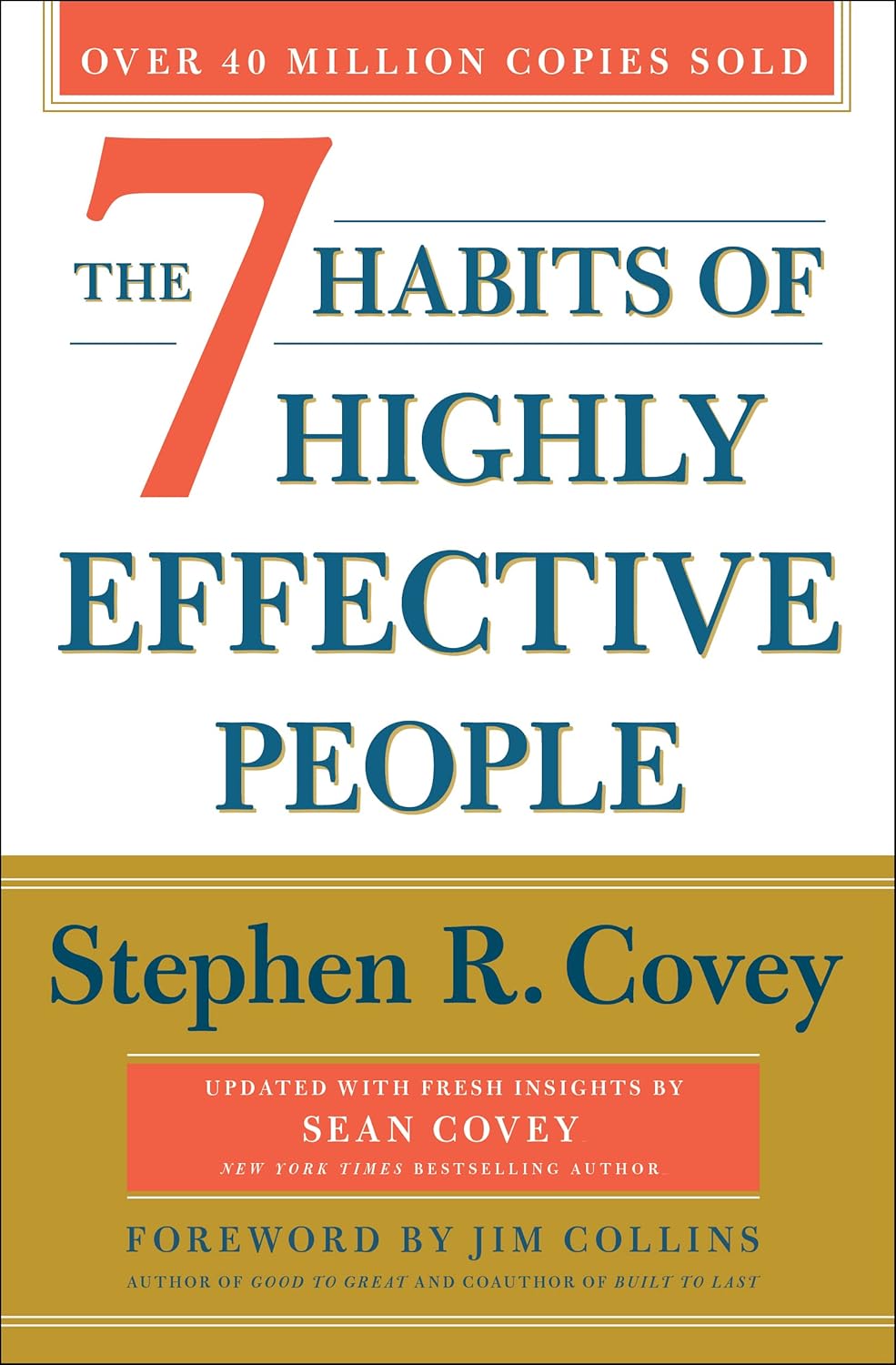
Book overview
Be Proactive emphasizes that effective people take responsibility for their choices and behavior rather than reacting to external circumstances. It distinguishes between proactive responses (guided by values) and reactive responses (driven by moods or conditions), arguing that freedom to choose our response is the essence of personal effectiveness.
This page is built to be a compact learning hub for The 7 Habits of Highly Effective People. You can move from the high-level summary into takeaways, quiz prompts, chapter review, and related books without breaking the reading flow.
Best takeaways to keep
Focus on your Circle of Influence — invest energy where you can make a difference rather than on what you cannot control.
Between stimulus and response lies the human ability to choose; use that space to act according to principles and values.
Proactivity means acting rather than being acted upon: take initiative, own mistakes, and shape outcomes.
Language matters: use proactive language (“I will,” “I choose”) instead of reactive language (“I can’t,” “If only”).
Identify one area where you feel stuck and take one deliberate action this week that is within your control.
The chapter centers on personal responsibility and agency as the foundation for lasting change, relevant to leadership, relationships, and stress management. Developing a proactive mindset expands influence and reduces wasted effort on uncontrollable factors.
Retrieval practice
What is the first habit discussed in the book?
Which habit emphasizes empathetic listening?
What does Habit 3 focus on?
Which habit is about creating mutually beneficial relationships?
Quiz preview
What is the first habit discussed in the book?
- Be Proactive
- Begin with the End in Mind
- Put First Things First
Which habit emphasizes empathetic listening?
- Think Win-Win
- Seek First to Understand, Then to Be Understood
- Synergize
What does Habit 3 focus on?
- Time Management
- Teamwork
- Self-Renewal
Which habit is about creating mutually beneficial relationships?
- Think Win-Win
- Synergize
- Put First Things First
Chapter map
Be Proactive
Be Proactive emphasizes that effective people take responsibility for their choices and behavior rather than reacting to external circumstances. It distinguishes between proactive responses (guided by values) and reactive responses (driven by moods or conditions), arguing that freedom to choose our response is the essence of personal effectiveness.
Begin with the End in Mind
Begin with the End in Mind urges readers to clarify their life and work goals by defining a personal mission and envisioning desired outcomes before acting. It promotes living intentionally according to chosen values rather than reacting to external expectations or circumstances.
Put First Things First
Put First Things First translates your values and goals into daily actions by prioritizing important but not always urgent activities. It teaches time management centered on effectiveness—spending time on high-impact tasks that support long-term goals rather than reacting to crises.
Think Win-Win
Think Win-Win advocates seeking mutually beneficial outcomes in interactions, replacing competitive or self-sacrificing mindsets with cooperative problem-solving. It frames effectiveness in relationships as seeking solutions where all parties feel respected and benefit.
Seek First to Understand, Then to Be Understood
This habit emphasizes empathetic listening as the basis for effective communication: understand others’ perspectives deeply before sharing your own. By truly listening, you build trust, uncover underlying concerns, and create a receptive environment for problem-solving.
Next best step
Move next into the questions page if you want better retention, or into the takeaways page if you want the shortest useful review loop for this book.