Book overview
In this chapter Sinek argues that people often behave as if they already understand others' motivations, which leads to poor decisions and ineffective leadership. He introduces the problem that without knowing the deeper "why," organizations and leaders default to surface-level explanations and assumptions.
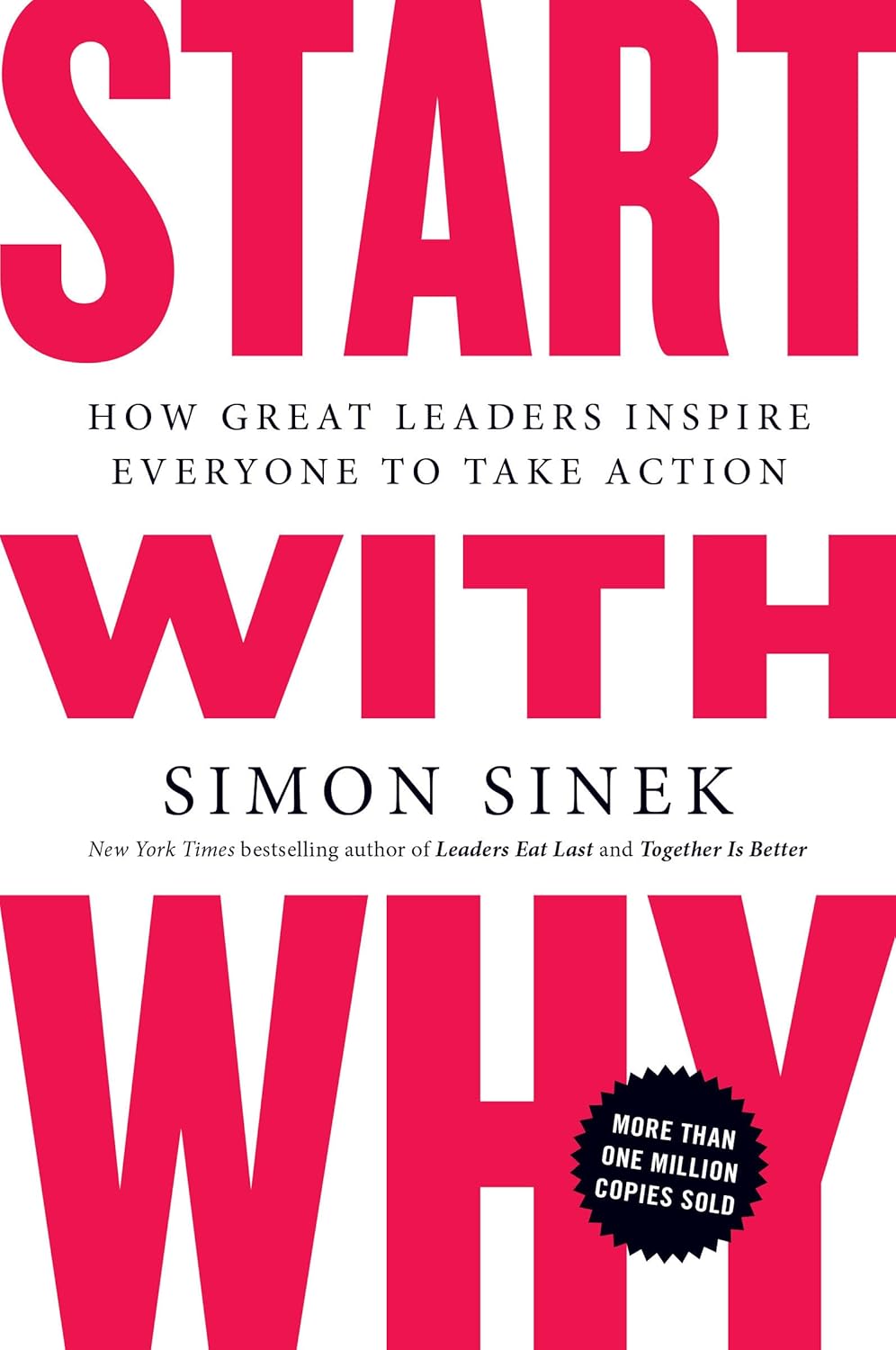
This page is built to be a compact learning hub for Start With Why: How Great Leaders Inspire Everyone to Take Action. You can move from the high-level summary into takeaways, quiz prompts, chapter review, and related books without breaking the reading flow.
Best takeaways to keep
Assuming you know motives prevents asking the fundamental question "Why?" and limits insight.
Leaders and organizations often explain actions by WHAT they do or HOW they do it, not WHY they do it.
Misaligned assumptions create mistrust and missed opportunities for inspiration.
Start conversations by asking "Why are we doing this?" before deciding on tactics.
Questioning assumptions and seeking purpose provides a clearer foundation for strategy and communication in any organization. Understanding the difference between motives and observable actions is crucial for authentic leadership.
In this chapter Sinek argues that people often behave as if they already understand others' motivations, which leads to poor decisions and ineffective leadership. He introduces the problem that without knowing the deeper "why," organizations and leaders default to surface-level explanations and assumptions.
Retrieval practice
What does Sinek argue is the primary driver of enduring inspiration and loyalty in organizations?
In the Golden Circle model, what is the correct order of focus for effective communication?
Sinek links the 'Why' to which part of the brain, responsible for feelings and decision-making?
According to Sinek, how do 'carrots and sticks' compare to inspiration as motivators?
Quiz preview
What does Sinek argue is the primary driver of enduring inspiration and loyalty in organizations?
- Offering the lowest prices
- Starting with 'Why'—a clear purpose or belief
- Using carrots and sticks (incentives and punishments)
In the Golden Circle model, what is the correct order of focus for effective communication?
- Why → How → What
- What → How → Why
- How → Why → What
Sinek links the 'Why' to which part of the brain, responsible for feelings and decision-making?
- The limbic brain
- The neocortex
- The brainstem
According to Sinek, how do 'carrots and sticks' compare to inspiration as motivators?
- They create long-term loyalty
- They are more effective than inspiration
- They yield short-term compliance but undermine lasting loyalty, whereas inspiration fosters enduring commitment
Chapter map
Assume You Know
In this chapter Sinek argues that people often behave as if they already understand others' motivations, which leads to poor decisions and ineffective leadership. He introduces the problem that without knowing the deeper "why," organizations and leaders default to surface-level explanations and assumptions.
Carrots and Sticks
Sinek contrasts manipulation-based motivation (carrots and sticks) with inspiration driven motivation, showing that incentives and punishments work short-term but undermine loyalty. He explains that inspiration, rooted in shared beliefs, produces sustainable behavior and deeper commitment.
The Golden Circle
Sinek presents the Golden Circle model: Why (purpose), How (process), What (result), and argues that great leaders and organizations communicate from the inside out. He shows that starting with WHY creates clarity and attracts people who share the same beliefs.
This Is Not Opinion, This Is Biology
Sinek ties the Golden Circle to biology by mapping Why to the limbic brain (feelings and decision-making) and What to the neocortex (rational thought and language). He argues that communicating Why appeals to the part of the brain that drives behavior, which explains why inside out messaging works.
Clarity, Discipline and Consistency
Sinek outlines three disciplines needed to successfully lead with Why: clarity of WHY, discipline of HOW, and consistency of WHAT. He explains that these disciplines ensure an organization’s actions and communications reinforce its purpose.
Next best step
Move next into the questions page if you want better retention, or into the takeaways page if you want the shortest useful review loop for this book.