Concept map
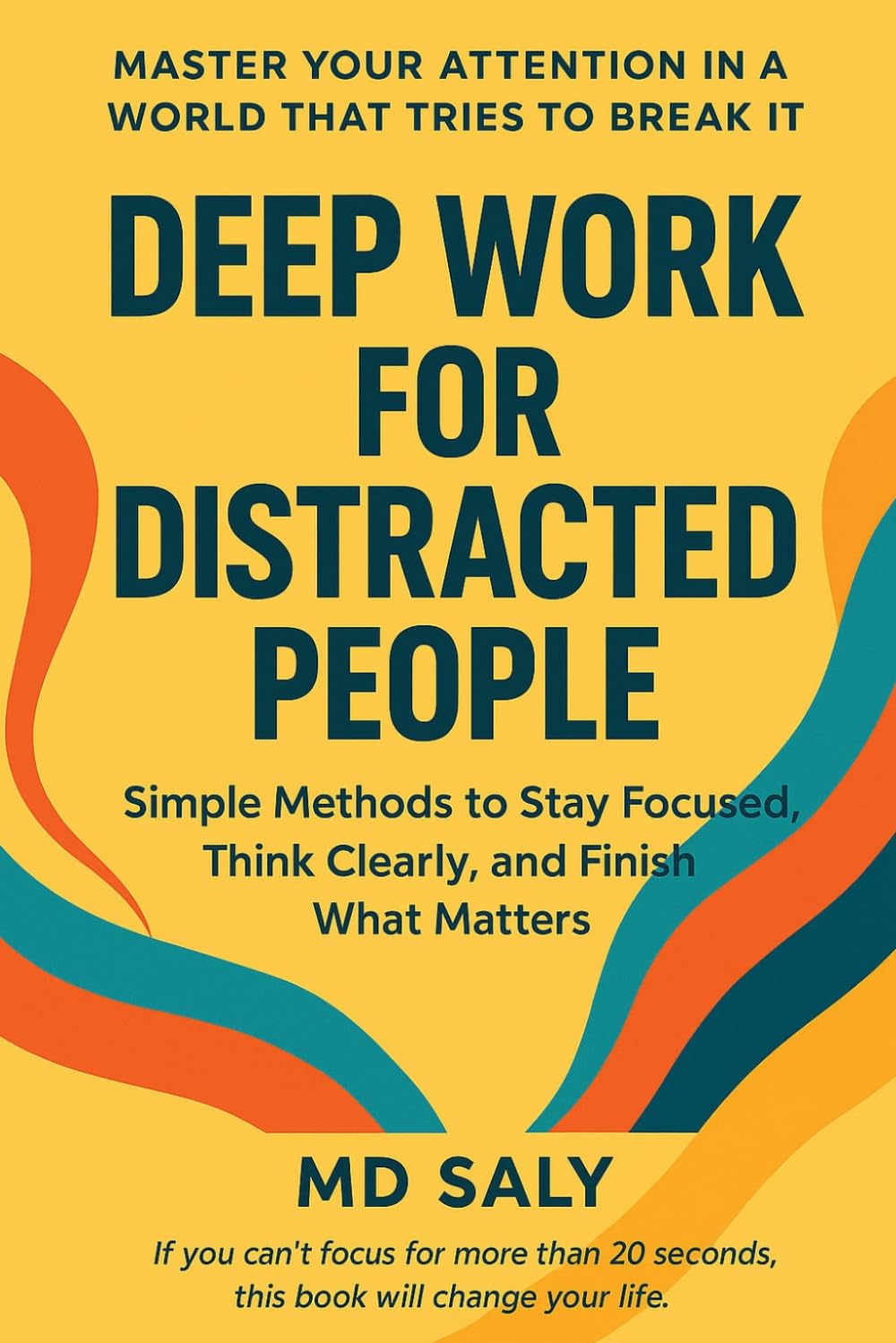
These are the ideas doing most of the work inside Deep Work for Distracted People: Simple Methods to Stay Focused, Think Clearly, and Finish What Matters. Study them as reusable mental models, then jump back into chapters or questions when you want more context.
Introduction: The Case for Deep Work
Deep Work for Distracted People makes the case that sustained, focused work is the most valuable skill in an age of constant interruptions. It argues that deliberate focus produces higher-quality output, faster learning, and deeper satisfaction than fragmented attention.
Supporting points
- Deep work is defined as cognitively demanding, distraction
- free work that pushes your abilities to their limits.
- The modern attention economy rewards shallow responsiveness, making deep work a rare and valuable differentiator.
How does introduction: the case for deep work change the way you would explain or apply Deep Work for Distracted People: Simple Methods to Stay Focused, Think Clearly, and Finish What Matters?
Introduction: The Case for Deep Work
Why Focus Fails: Understanding Distraction
This chapter examines the cognitive, environmental, and social causes of distraction that derail focus. It shows how attention is hijacked by habits, notifications, decision fatigue, and social expectations, and how these factors compound over time.
Supporting points
- Habitual checking and novelty
- seeking are powerful drivers of attention loss.
- Notifications and always
How does why focus fails: understanding distraction change the way you would explain or apply Deep Work for Distracted People: Simple Methods to Stay Focused, Think Clearly, and Finish What Matters?
Why Focus Fails: Understanding Distraction
The Science of Attention and Productivity
This chapter summarizes research on attention, memory, and cognitive load to explain why uninterrupted focus boosts learning and output. It links neuroscience and behavioral studies to practical recommendations for managing mental energy and optimizing work periods.
Supporting points
- Attention is a limited resource; sustained focus depletes but also trains attentional capacity.
- Working in deep, uninterrupted bursts leads to better encoding of information and higher
- quality results.
How does the science of attention and productivity change the way you would explain or apply Deep Work for Distracted People: Simple Methods to Stay Focused, Think Clearly, and Finish What Matters?
The Science of Attention and Productivity
Clarifying What Matters: Prioritizing Deep Work
This chapter helps readers define which tasks deserve deep work and which are shallow but necessary. It offers frameworks for aligning daily activities with long-term goals so focused effort yields the most meaningful results.
Supporting points
- Not all work benefits equally from deep focus; identify high
- impact tasks that require concentration.
- Use criteria such as rarity, leverage, and long
How does clarifying what matters: prioritizing deep work change the way you would explain or apply Deep Work for Distracted People: Simple Methods to Stay Focused, Think Clearly, and Finish What Matters?
Clarifying What Matters: Prioritizing Deep Work
Designing Your Deep Work Schedule
This chapter provides templates and principles for building a sustainable deep work schedule tailored to personal rhythms and responsibilities. It discusses block lengths, frequency, and integrating deep sessions into a realistic calendar.
Supporting points
- Choose a scheduling philosophy (e.g., monastic, bimodal, rhythmic, journalistic) that fits your role and constraints.
- Block long, uninterrupted time for deep work when your energy and attention are highest.
- Protect transitions and buffer time to reduce task
How does designing your deep work schedule change the way you would explain or apply Deep Work for Distracted People: Simple Methods to Stay Focused, Think Clearly, and Finish What Matters?
Designing Your Deep Work Schedule
Creating a Distraction-Free Environment
This chapter outlines how to shape physical and digital spaces to minimize interruptions and signal intent to yourself and others. It covers workspace layout, device policies, and social agreements that support sustained concentration.
Supporting points
- Declutter and design your physical workspace to reduce visual and tactile distractions.
- Enforce digital boundaries: turn off nonessential notifications, use app restrictions, and create focus profiles.
- Communicate availability rules to colleagues, family, or housemates to prevent social interruptions.
How does creating a distraction-free environment change the way you would explain or apply Deep Work for Distracted People: Simple Methods to Stay Focused, Think Clearly, and Finish What Matters?
Creating a Distraction-Free Environment
Rituals and Routines for Sustained Focus
This chapter recommends establishing rituals that cue focused behavior and make deep work habitual. It discusses pre-work routines, start/stop rituals, and habits that minimize decision making and increase the likelihood of sustained attention.
Supporting points
- Rituals reduce friction by automating the steps needed to begin and sustain deep work.
- Include concrete elements: start time, place, duration, rules, and a small pre
- work routine to signal the brain.
How does rituals and routines for sustained focus change the way you would explain or apply Deep Work for Distracted People: Simple Methods to Stay Focused, Think Clearly, and Finish What Matters?
Rituals and Routines for Sustained Focus
Practical Techniques: Time-Blocking, Pomodoro, and Batching
This chapter presents concrete methods—time-blocking, Pomodoro, and batching—to structure work and protect focus. It explains when each technique is most effective and how to combine them for different tasks and tolerance levels.
Supporting points
- Time
- blocking allocates specific calendar segments to tasks, ensuring intentional use of time and reducing decision overhead.
- The Pomodoro Technique (short focused intervals with regular breaks) helps maintain energy and prevents burnout for those new to long focus periods.
How does practical techniques: time-blocking, pomodoro, and batching change the way you would explain or apply Deep Work for Distracted People: Simple Methods to Stay Focused, Think Clearly, and Finish What Matters?
Practical Techniques: Time-Blocking, Pomodoro, and Batching