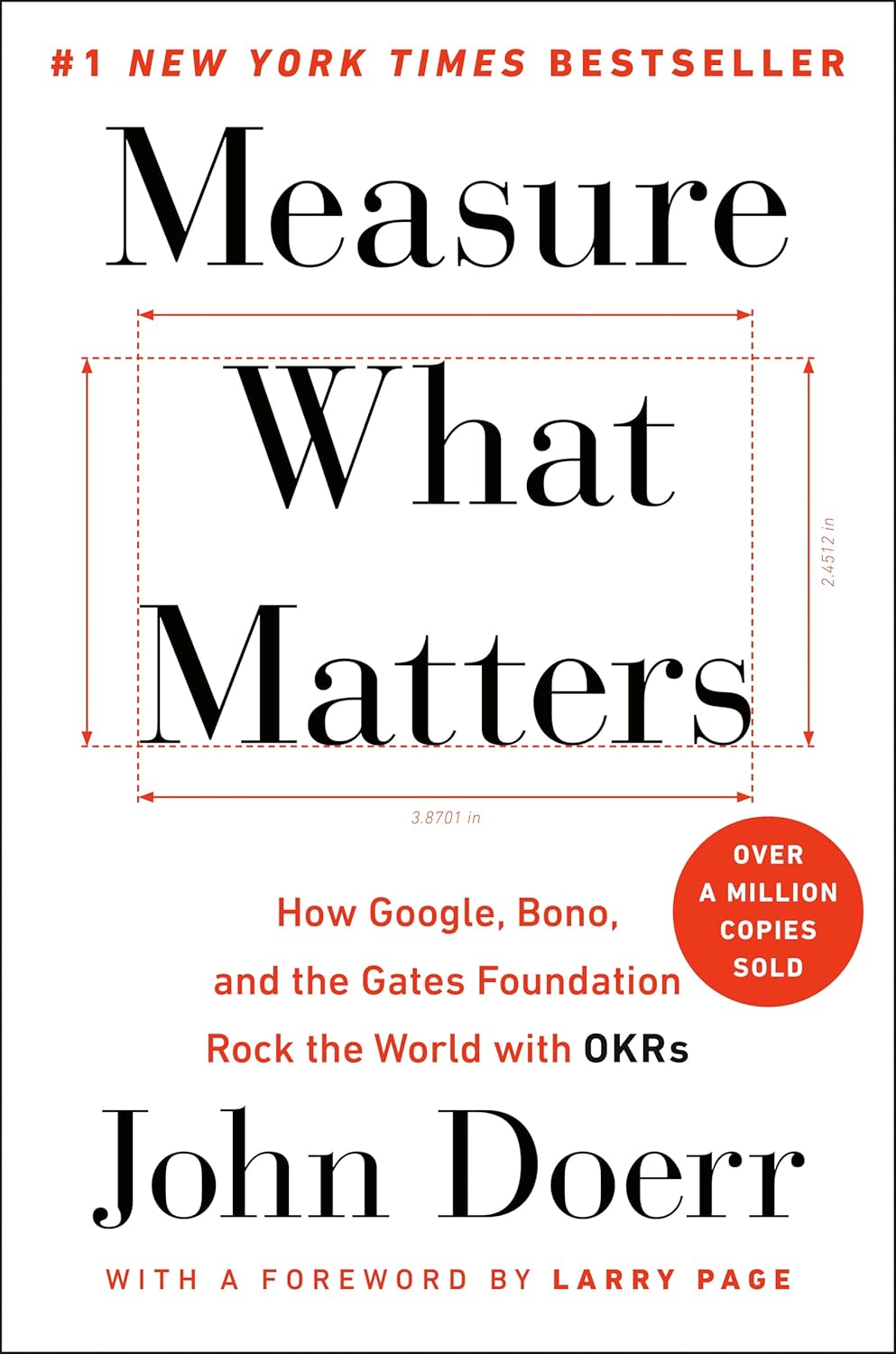
Book overview
Measure What Matters introduces OKRs (Objectives and Key Results) as a simple, powerful goal-setting system that drives focus, alignment, and measurable progress. The chapter explains why organizations from startups to large companies use OKRs to turn strategy into action and to encourage ambitious, transparent performance.
This page is built to be a compact learning hub for Measure What Matters. You can move from the high-level summary into takeaways, quiz prompts, chapter review, and related books without breaking the reading flow.
Best takeaways to keep
OKRs combine qualitative objectives with quantitative key results to make goals clear and measurable.
Transparency and public sharing of OKRs create alignment and accountability across organizations.
OKRs encourage aspirational thinking while still tracking measurable outcomes.
Adopt OKRs to convert strategic priorities into a few measurable objectives that everyone can see and align to.
The chapter frames OKRs as a practical tool for leaders to execute strategy and foster a performance culture, relevant to teams seeking better outcomes and clearer priorities. OKRs are positioned as adaptable across organizational sizes and industries.
Measure What Matters introduces OKRs (Objectives and Key Results) as a simple, powerful goal-setting system that drives focus, alignment, and measurable progress. The chapter explains why organizations from startups to large companies use OKRs to turn strategy into action and to encourage ambitious, transparent performance.
Retrieval practice
What are the two parts of the OKR framework?
Which management innovator at Intel is credited with adapting Management by Objectives into the system that became OKRs?
Which best describes a well-crafted Key Result?
Which routine is recommended to make OKRs work for accountability and progress?
Quiz preview
What are the two parts of the OKR framework?
- Objective (a short, inspiring qualitative goal) and Key Results (measurable outcomes)
- Goals and KPIs
- Tasks and Milestones
Which management innovator at Intel is credited with adapting Management by Objectives into the system that became OKRs?
- Peter Drucker
- Andy Grove
- John Doerr
Which best describes a well-crafted Key Result?
- A long checklist of tasks to complete
- A vague aspirational statement tied to morale
- Quantitative, outcome-focused, limited in number (2–5) and signaling real progress
Which routine is recommended to make OKRs work for accountability and progress?
- Quarterly reviews only
- Regular cadence with weekly check-ins and quarterly reviews
- Annual performance reviews
Chapter map
Introduction: Why OKRs Matter
Measure What Matters introduces OKRs (Objectives and Key Results) as a simple, powerful goal-setting system that drives focus, alignment, and measurable progress. The chapter explains why organizations from startups to large companies use OKRs to turn strategy into action and to encourage ambitious, transparent performance.
How OKRs Work: Objectives and Key Results
This chapter defines the two parts of OKRs: the Objective (a short, inspiring qualitative goal) and the Key Results (a set of 2–5 measurable outcomes that indicate progress). It explains how clear metrics and regular scoring turn ambition into operational discipline.
The Origins: Andy Grove, Intel, and Management by Objectives
This chapter traces OKRs back to Andy Grove’s adaptation of Management by Objectives (MBOs) at Intel, showing how disciplined goal-setting transformed execution. It highlights Grove’s focus on clarity, cadence, and rigorous review as the foundations for modern OKRs.
Setting Objectives: Choosing What Matters
This chapter guides readers on selecting the right Objectives: bold, limited in number, and aligned with mission and customer impact. It emphasizes clarity, inspirational language, and focus to ensure teams know what to prioritize each cycle.
Defining Key Results: Measuring Progress
This chapter explains how to craft Key Results that accurately measure outcomes and signal real progress toward an Objective. It stresses that KRs must be quantitative, outcome-focused, and limited in number so teams can objectively assess success.
Next best step
Move next into the questions page if you want better retention, or into the takeaways page if you want the shortest useful review loop for this book.