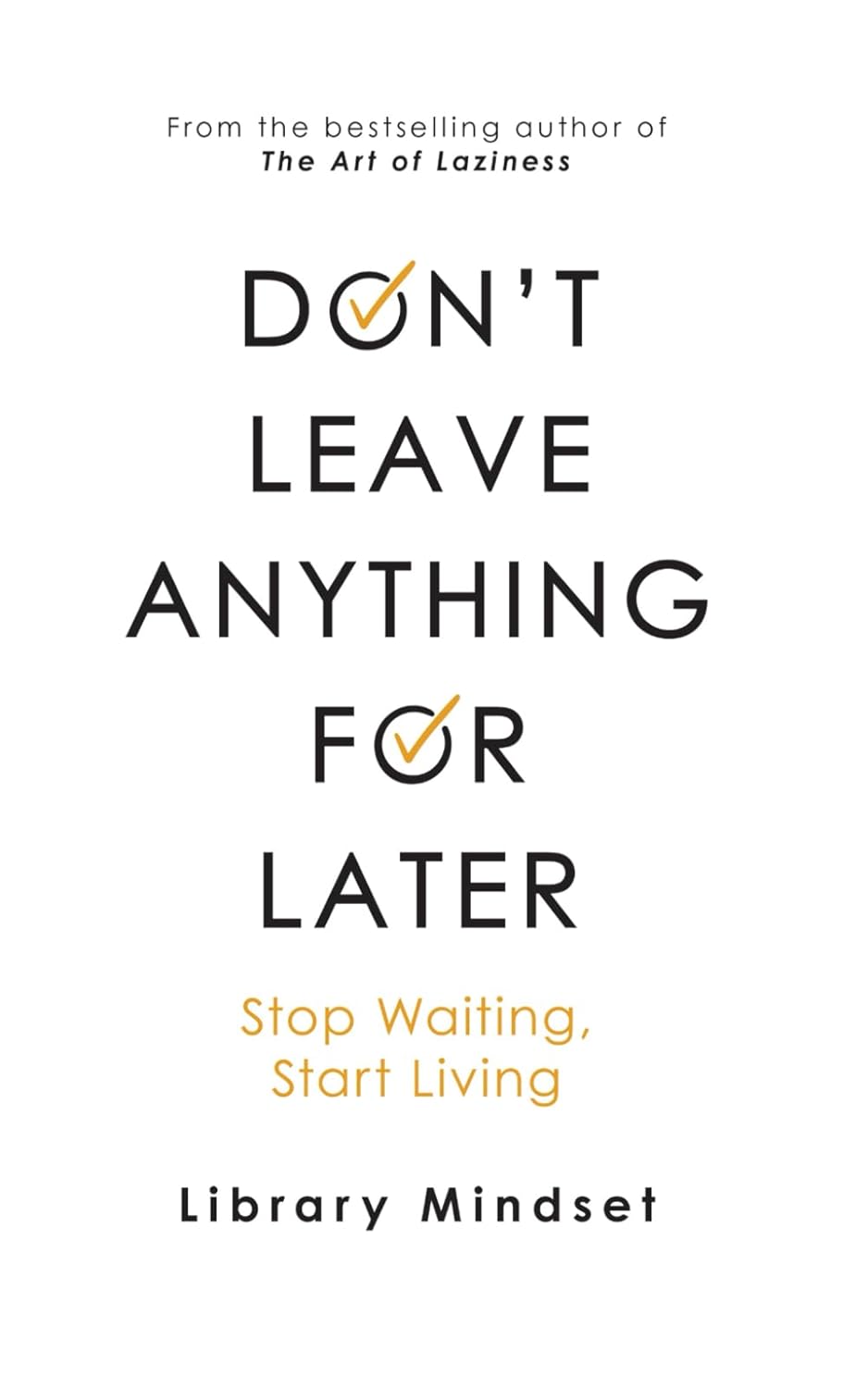
Book overview
This chapter outlines how delaying tasks creates hidden costs in time, energy, and opportunity, arguing that small postponements compound into significant losses. It introduces the core claim that treating work like borrowing from a library of time leads to smarter, immediate action.
This page is built to be a compact learning hub for Don't Leave Anything For Later. You can move from the high-level summary into takeaways, quiz prompts, chapter review, and related books without breaking the reading flow.
Best takeaways to keep
Waiting multiplies friction and reduces motivation over time.
Short delays often become habitual procrastination that undermines goals.
Opportunity cost: postponed actions foreclose future options.
Treat small tasks as high-priority loans to your future self and act on them immediately.
The chapter frames procrastination as an economic and psychological inefficiency, relevant to anyone wanting to reclaim time and momentum. It sets the tone for practical fixes that follow.
This chapter outlines how delaying tasks creates hidden costs in time, energy, and opportunity, arguing that small postponements compound into significant losses. It introduces the core claim that treating work like borrowing from a library of time leads to smarter, immediate action.
Retrieval practice
According to "Don't Leave Anything For Later", what is the primary consequence of delaying small tasks?
What does the "Library Mindset" refer to in the book?
Which combination is cited as common causes of procrastination in the book?
What is the main benefit of chunking tasks as described in the book?
Quiz preview
According to "Don't Leave Anything For Later", what is the primary consequence of delaying small tasks?
- They usually resolve themselves without any productivity impact
- They primarily damage reputation but not personal time or energy
- They create hidden costs in time, energy, and opportunity that compound into significant losses
What does the "Library Mindset" refer to in the book?
- Treating available time and resources like a public library—borrow responsibly, return promptly, avoid hoarding
- Hoarding resources to ensure you never run out
- Outsourcing all tasks to others to maximize use of time
Which combination is cited as common causes of procrastination in the book?
- Fear of failure, decision paralysis, and poor reward structures
- Only a lack of talent or intelligence
- Strict time availability and overplanning only
What is the main benefit of chunking tasks as described in the book?
- It eliminates the need for planning altogether
- Breaking large tasks into bite-sized steps reduces friction, builds momentum, and compounds into significant progress
- It increases the total number of tasks so work feels more important but slows progress
Chapter map
Introduction: The Cost of Waiting
This chapter outlines how delaying tasks creates hidden costs in time, energy, and opportunity, arguing that small postponements compound into significant losses. It introduces the core claim that treating work like borrowing from a library of time leads to smarter, immediate action.
The Library Mindset Explained
This chapter defines the "Library Mindset" as the practice of treating available time and resources like a public library—borrow responsibly, return promptly, and avoid hoarding. It explains how this mental model reduces accumulation of unfinished tasks and fosters disciplined stewardship of attention.
Why We Procrastinate
This chapter examines the psychological, emotional, and situational causes of procrastination, including fear of failure, decision paralysis, and poor reward structures. It emphasizes that procrastination is often a coping mechanism rather than mere laziness.
Prioritize: What Truly Matters
This chapter provides methods for distinguishing high-impact tasks from low value activities, urging readers to focus on work that aligns with long-term goals. It introduces simple prioritization frameworks to reduce decision fatigue and direct energy where it matters most.
Chunking: Small Steps, Big Results
The chapter explains chunking: breaking large tasks into bite-sized, non intimidating steps to reduce friction and build momentum. It shows how consistent small actions compound into significant progress and makes success feel achievable.
Next best step
Move next into the questions page if you want better retention, or into the takeaways page if you want the shortest useful review loop for this book.