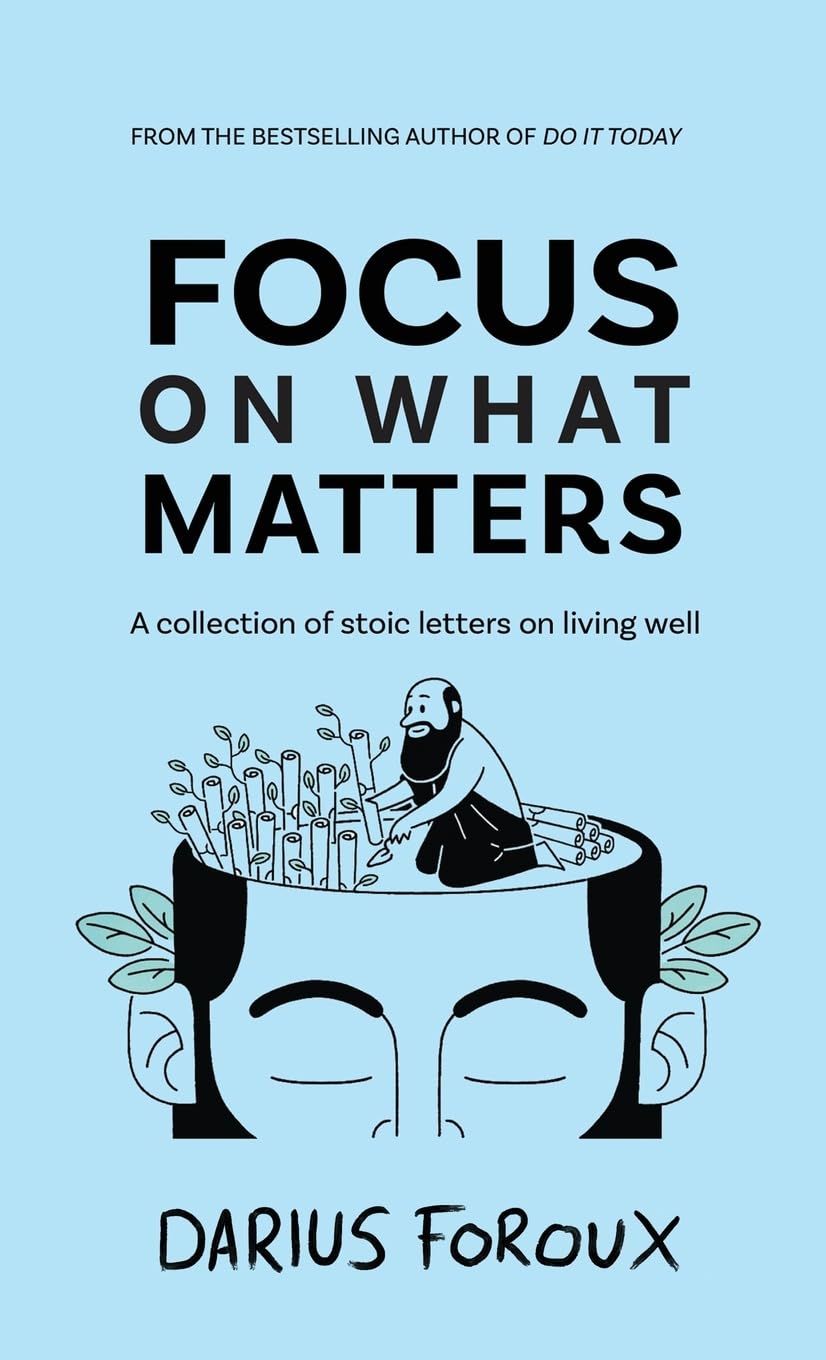
Book overview
Focus is presented as the foundation for meaningful achievement and well-being, explaining how attention shapes outcomes in work and life. The introduction outlines the costs of scattered attention and previews strategies to concentrate on what truly matters.
This page is built to be a compact learning hub for Focus on What Matters. You can move from the high-level summary into takeaways, quiz prompts, chapter review, and related books without breaking the reading flow.
Best takeaways to keep
Attention is a limited resource that determines the quality of results.
Constant context switching reduces effectiveness and increases stress.
Clarity about priorities is necessary to direct focus.
Small changes in attention management compound into large benefits.
Commit to identifying one high-impact area to concentrate on this week.
The chapter frames focus as both a personal skill and an environmental design problem relevant to productivity, creativity, and mental health. It establishes why readers should prioritize building focus in modern, distraction-rich contexts.
Retrieval practice
According to the book, what is the first step to ensure your efforts produce meaningful results?
Which practice is recommended to free up time and mental bandwidth after choosing priorities?
Which combination of techniques does the book recommend to strengthen concentration?
What design choices support a focus-friendly environment and digital minimalism?
Quiz preview
According to the book, what is the first step to ensure your efforts produce meaningful results?
- Clarify your values, goals, and priorities so attention is intentionally allocated
- Increase productivity by multitasking across more projects
- Say yes to as many opportunities as possible to avoid missing out
Which practice is recommended to free up time and mental bandwidth after choosing priorities?
- Ruthlessly prune tasks, commitments, and possessions that don't add value
- Add more low-effort tasks to feel productive
- Delegate every important decision to others
Which combination of techniques does the book recommend to strengthen concentration?
- Use external timers and never meditate
- Practice mindfulness, single‑tasking, and attention training
- Rely primarily on willpower and caffeine
What design choices support a focus-friendly environment and digital minimalism?
- Filling your workspace with reminders of unfinished tasks
- Minimizing interruptions, managing notifications, and simplifying digital tools
- Keeping all devices visible and notifications enabled for quick responses
Chapter map
Introduction: Why Focus Matters
Focus is presented as the foundation for meaningful achievement and well-being, explaining how attention shapes outcomes in work and life. The introduction outlines the costs of scattered attention and previews strategies to concentrate on what truly matters.
Decide What Truly Matters
This chapter guides readers through clarifying values, goals, and priorities so effort is aligned with meaningful outcomes. It emphasizes making explicit choices about where to invest attention rather than reacting to every demand.
Eliminate the Unnecessary
After choosing priorities, the chapter focuses on removing tasks, commitments, and possessions that drain attention without adding value. It promotes ruthless pruning of obligations to free up time and mental bandwidth.
Master Your Attention
This chapter explains cognitive mechanisms of attention and offers techniques to strengthen concentration, such as mindfulness, single-tasking, and attention training. It provides strategies to recognize and manage internal and external attention drains.
Build Focused Habits
This chapter outlines how to create routines that make focused work automatic, using habit design principles like cues, routines, and rewards. It emphasizes consistency, small incremental changes, and habit stacking to embed focus into daily life.
Next best step
Move next into the questions page if you want better retention, or into the takeaways page if you want the shortest useful review loop for this book.