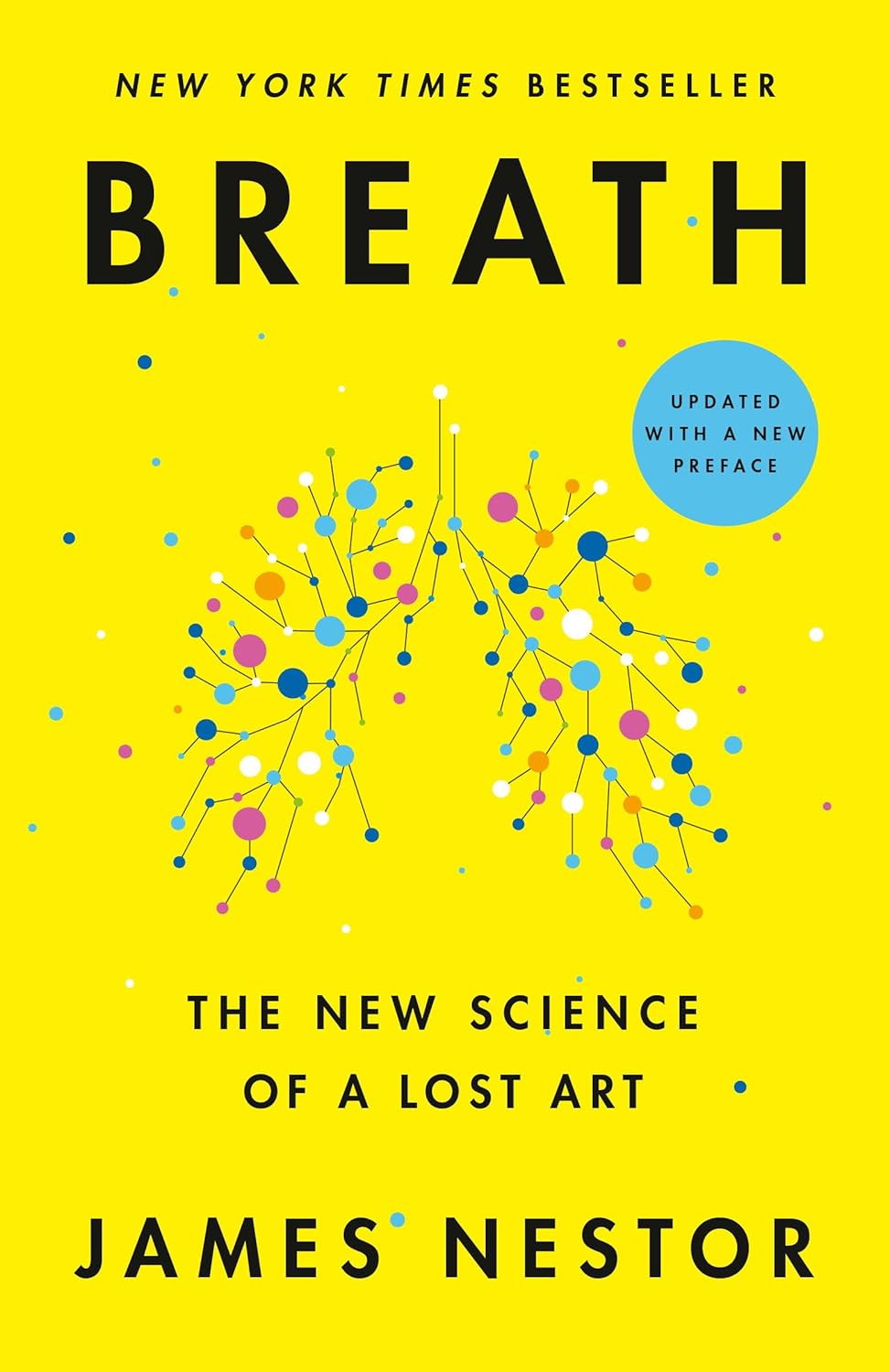
Book overview
James Nestor introduces the idea that modern humans have largely forgotten how to breathe correctly, linking poor breathing habits to a wide range of chronic health problems. He describes his personal experiments and journeys to meet researchers and practitioners who reclaim and study traditional breathing techniques.
This page is built to be a compact learning hub for Breath: The New Science of a Lost Art. You can move from the high-level summary into takeaways, quiz prompts, chapter review, and related books without breaking the reading flow.
Best takeaways to keep
Modern habits (mouth
breathing, shallow rapid breaths) contrast with how humans evolved to breathe.
Poor breathing contributes to problems like sleep disturbances, reduced athletic performance, and chronic respiratory issues.
The book sets up an exploration combining history, science, and hands
on testing of varied breathing methods.
Begin paying conscious attention to your breath and whether you breathe through your nose or mouth.
Retrieval practice
Which physiological benefit of nasal breathing is emphasized in the book as aiding oxygen uptake?
According to the book, what important regulatory role does carbon dioxide (CO2) play in respiration?
What downstream consequences of chronic mouth-breathing does the book highlight?
How do the breathing methods covered differ in approach?
Quiz preview
Which physiological benefit of nasal breathing is emphasized in the book as aiding oxygen uptake?
- Production of nitric oxide that improves oxygen absorption
- Bypassing nasal filtration to increase airflow
- Elimination of carbon dioxide from the blood
According to the book, what important regulatory role does carbon dioxide (CO2) play in respiration?
- It is only a waste product and should be minimized
- It helps trigger the release of oxygen from hemoglobin to tissues (Bohr effect)
- It directly causes inhalation by contracting the diaphragm
What downstream consequences of chronic mouth-breathing does the book highlight?
- Altered facial development, dental problems, increased snoring and sleep apnea
- Improved oxygen delivery and stronger jaw muscles
- Increased production of nasal nitric oxide
How do the breathing methods covered differ in approach?
- Pranayama and Buteyko emphasize nasal, slow, controlled breathing; Wim Hof combines cyclical deep breathing with cold exposure to alter autonomic responses
- All three methods are identical in technique and purpose
- Buteyko primarily promotes rapid hyperventilation to increase oxygen stores
Chapter map
Introduction: The Lost Art of Breathing
James Nestor introduces the idea that modern humans have largely forgotten how to breathe correctly, linking poor breathing habits to a wide range of chronic health problems. He describes his personal experiments and journeys to meet researchers and practitioners who reclaim and study traditional breathing techniques.
The Nose: How We Were Meant to Breathe
This chapter explains the physiological advantages of nasal breathing: filtration, humidification, temperature regulation and production of nitric oxide which aids oxygen uptake. Nestor shows how nasal breathing naturally slows and regulates respiration, improving oxygenation and protecting airways.
The Mouth: The Modern Epidemic of Mouth-Breathing
Nestor documents how mouth-breathing has become common and explains the downstream consequences: altered facial development in children, dental problems, increased snoring and sleep apnea, and poorer overall respiratory efficiency. He explores environmental and cultural factors that may have driven the shift toward habitual mouth breathing.
The Secret Power of Carbon Dioxide
Nestor reframes carbon dioxide from a mere waste product to a crucial regulator of respiration and oxygen delivery, explaining how CO2 levels influence the body’s release of oxygen to tissues (Bohr effect). He discusses how over-breathing lowers CO2 and can reduce oxygen availability despite high blood oxygen saturation.
The Breathless: Asthma, Allergy and the Respiratory Crisis
This chapter examines the global rise in asthma and allergies, arguing that changes in breathing patterns, environmental factors, and medical approaches have contributed to a respiratory crisis. Nestor discusses evidence that breathing retraining can reduce symptoms and medication use in many patients.
Next best step
Move next into the questions page if you want better retention, or into the takeaways page if you want the shortest useful review loop for this book.