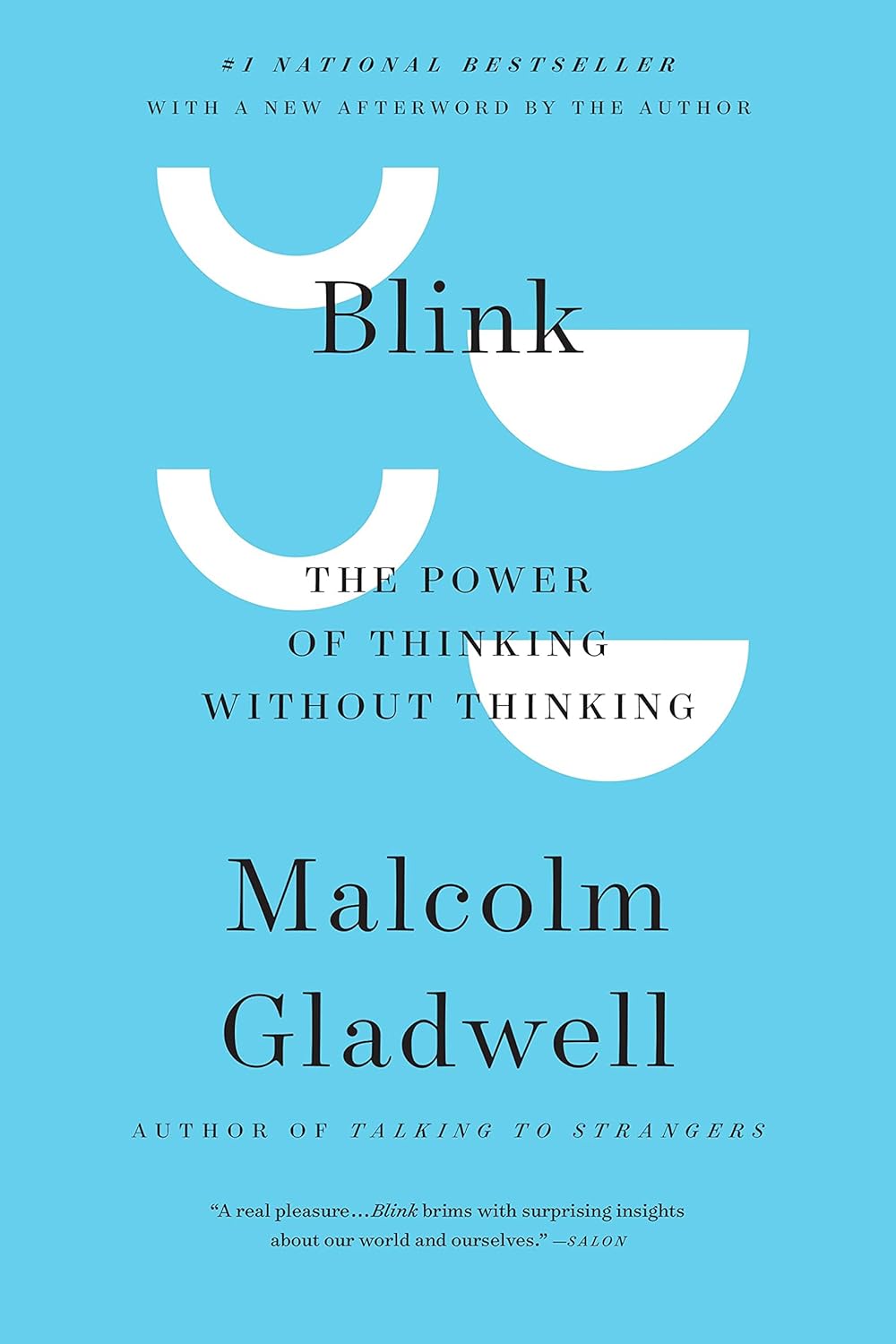
ReadSprintBooksBlink: The Power of Thinking Without ThinkingBlink: The Power of Thinking Without Thinking Key Concepts and Core Ideas
Blink: The Power of Thinking Without Thinking
Blink: The Power of Thinking Without Thinking Key Concepts and Core Ideas

Blink: The Power of Thinking Without Thinking Key Concepts and Core Ideas

by Malcolm Gladwell

Understand the core concepts in Blink: The Power of Thinking Without Thinking by Malcolm Gladwell, with explanations, recall prompts, related books, and connected learning paths.

This page isolates the core concepts carrying Blink: The Power of Thinking Without Thinking. Use it when you want to understand the book’s mental models, not just skim the chapter sequence.

Built for retention

ReadSprint combines concise summaries, quizzes, active recall, and related reading paths so the useful part of the book is easier to keep.

Open full summary

6

Chapter summaries

5

Quiz questions

12

Key takeaways

6

Related books

Concept map

These are the ideas doing most of the work inside Blink: The Power of Thinking Without Thinking. Study them as reusable mental models, then jump back into chapters or questions when you want more context.

Concept 1

The Theory of Thin Slices

Thin-slicing is the ability of our unconscious to find patterns and make rapid judgments from very limited information. Gladwell argues these snap judgments can be surprisingly accurate and useful, often rivaling more deliberate analysis when conditions are right.

Why it matters: The chapter establishes the central idea that rapid cognition matters in everyday decisions and professional contexts, framing later examples of both its power and pitfalls. This is relevant for anyone balancing intuiti…

Supporting points

  • Thin
  • slicing refers to making quick inferences from narrow slices of experience.
  • The unconscious processes relevant information fast and filters out noise.
Active recall prompt

How does the theory of thin slices change the way you would explain or apply Blink: The Power of Thinking Without Thinking?

Related chapter

The Theory of Thin Slices

Concept 2

The Locked Door: The Secret Life of Snap Decisions

Many of the most important elements of snap judgments operate behind an internal "locked door"—they are unconscious and inaccessible to introspection. Gladwell shows that even when people arrive at correct conclusions, they often cannot explain how, and attempts to verbalize can harm decision quality.

Why it matters: This chapter underscores the gap between conscious reasoning and subconscious cognition, reminding readers that some knowledge is tacit and should be handled differently. It matters for interviewing, clinical judgment,…

Supporting points

  • People often cannot accurately report the reasons for their snap judgments.
  • Verbalizing the process of intuition can disrupt performance and lead to worse outcomes.
  • Experiments show implicit processes drive choices even when conscious explanations are offered.
Active recall prompt

How does the locked door: the secret life of snap decisions change the way you would explain or apply Blink: The Power of Thinking Without Thinking?

Related chapter

The Locked Door: The Secret Life of Snap Decisions

Concept 3

The Warren Harding Error

Gladwell recounts Warren Harding's political rise as an example of how appearances and superficial cues can mislead decision-making. The chapter shows how thin slicing can produce systematic errors—people make confident but wrong judgments based on looks and other surface features.

Why it matters: The chapter highlights the danger of overreliance on snap judgments in social and institutional choices, connecting thin-slicing to prejudice and error. Its relevance lies in improving selection processes and countering…

Supporting points

  • First impressions and physical appearance can heavily bias judgment.
  • The Warren Harding example illustrates attractive but unsuitable leaders being chosen for the wrong reasons.
  • Implicit stereotypes and cultural cues can create widespread misjudgments.
Active recall prompt

How does the warren harding error change the way you would explain or apply Blink: The Power of Thinking Without Thinking?

Related chapter

The Warren Harding Error

Concept 4

Paul Van Riper and the Art of Rapid Cognition

This chapter tells how Marine Corps General Paul Van Riper used rapid, intuitive decision-making to outmaneuver a high tech wargame opponent in the Millennium Challenge. It demonstrates that under certain conditions, quick, experience-based moves can outperform slower, more data heavy approaches.

Why it matters: The chapter shows the practical power of thin-slicing in real world high-stakes situations while warning against mistaking luck for a general rule. It is relevant for leadership, military strategy, and any fast paced de…

Supporting points

  • Van Riper relied on intuition, decentralized command, and simple effective tactics rather than complex modeling.
  • Rapid cognition can exploit blind spots in over
  • engineered systems.
Active recall prompt

How does paul van riper and the art of rapid cognition change the way you would explain or apply Blink: The Power of Thinking Without Thinking?

Related chapter

Paul Van Riper and the Art of Rapid Cognition

Concept 5

Kenna's Dilemma

Kenna's Dilemma explores how taste, context, and social dynamics can make it hard to predict cultural success despite favorable expert reactions. Gladwell uses the case of musician Kenna to show that market testing and focus groups can fail because they alter the very preferences they aim to measure.

Why it matters: This chapter highlights limits of analytical market research and the role of unconscious social influences in collective choices, relevant to marketing, product launches, and cultural forecasting. It cautions against tr…

Supporting points

  • Experts' positive assessments do not guarantee broad market success.
  • Focus groups and explicit testing can change how people respond, suppressing authentic reactions.
  • Social context, familiarity, and conformity shape whether a cultural product catches on.
Active recall prompt

How does kenna's dilemma change the way you would explain or apply Blink: The Power of Thinking Without Thinking?

Related chapter

Kenna's Dilemma

Concept 6

Seven Seconds in the Bronx

The chapter examines the 1999 police shooting of Amadou Diallo as a tragic example of split-second decisions shaped by stereotypes and fear. Gladwell analyzes how high pressure situations and training influence rapid cognition, sometimes leading to catastrophic mistakes.

Why it matters: The chapter connects rapid cognition to ethics and public safety, showing how unconscious processes can produce real-world harm and why systemic safeguards matter. It is relevant to law enforcement, policy design, and c…

Supporting points

  • Under stress, people rely more on thin
  • slicing and are vulnerable to unconscious bias.
  • Training, exposure, and scenario rehearsal can change how quickly and accurately people react.
Active recall prompt

How does seven seconds in the bronx change the way you would explain or apply Blink: The Power of Thinking Without Thinking?

Related chapter

Seven Seconds in the Bronx

Quiz checkpoints

Question 1

What is 'thin-slicing' as described in Blink?

Question 2

What key point does 'The Locked Door' chapter make about snap judgments?

Question 3

What lesson does 'The Warren Harding Error' illustrate?

Practice retrieval

Key concepts

The Theory of Thin Slices

The chapter establishes the central idea that rapid cognition matters in everyday decisions and professional contexts, framing later examples of both its power and pitfalls. This is relevant for anyone balancing intuiti…

The Locked Door: The Secret Life of Snap Decisions

This chapter underscores the gap between conscious reasoning and subconscious cognition, reminding readers that some knowledge is tacit and should be handled differently. It matters for interviewing, clinical judgment,…

The Warren Harding Error

The chapter highlights the danger of overreliance on snap judgments in social and institutional choices, connecting thin-slicing to prejudice and error. Its relevance lies in improving selection processes and countering…

Open concept map

Similar themes and topic pages

Use topic hubs and category pages to keep reading depth aligned with what this book is actually about.

Turn Reading Into Recall

Keep Blink: The Power of Thinking Without Thinking review-ready instead of letting it fade.

This page is strongest when it becomes part of a review habit: save the summary, revisit the key takeaways, and use recall prompts before the next meeting, study block, or decision.

Save one strong takeaway instead of over-highlighting.
Use the questions page to test what actually stuck.
Return when the book becomes relevant again, not just when motivation is high.
See pricing
Get Book Review Notes

Get practical notes on remembering and reusing ideas from nonfiction books without building an overly heavy note system.

Retention workflow

Turn this page into a repeatable study loop

Move from summary to takeaways, test yourself with questions, revisit the concept map, and then continue into related books. That keeps Blink: The Power of Thinking Without Thinkingconnected instead of turning into a one-time skim.

Frequently asked questions

What are the key concepts in Blink: The Power of Thinking Without Thinking?

The key concepts here are distilled from the chapter summaries, major themes, and action-oriented takeaways so you can quickly see the ideas carrying the whole book.

How should I study these Blink: The Power of Thinking Without Thinking concepts?

Start by explaining each concept from memory, connect it to a chapter or example, and then test yourself with one active recall prompt before moving on.

How are the concepts connected to other books?

Use the related books and topic links on this page to find books that reinforce, challenge, or extend the same ideas from a different angle.