Book overview
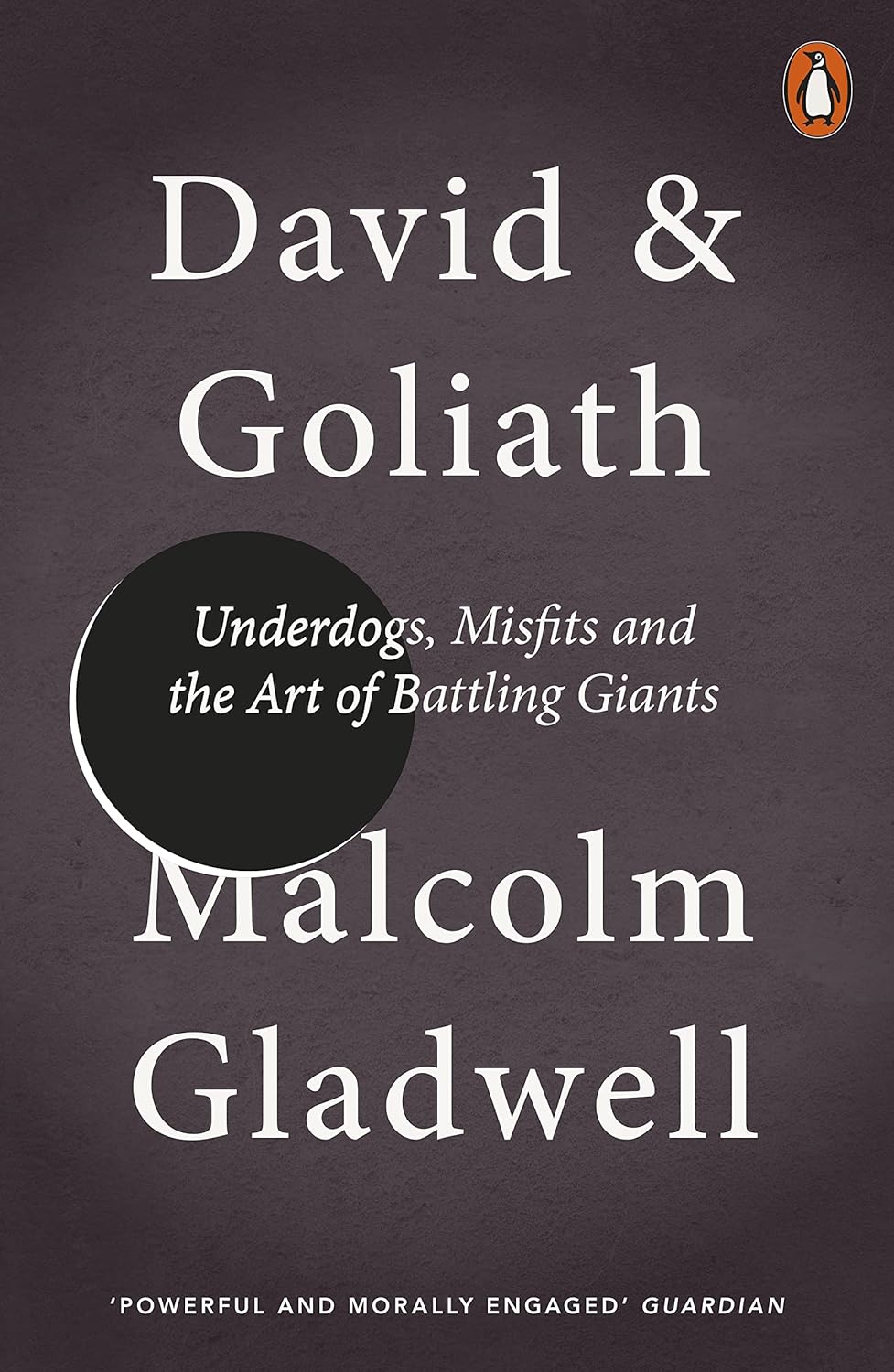
Gladwell opens with the biblical story of David and Goliath to challenge the conventional understanding of advantage and disadvantage, arguing that apparent strength can contain hidden weaknesses and that apparent weakness can conceal real strengths. He reframes the encounter as an illustration of how strategy, perception, and context matter more than raw size or power.
This page is built to be a compact learning hub for David & Goliath: Underdogs, Misfits and the Art of Battling Giants. You can move from the high-level summary into takeaways, quiz prompts, chapter review, and related books without breaking the reading flow.
Best takeaways to keep
The visible advantage (Goliath's size and armor) obscures vulnerabilities (limited mobility, predictable tactics).
David's apparent weakness (youth, light armament) became an advantage through speed, skill, and strategy.
Success often depends on choosing the form of engagement that neutralizes an opponent's strengths.
Perception of power can shape behavior and outcomes more than material power itself.
When facing a stronger opponent, identify and exploit their hidden vulnerabilities rather than confronting their strength directly.
The chapter reframes how we evaluate strength and weakness, showing this concept applies to business, education, and personal challenges. It invites readers to look past appearances and consider deeper dynamics in conflicts.
Retrieval practice
What central claim does Gladwell make using the biblical story of David and Goliath?
The "theory of desirable difficulty" in the book argues which of the following?
Which paradox about advantages and disadvantages does Gladwell highlight?
According to Gladwell, what quality in authority figures produces the most cooperation?
Quiz preview
What central claim does Gladwell make using the biblical story of David and Goliath?
- Strength always guarantees victory.
- Apparent strength can hide weaknesses and apparent weakness can be an advantage.
- David won solely because of divine intervention.
The "theory of desirable difficulty" in the book argues which of the following?
- Obstacles always hinder success.
- Certain hardships can produce unexpected advantages and skills that help later.
- Removing all difficulties is the best way to ensure success.
Which paradox about advantages and disadvantages does Gladwell highlight?
- Wealth always prevents mistakes.
- Being larger or more powerful always means greater resilience.
- Privilege or apparent advantage can create fragility, complacency, or poor decision-making.
According to Gladwell, what quality in authority figures produces the most cooperation?
- Greater use of coercive force.
- Perceived legitimacy and fair treatment.
- Strict surveillance and punishment.
Chapter map
Goliath
Gladwell opens with the biblical story of David and Goliath to challenge the conventional understanding of advantage and disadvantage, arguing that apparent strength can contain hidden weaknesses and that apparent weakness can conceal real strengths. He reframes the encounter as an illustration of how strategy, perception, and context matter more than raw size or power.
The Theory of Desirable Difficulty
Gladwell introduces the idea that certain obstacles and hardships can produce unexpected advantages, a concept he calls the "theory of desirable difficulty." He uses examples (including dyslexia and other adversity-driven stories) to show how difficulties can force people to develop compensatory skills, resilience, and alternative strategies.
The Advantages of Disadvantages (and the Disadvantages of Advantages)
Gladwell examines paradoxes where disadvantages become advantages and advantages create new vulnerabilities, showing that wealth, privilege, or size can produce complacency, poor decision-making, or fragility. He argues that giving people a big advantage can sometimes remove incentives or capabilities that would have made them stronger.
Legitimacy and Authority
Gladwell shifts to the social dynamics of power, arguing that legitimacy — the perception that authority is fair and just — is often more effective than raw coercive force in producing cooperation. He uses policing and governance examples to show that when people view institutions as legitimate, compliance and public safety improve.
The Limits of Power
Gladwell explores how excessive or misapplied power can backfire, creating resistance and diminishing effectiveness. He illustrates that the limits of power become apparent when authorities rely on intimidation or blanket solutions that ignore local context and legitimacy.
Next best step
Move next into the questions page if you want better retention, or into the takeaways page if you want the shortest useful review loop for this book.