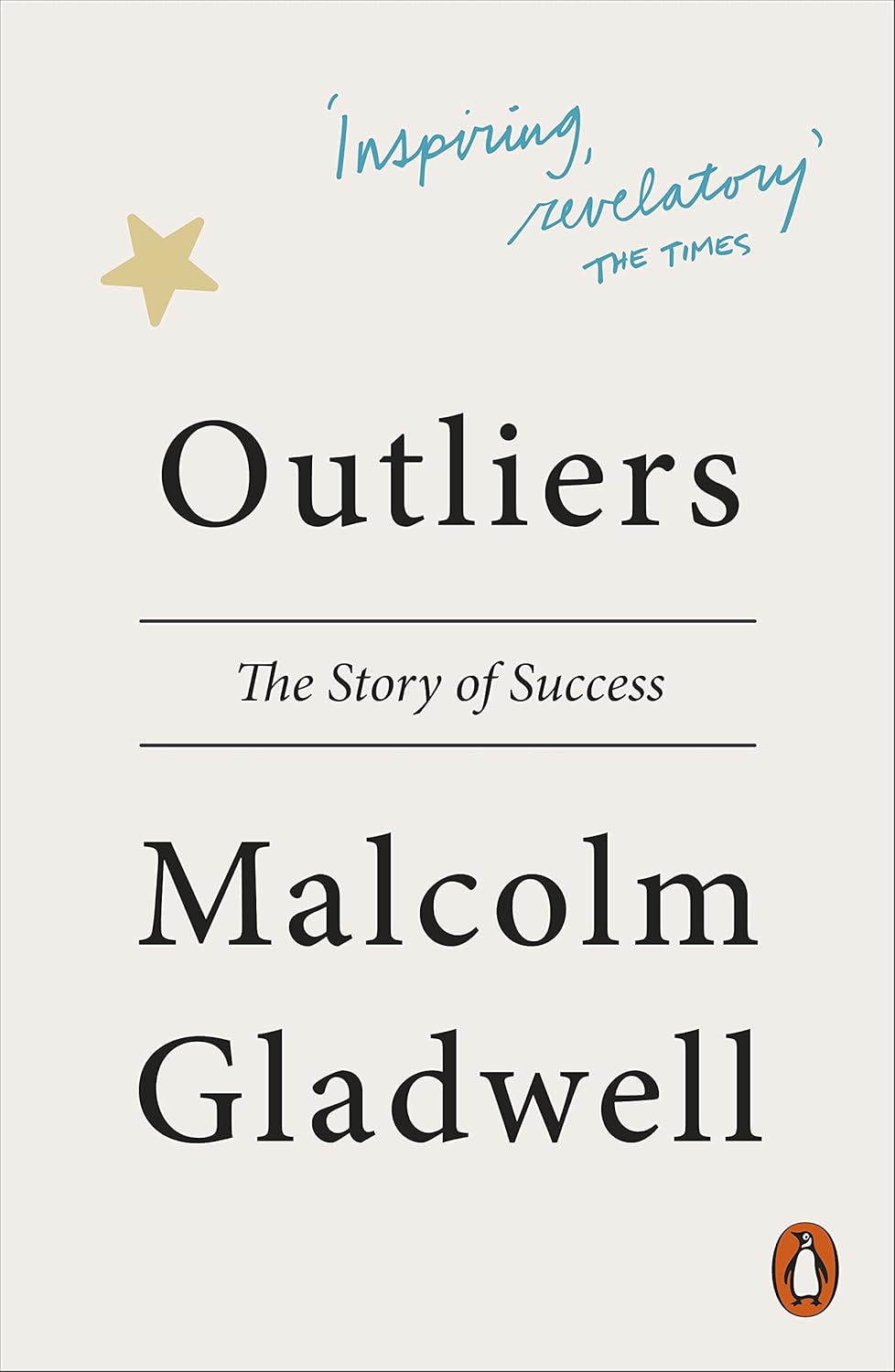
Book overview
Two to three sentences: Gladwell explains how small initial advantages compound over time into large differences in achievement, using the "Matthew Effect" to show that success often depends on accumulated opportunities rather than only personal merit. He illustrates this with examples like youth hockey cut-off dates and how early advantages translate into greater coaching, practice, and visibility.
This page is built to be a compact learning hub for Outliers: The Story of Success. You can move from the high-level summary into takeaways, quiz prompts, chapter review, and related books without breaking the reading flow.
Best takeaways to keep
Small advantages (age, initial selection) compound over time into much larger ones.
Selection and opportunity structures (e.g., sports cut
off dates) systematically favor certain groups.
Social and institutional practices amplify early differences, creating cumulative advantage.
Meritocratic narratives obscure the role of luck and timing in success.
Policy and selection systems can unintentionally reproduce inequality.
Retrieval practice
According to Gladwell's "Matthew Effect" chapter, what most explains why some people accumulate large advantages over time?
What is the central claim of Gladwell’s "10,000-Hour Rule"?
In "The Trouble with Geniuses" Gladwell argues that high IQ alone does not ensure success. Which additional factor does he emphasize as crucial?
What key explanation does Gladwell offer in "The Ethnic Theory of Plane Crashes" for some accidents?
Quiz preview
According to Gladwell's "Matthew Effect" chapter, what most explains why some people accumulate large advantages over time?
- Small early advantages compound through accumulated opportunities and reinforcement
- Innate genius present from birth determines long-term success
- Random luck at a single point in time is the main factor
What is the central claim of Gladwell’s "10,000-Hour Rule"?
- Natural talent is the primary determinant of world-class success
- Approximately 10,000 hours of focused, deliberate practice is critical to achieving high-level skill
- Short bursts of casual practice are sufficient to become an expert
In "The Trouble with Geniuses" Gladwell argues that high IQ alone does not ensure success. Which additional factor does he emphasize as crucial?
- Access to cultural capital and the ability to navigate institutions (class, upbringing, social skills)
- Having the highest possible IQ score without any social support
- Attending elite schools is the only determinant
What key explanation does Gladwell offer in "The Ethnic Theory of Plane Crashes" for some accidents?
- Cultural communication styles and high power distance in cockpit hierarchies can prevent subordinates from questioning superiors, causing fatal mistakes
- Mechanical failure is almost always the sole cause of crashes
- Weather and pilot fatigue are the only important factors
Chapter map
The Matthew Effect
Two to three sentences: Gladwell explains how small initial advantages compound over time into large differences in achievement, using the "Matthew Effect" to show that success often depends on accumulated opportunities rather than only personal merit. He illustrates this with examples like youth hockey cut-off dates and how early advantages translate into greater coaching, practice, and visibility.
The 10,000-Hour Rule
Two to three sentences: Gladwell argues that high-level success in complex skills is largely a function of practice — roughly 10,000 hours of deliberate work — rather than magical innate talent. He supports this with cases like the Beatles and Bill Gates, showing how unusual access to practice opportunities and timing enable mastery.
The Trouble with Geniuses, Part 1
Two to three sentences: Gladwell questions the assumption that raw IQ alone guarantees extraordinary success, contrasting extremely high-IQ individuals with real world achievers. Through stories like Chris Langan and references to research, he shows that practical intelligence and social savvy matter as much as measured intelligence.
The Trouble with Geniuses, Part 2
Two to three sentences: Gladwell expands on how class and upbringing — what sociologists call cultural capital — shape the ability to navigate institutions and assert oneself. He contrasts parenting styles (concerted cultivation vs. natural growth) and shows how middle-class children gain advantages in negotiation, advocacy, and working with authority figures.
The Three Lessons of Joe Flom
Two to three sentences: Using Joe Flom's career as a case study, Gladwell identifies three lessons about success: demographic luck, the importance of being willing to do undesirable work, and the power of specific historical timing. Flom’s outsider status and willingness to take on hostile takeovers positioned him for success when corporate law changed.
Next best step
Move next into the questions page if you want better retention, or into the takeaways page if you want the shortest useful review loop for this book.