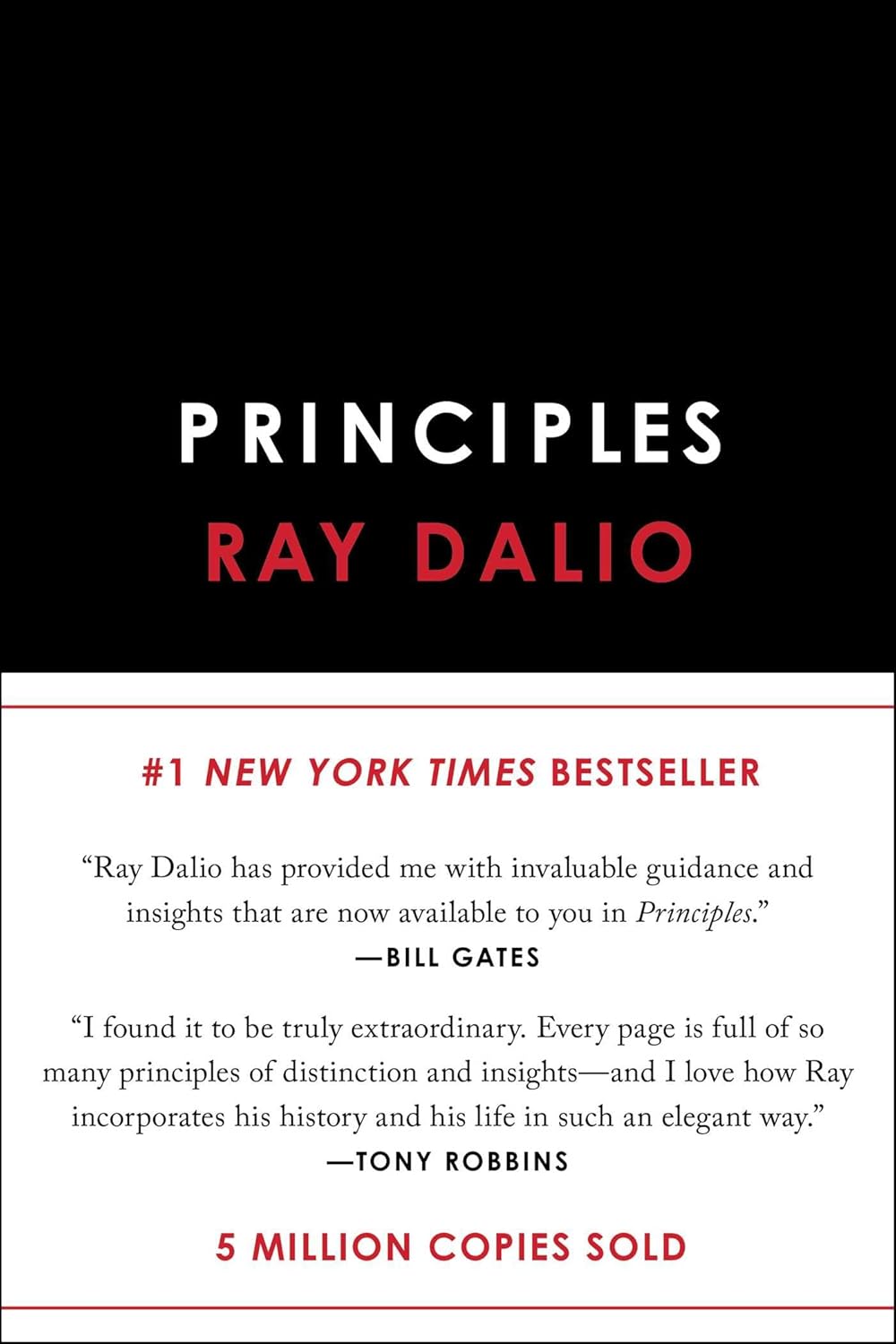
Book overview
Ray Dalio introduces the purpose of the book and situates his principles within his personal and professional journey. He explains that sharing clear, tested principles can help others make better decisions and create meaningful work environments.
This page is built to be a compact learning hub for Principles. You can move from the high-level summary into takeaways, quiz prompts, chapter review, and related books without breaking the reading flow.
Best takeaways to keep
The book is a distillation of lessons learned from successes and failures over decades.
Principles are explicit tools for decision
making and organizational design.
Radical transparency and truth
seeking underpin his approach.
Treat principles as tested decision-making tools to be adapted and applied deliberately.
Retrieval practice
According to Dalio's Life Principles 'Embrace Reality and Deal with It', what is the most important attitude to adopt?
Which correctly lists the first step of Dalio's 5-step process for getting what you want?
What is 'believability-weighted' decision making as described by Dalio?
Why does Dalio advocate a culture of 'radical truth and transparency'?
Quiz preview
According to Dalio's Life Principles 'Embrace Reality and Deal with It', what is the most important attitude to adopt?
- Ignore inconvenient facts and focus on optimism
- See things as they are, accept painful truths, and act accordingly
- Delegate reality-assessment to others
Which correctly lists the first step of Dalio's 5-step process for getting what you want?
- Identify problems
- Set clear goals
- Design plans
What is 'believability-weighted' decision making as described by Dalio?
- Giving equal weight to everyone's opinions regardless of experience
- Using the most senior person's view as final
- Weighting people's opinions by their demonstrated track record and expertise
Why does Dalio advocate a culture of 'radical truth and transparency'?
- To make organizations more hierarchical and maintain control
- So that problems surface quickly and are addressed honestly, improving decisions and learning
- To protect employees from criticism
Chapter map
Introduction: Where I'm Coming From
Ray Dalio introduces the purpose of the book and situates his principles within his personal and professional journey. He explains that sharing clear, tested principles can help others make better decisions and create meaningful work environments.
My Early Life and Career
Dalio recounts formative experiences from childhood through his initial career in finance that shaped his worldview and work ethic. He highlights early curiosities about how markets work and how setbacks taught him to value honest feedback and systematic thinking.
The Birth of Bridgewater and the Evolution of My Thinking
Dalio describes founding Bridgewater Associates and how its culture evolved around explicit principles like idea meritocracy and radical transparency. He explains that organizational experimentation and systematizing decision-making produced better outcomes and clarified his thinking.
Life Principles: Embrace Reality and Deal with It
Dalio argues that effectively facing reality is the foundation for progress: seeing things as they are, not as you wish them to be, and then acting accordingly. He emphasizes clear-sightedness, acceptance of painful truths, and converting pain into learning.
Life Principles: Use the 5-Step Process to Get What You Want
Dalio lays out a repeatable five-step process for achieving goals: set clear goals, identify problems, diagnose root causes, design plans, and execute. He stresses iterative improvement and the importance of tracking progress with metrics.
Next best step
Move next into the questions page if you want better retention, or into the takeaways page if you want the shortest useful review loop for this book.