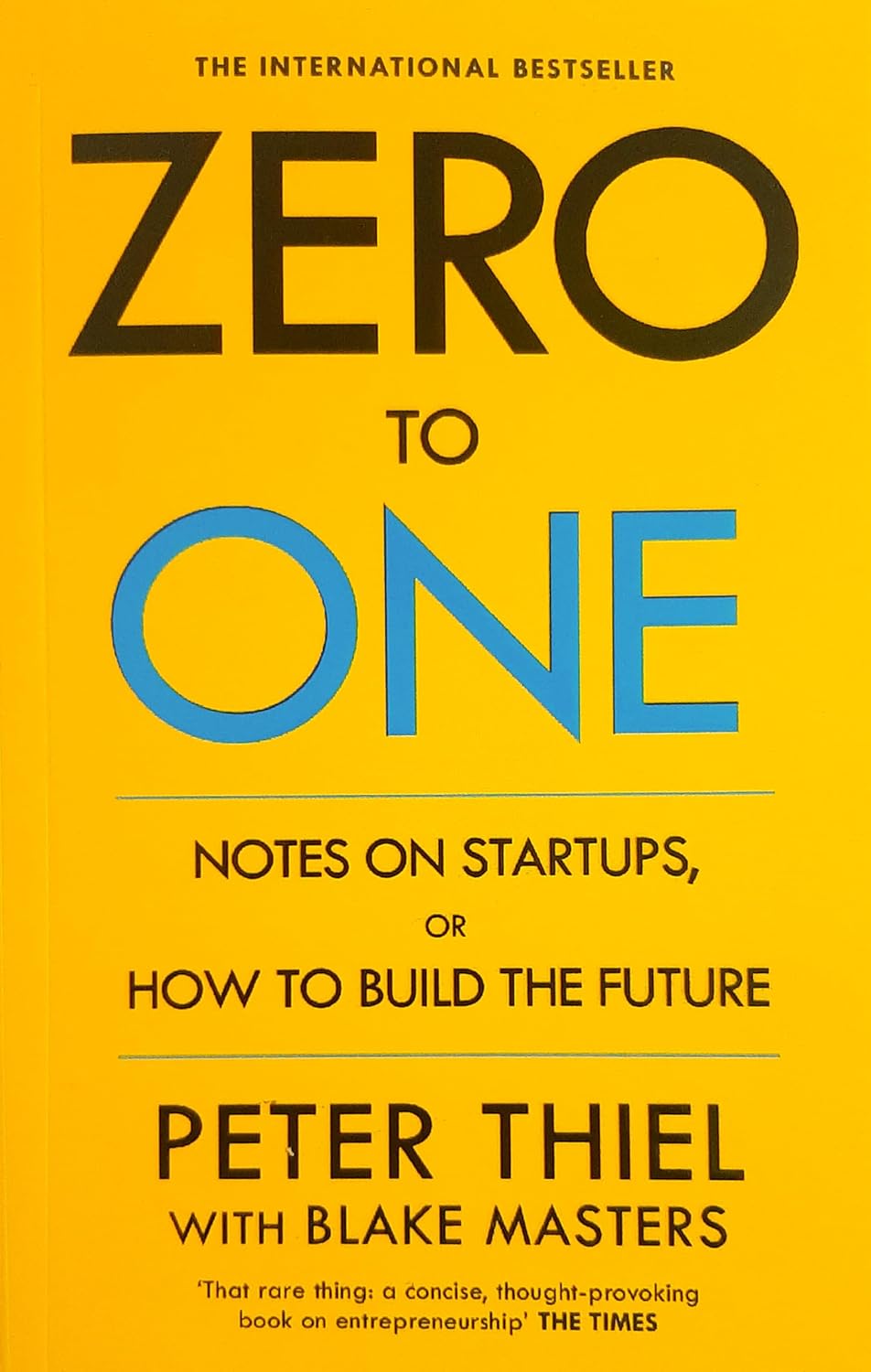
Book overview
Peter Thiel argues that the future is not inevitable and must be actively created; progress comes from technology that takes us from "zero to one" rather than incremental "one to n" improvements. He emphasizes that doing new things requires bold, contrarian thinking and deliberate planning to build lasting value.
This page is built to be a compact learning hub for Zero to One. You can move from the high-level summary into takeaways, quiz prompts, chapter review, and related books without breaking the reading flow.
Best takeaways to keep
The distinction between vertical progress (zero to one) and horizontal progress (one to n).
Most people expect the future to be a continuation of the present, but definite planning and innovation produce breakthroughs.
Stagnation is a risk when society relies on globalization and copying instead of technological novelty.
Actively seek opportunities to create something genuinely new rather than merely iterating on existing solutions.
This chapter frames entrepreneurship as a creative, forward-looking endeavor and challenges readers to prefer unique innovations over imitation. It sets the philosophical foundation for thinking about strategy, monopoly, and progress.
Peter Thiel argues that the future is not inevitable and must be actively created; progress comes from technology that takes us from "zero to one" rather than incremental "one to n" improvements. He emphasizes that doing new things requires bold, contrarian thinking and deliberate planning to build lasting value.
Retrieval practice
What is the main theme of 'Zero to One'?
What does Thiel argue about monopolies?
What is the 'last mover advantage'?
What does Thiel say about company culture?
Quiz preview
What is the main theme of 'Zero to One'?
- Innovation over imitation
- Competition is key
- Luck determines success
What does Thiel argue about monopolies?
- They are harmful to innovation
- They can drive progress
- They should be avoided
What is the 'last mover advantage'?
- Being first to market
- Learning from early entrants
- Competing aggressively
What does Thiel say about company culture?
- It is irrelevant to success
- It can enhance performance
- It should be ignored
Chapter map
The Challenge of the Future
Peter Thiel argues that the future is not inevitable and must be actively created; progress comes from technology that takes us from "zero to one" rather than incremental "one to n" improvements. He emphasizes that doing new things requires bold, contrarian thinking and deliberate planning to build lasting value.
Party Like It's 1999
Thiel recounts the dot-com boom and bust to show the dangers of ungrounded optimism and herd behavior: capital and talent were misallocated based on hype rather than durable business fundamentals. He uses the episode to extract lessons about valuation, planning, and the difference between building a company and riding a speculative wave.
All Happy Companies Are Different
Thiel asserts that successful companies are unique because they avoid competition and secure monopoly-like positions, while failed firms often end up in cutthroat markets. He argues that the goal of a business should be to create and maintain lasting monopoly through proprietary technology, network effects, economies of scale, and branding.
The Ideology of Competition
Thiel critiques the cultural fetishization of competition, showing that relentless rivalry often reduces creativity and destroys value. He recommends that companies strive to be non-competitive by creating unique offerings and controlling niches where competition is irrelevant.
Last Mover Advantage
Thiel explains how companies that become definitive market leaders can enjoy "last mover advantage" by establishing durable monopolies through scale, brand, and proprietary tech. He contrasts this with the false allure of being an early mover without the ability to secure defensible advantages.
Next best step
Move next into the questions page if you want better retention, or into the takeaways page if you want the shortest useful review loop for this book.