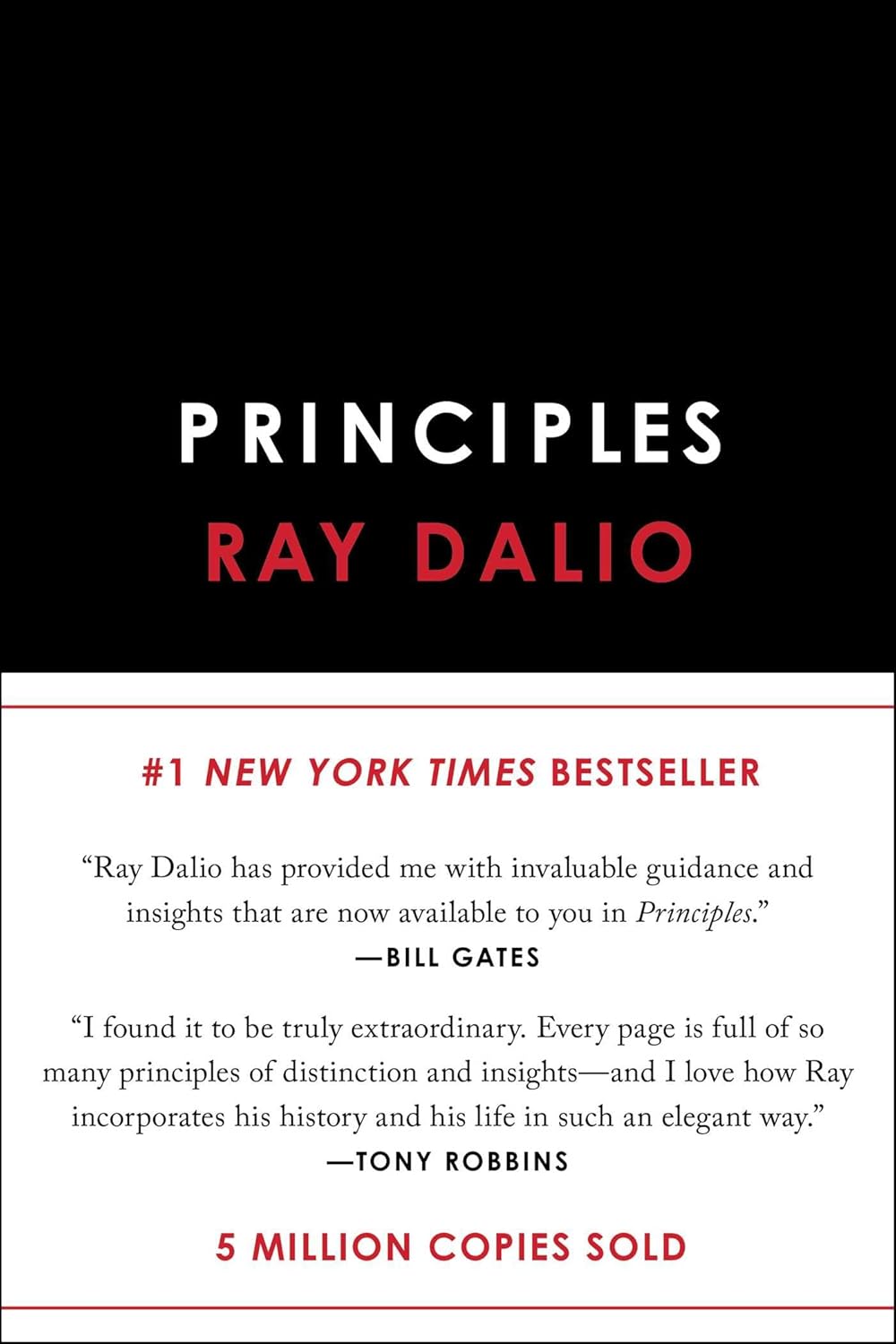
ReadSprintBooksPrinciplesPrinciples Questions, Quiz, and Active Recall Prompts
Principles
Principles Questions, Quiz, and Active Recall Prompts

Principles Questions, Quiz, and Active Recall Prompts

by Ray Dalio

Test your understanding of Principles by Ray Dalio with quiz questions, active recall prompts, and related learning resources.

Reading without retrieval fades fast. Use these Principles questions and active recall prompts to pressure-test what you understood and keep the book usable later.

Built for retention

ReadSprint combines concise summaries, quizzes, active recall, and related reading paths so the useful part of the book is easier to keep.

Open full summary

18

Chapter summaries

5

Quiz questions

12

Key takeaways

6

Related books

Quiz questions

Question 1

According to Dalio's Life Principles 'Embrace Reality and Deal with It', what is the most important attitude to adopt?

  • Ignore inconvenient facts and focus on optimism
  • See things as they are, accept painful truths, and act accordingly
  • Delegate reality-assessment to others
  • Only focus on positive possibilities
Question 2

Which correctly lists the first step of Dalio's 5-step process for getting what you want?

  • Identify problems
  • Set clear goals
  • Design plans
  • Execute the plan
Question 3

What is 'believability-weighted' decision making as described by Dalio?

  • Giving equal weight to everyone's opinions regardless of experience
  • Using the most senior person's view as final
  • Weighting people's opinions by their demonstrated track record and expertise
  • Deciding by random selection to avoid bias
Question 4

Why does Dalio advocate a culture of 'radical truth and transparency'?

  • To make organizations more hierarchical and maintain control
  • So that problems surface quickly and are addressed honestly, improving decisions and learning
  • To protect employees from criticism
  • To prioritize company image over internal candor
Question 5

How does Dalio propose using data and algorithms in decision making?

  • Replace human judgment entirely with algorithms
  • Use data, metrics, and algorithms to complement human judgment, backtest approaches, and iteratively refine
  • Ignore algorithms because they remove human creativity
  • Use algorithms only for bookkeeping, not for decisions

Active recall prompts

According to Dalio's Life Principles 'Embrace Reality and Deal with It', what is the most important attitude to adopt?

Which correctly lists the first step of Dalio's 5-step process for getting what you want?

What is 'believability-weighted' decision making as described by Dalio?

Why does Dalio advocate a culture of 'radical truth and transparency'?

What is the main idea of "Introduction: Where I'm Coming From", and how would you explain it without looking back?

What is the main idea of "My Early Life and Career", and how would you explain it without looking back?

What is the main idea of "The Birth of Bridgewater and the Evolution of My Thinking", and how would you explain it without looking back?

What is the main idea of "Life Principles: Embrace Reality and Deal with It", and how would you explain it without looking back?

Quiz checkpoints

Question 1

According to Dalio's Life Principles 'Embrace Reality and Deal with It', what is the most important attitude to adopt?

Question 2

Which correctly lists the first step of Dalio's 5-step process for getting what you want?

Question 3

What is 'believability-weighted' decision making as described by Dalio?

Practice retrieval

Key concepts

Introduction: Where I'm Coming From

The introduction frames the work as practical guidance grounded in experience and experimentation, relevant to individuals and organizations aiming to improve outcomes. It sets expectations that principles are adaptable…

My Early Life and Career

Personal history illustrates how habits of reflection and empirical testing grow from experience and shape long-term approaches to decision making. The chapter shows why humility and continual learning are essential for…

The Birth of Bridgewater and the Evolution of My Thinking

The chapter demonstrates how institutionalizing principles and measurement can scale learning and decision quality across an organization. It provides a model for designing culture intentionally to align incentives with…

Open concept map

Similar themes and topic pages

Use topic hubs and category pages to keep reading depth aligned with what this book is actually about.

Turn Reading Into Recall

Keep Principles review-ready instead of letting it fade.

This page is strongest when it becomes part of a review habit: save the summary, revisit the key takeaways, and use recall prompts before the next meeting, study block, or decision.

Save one strong takeaway instead of over-highlighting.
Use the questions page to test what actually stuck.
Return when the book becomes relevant again, not just when motivation is high.
See pricing
Get Book Review Notes

Get practical notes on remembering and reusing ideas from nonfiction books without building an overly heavy note system.

Retention workflow

Turn this page into a repeatable study loop

Move from summary to takeaways, test yourself with questions, revisit the concept map, and then continue into related books. That keeps Principlesconnected instead of turning into a one-time skim.

Frequently asked questions

Why use quiz questions for Principles?

Quiz-style recall is more durable than passive rereading because it forces you to retrieve the idea instead of merely recognizing it.

How should I answer active recall prompts?

Answer from memory first, then review the relevant chapter summary only after you have tried to explain the idea on your own.

What if I miss several questions about Principles?

That usually means the book needs a shorter review loop. Revisit the chapter summaries, keep only a few high-value takeaways, and test yourself again later.