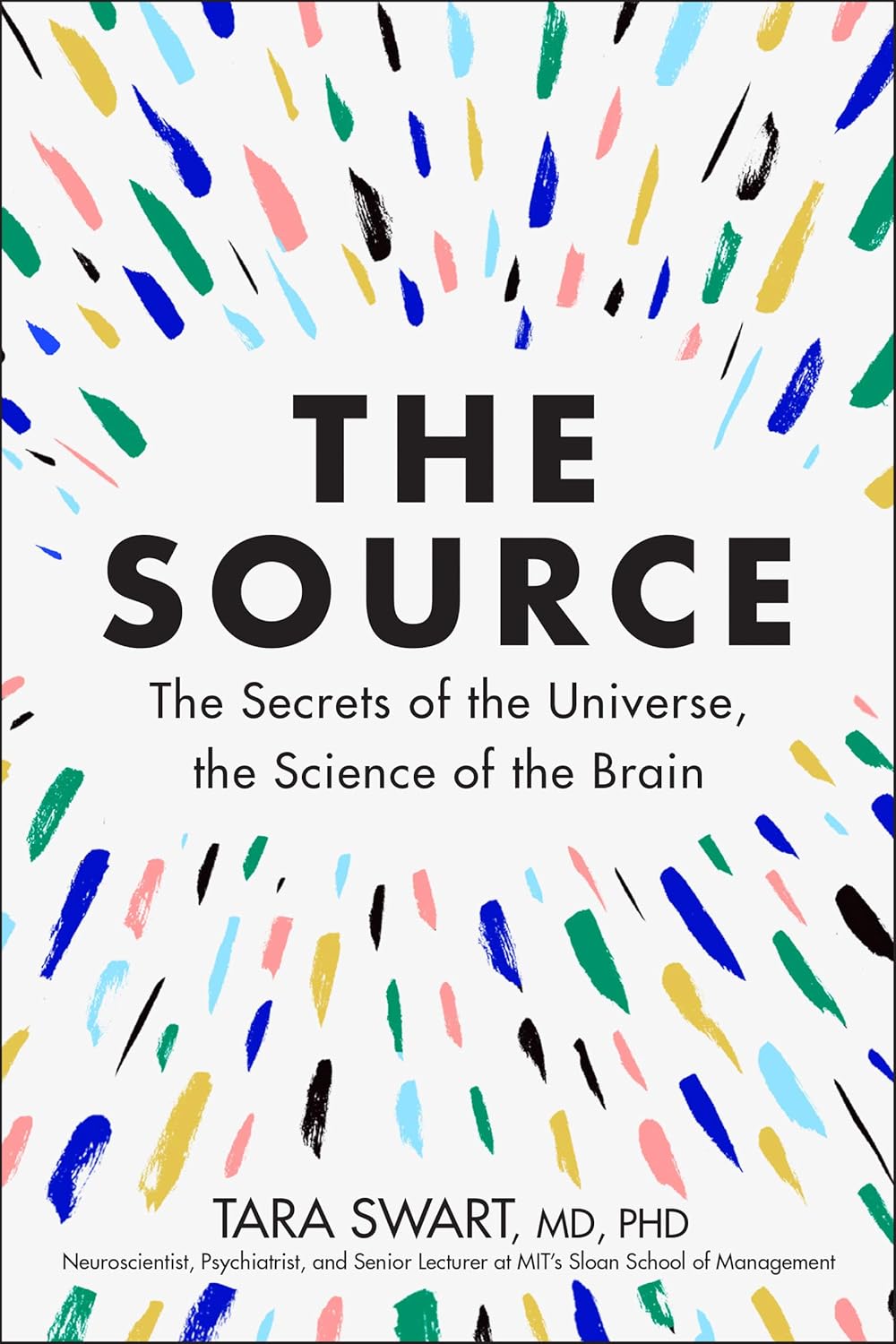
Concept map
These are the ideas doing most of the work inside The Source: The Secrets of the Universe, the Science of the Brain. Study them as reusable mental models, then jump back into chapters or questions when you want more context.
1. Awakening to the Source
The opening chapter introduces the central idea of 'the Source' as a unifying field of energy and information that underpins reality and human experience. It frames the book's aim to bridge scientific findings about the brain with broader metaphysical concepts, proposing that awareness of this Source can transform perception and behavior.
Supporting points
- The Source is presented as an interconnected field that links mind, matter and information.
- Human consciousness can tune into this field, affecting subjective experience and potentially external outcomes.
- The chapter outlines scientific and experiential approaches the book will use to explore the Source.
How does 1. awakening to the source change the way you would explain or apply The Source: The Secrets of the Universe, the Science of the Brain?
1. Awakening to the Source
2. Energy, Information and the Universe
Chapter two surveys the concepts of energy and information as core constituents of the universe and explains their relevance to living systems and cognition. It argues that information flow and energetic patterns underlie both physical phenomena and mental states, providing a framework for understanding mind-matter interactions.
Supporting points
- Energy and information are distinct but interrelated: energy enables change while information organizes structure.
- Biological systems, including brains, depend on continuous energy flows and information processing to maintain function.
- Patterns of information can propagate influence beyond local physical interactions, a theme revisited in later chapters.
How does 2. energy, information and the universe change the way you would explain or apply The Source: The Secrets of the Universe, the Science of the Brain?
2. Energy, Information and the Universe
3. The Brain: Anatomy of Belief
This chapter examines the brain's structure and function as the organ that constructs belief and meaning, showing how neural circuits encode expectations and identity. It explains mechanisms like synaptic connectivity, networks and feedback loops that stabilize beliefs and habitual responses.
Supporting points
- Beliefs are emergent properties of neural networks formed through repeated activation and reinforced pathways.
- Key brain regions involved in belief formation include sensory processing areas, association cortices and valuation systems.
- Feedback loops and prediction error signals update or entrench beliefs depending on attention and reinforcement.
How does 3. the brain: anatomy of belief change the way you would explain or apply The Source: The Secrets of the Universe, the Science of the Brain?
3. The Brain: Anatomy of Belief
4. Consciousness and Quantum Perspectives
Chapter four explores contemporary theories of consciousness and introduces selective quantum concepts as metaphors and possible mechanisms connecting mind and the physical world. It presents cautious discussion of how quantum principles like entanglement and contextuality might inform models of consciousness without overstating scientific certainty.
Supporting points
- Multiple competing models of consciousness exist, ranging from emergentist to integrative information approaches.
- Quantum concepts provide intriguing metaphors for nonlocal correlations and indeterminacy in cognition, but empirical links remain debated.
- The chapter emphasizes careful interpretation, suggesting quantum ideas can inspire new hypotheses rather than provide definitive explanations.
How does 4. consciousness and quantum perspectives change the way you would explain or apply The Source: The Secrets of the Universe, the Science of the Brain?
4. Consciousness and Quantum Perspectives
5. Intention, Attention and Neuroplasticity
This chapter focuses on how directed intention and sustained attention drive neuroplastic changes in the brain, enabling lasting psychological and behavioral transformation. It summarizes research showing that purposeful mental practices can rewire circuitry related to emotion, habit and cognition.
Supporting points
- Intention provides the goal or desired state, while attention supplies the sustained neural activation needed to consolidate change.
- Neuroplasticity is the mechanism by which repeated attention and practice alter synaptic strength and network configurations.
- Practical exercises such as focused meditation, deliberate practice and goal visualization are described as ways to harness this process.
How does 5. intention, attention and neuroplasticity change the way you would explain or apply The Source: The Secrets of the Universe, the Science of the Brain?
5. Intention, Attention and Neuroplasticity
6. The Chemistry of Emotion and Motivation
Chapter six reviews the neurochemical basis of emotion and motivation, explaining how neurotransmitters and hormones shape feeling states, drive and decision-making. It clarifies how chemical dynamics interact with cognition and environment to sustain or alter motivational patterns.
Supporting points
- Primary neurochemicals such as dopamine, serotonin, oxytocin and cortisol have distinct roles in reward, mood, social bonding and stress.
- Motivation arises from the interplay between reward prediction, valuation systems and bodily states.
- Chemical states can be modulated by behavior, diet, sleep, social context and targeted mental practices to influence emotional tone and drive.
How does 6. the chemistry of emotion and motivation change the way you would explain or apply The Source: The Secrets of the Universe, the Science of the Brain?
6. The Chemistry of Emotion and Motivation
7. Rewiring Habits: The Subconscious Mind
This chapter delves into how habits form and persist through subconscious processes and describes methods for bringing unconscious patterns into conscious control. It outlines stages of habit change and techniques to replace automatic responses with intentional alternatives.
Supporting points
- Habits are encoded by repeated cue
- routine-reward cycles that become automated in subcortical circuits.
- Bringing habits to conscious awareness, altering cues, and providing alternative routines are key to rewiring behavior.
How does 7. rewiring habits: the subconscious mind change the way you would explain or apply The Source: The Secrets of the Universe, the Science of the Brain?
7. Rewiring Habits: The Subconscious Mind
8. Visualization, Placebo and the Power of Expectation
The final chapter in this range examines how visualization, placebo effects and expectation shape physiology and outcomes, demonstrating that belief and mental imagery can produce measurable changes. It synthesizes evidence that anticipatory processes influence healing, performance and perception.
Supporting points
- Visualization engages many of the same neural circuits as actual performance, aiding skill acquisition and preparation.
- Placebo effects reveal the potency of expectation, context and meaning in modulating physiological responses.
- Combining realistic visualization with credible cues and supportive environments amplifies expectancy effects for beneficial results.
How does 8. visualization, placebo and the power of expectation change the way you would explain or apply The Source: The Secrets of the Universe, the Science of the Brain?
8. Visualization, Placebo and the Power of Expectation