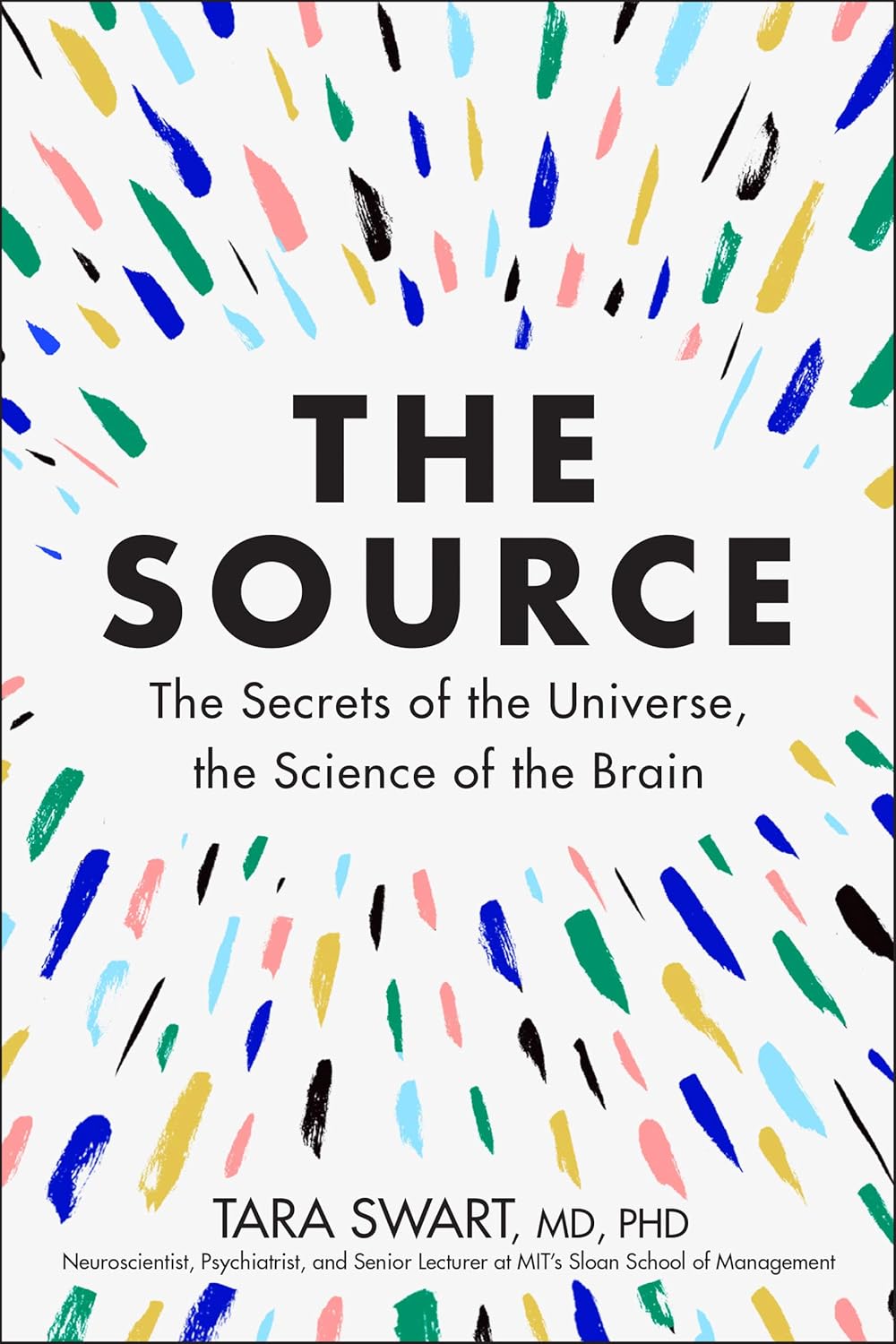
ReadSprintBooksThe Source: The Secrets of the Universe, the Science of the BrainThe Source: The Secrets of the Universe, the Science of the Brain Questions, Quiz, and Active Recall Prompts
The Source: The Secrets of the Universe, the Science of the Brain
The Source: The Secrets of the Universe, the Science of the Brain Questions, Quiz, and Active Recall Prompts

The Source: The Secrets of the Universe, the Science of the Brain Questions, Quiz, and Active Recall Prompts

by Tara Swart, MD, PhD

Test your understanding of The Source: The Secrets of the Universe, the Science of the Brain by Tara Swart, MD, PhD with quiz questions, active recall prompts, and related learning resources.

Reading without retrieval fades fast. Use these The Source: The Secrets of the Universe, the Science of the Brain questions and active recall prompts to pressure-test what you understood and keep the book usable later.

Built for retention

ReadSprint combines concise summaries, quizzes, active recall, and related reading paths so the useful part of the book is easier to keep.

Open full summary

12

Chapter summaries

5

Quiz questions

12

Key takeaways

6

Related books

Quiz questions

Question 1

According to the book, what is 'the Source' primarily described as?

  • A unifying field of energy and information that underpins reality and human experience
  • A specific brain structure responsible for consciousness
  • A single neurotransmitter that controls belief
  • A social construct created by culture and language
Question 2

How does the book characterize the roles of energy and information in the universe and living systems?

  • As core constituents whose flow and patterns underlie physical processes, cognition, and life
  • As metaphors with no measurable role in biological systems
  • As identical to matter and therefore irrelevant to cognition
  • As purely mathematical concepts that do not affect biology
Question 3

What role does the brain play in belief and meaning, according to the text?

  • It constructs belief and identity through neural circuits, synaptic connectivity and network dynamics
  • It passively records experiences without shaping expectations
  • It functions only as a chemical factory producing emotions
  • It is unrelated to meaning, which arises solely from language
Question 4

Which mechanism is emphasized for producing lasting psychological and behavioral change?

  • Directed intention combined with sustained attention driving neuroplastic changes
  • Relying only on willpower without focused practice
  • Taking supplements to instantly rewire neural circuits
  • Avoiding attention to problems so the brain forgets them
Question 5

Which set of practices does the book recommend for "living from the Source" and integrating its principles?

  • Mindfulness, movement routines, journaling, sleep hygiene and supportive community practices
  • Strict dieting alone without attention to sleep or relationships
  • Taking medication as the sole method for transformation
  • Complete social isolation to focus inwardly

Active recall prompts

According to the book, what is 'the Source' primarily described as?

How does the book characterize the roles of energy and information in the universe and living systems?

What role does the brain play in belief and meaning, according to the text?

Which mechanism is emphasized for producing lasting psychological and behavioral change?

What is the main idea of "1. Awakening to the Source", and how would you explain it without looking back?

What is the main idea of "2. Energy, Information and the Universe", and how would you explain it without looking back?

What is the main idea of "3. The Brain: Anatomy of Belief", and how would you explain it without looking back?

What is the main idea of "4. Consciousness and Quantum Perspectives", and how would you explain it without looking back?

Quiz checkpoints

Question 1

According to the book, what is 'the Source' primarily described as?

Question 2

How does the book characterize the roles of energy and information in the universe and living systems?

Question 3

What role does the brain play in belief and meaning, according to the text?

Practice retrieval

Key concepts

1. Awakening to the Source

This chapter establishes the interdisciplinary approach combining neuroscience, physics and contemplative practice to make the idea of a fundamental Source practically relevant to personal change. It sets the stage for…

2. Energy, Information and the Universe

By recasting mental processes in terms of energy and information, the chapter links neuroscience to broader physical principles, making cognitive change appear as manageable manipulation of patterns. This perspective su…

3. The Brain: Anatomy of Belief

Understanding belief as a neurobiological process demystifies how identity and worldview are shaped and thus how they can be deliberately changed. The chapter links this anatomy to practical strategies for belief revisi…

Open concept map

Similar themes and topic pages

Use topic hubs and category pages to keep reading depth aligned with what this book is actually about.

Turn Reading Into Recall

Keep The Source: The Secrets of the Universe, the Science of the Brain review-ready instead of letting it fade.

This page is strongest when it becomes part of a review habit: save the summary, revisit the key takeaways, and use recall prompts before the next meeting, study block, or decision.

Save one strong takeaway instead of over-highlighting.
Use the questions page to test what actually stuck.
Return when the book becomes relevant again, not just when motivation is high.
See pricing
Get Book Review Notes

Get practical notes on remembering and reusing ideas from nonfiction books without building an overly heavy note system.

Retention workflow

Turn this page into a repeatable study loop

Move from summary to takeaways, test yourself with questions, revisit the concept map, and then continue into related books. That keeps The Source: The Secrets of the Universe, the Science of the Brainconnected instead of turning into a one-time skim.

Frequently asked questions

Why use quiz questions for The Source: The Secrets of the Universe, the Science of the Brain?

Quiz-style recall is more durable than passive rereading because it forces you to retrieve the idea instead of merely recognizing it.

How should I answer active recall prompts?

Answer from memory first, then review the relevant chapter summary only after you have tried to explain the idea on your own.

What if I miss several questions about The Source: The Secrets of the Universe, the Science of the Brain?

That usually means the book needs a shorter review loop. Revisit the chapter summaries, keep only a few high-value takeaways, and test yourself again later.