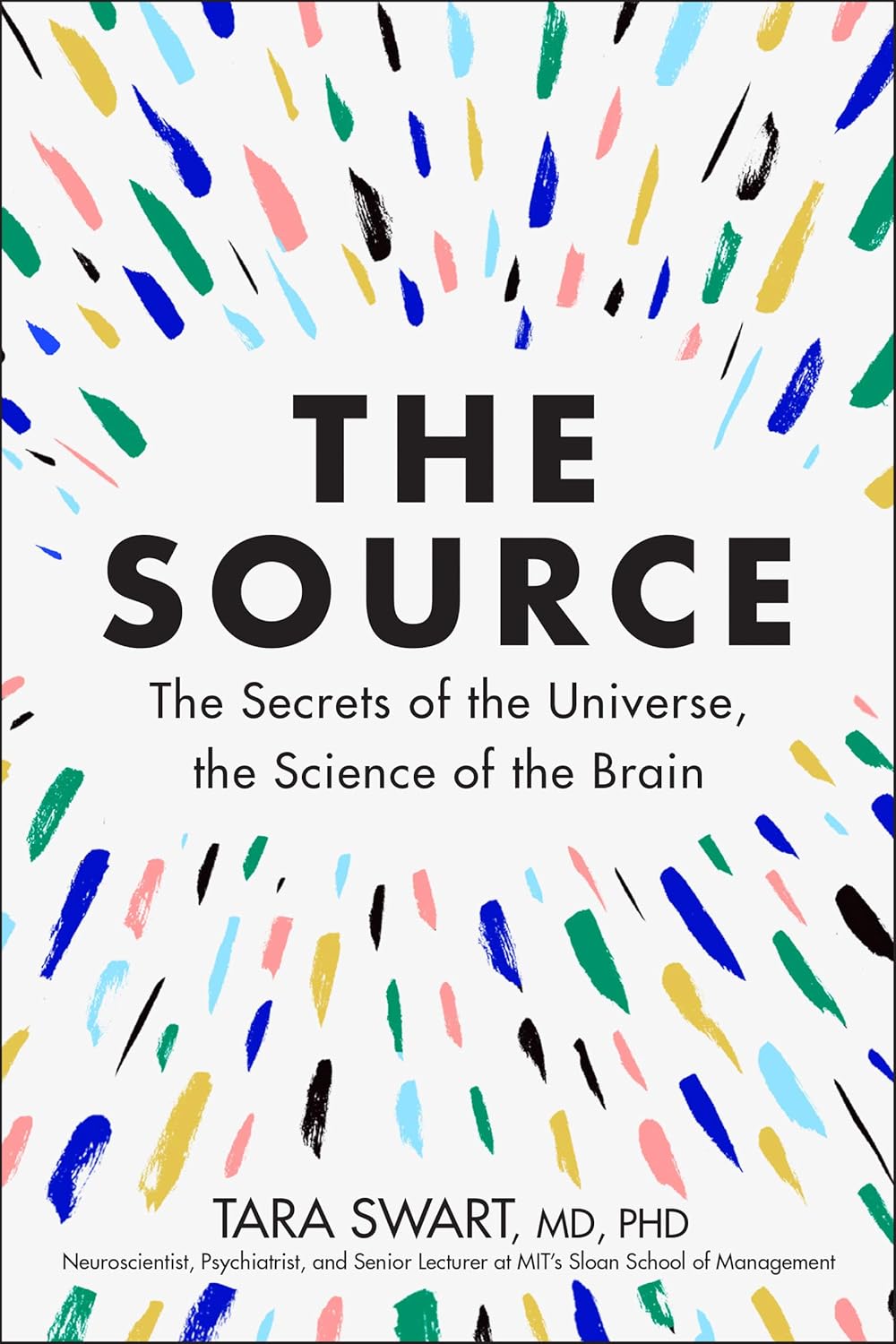
Book overview
The opening chapter introduces the central idea of 'the Source' as a unifying field of energy and information that underpins reality and human experience. It frames the book's aim to bridge scientific findings about the brain with broader metaphysical concepts, proposing that awareness of this Source can transform perception and behavior.
This page is built to be a compact learning hub for The Source: The Secrets of the Universe, the Science of the Brain. You can move from the high-level summary into takeaways, quiz prompts, chapter review, and related books without breaking the reading flow.
Best takeaways to keep
The Source is presented as an interconnected field that links mind, matter and information.
Human consciousness can tune into this field, affecting subjective experience and potentially external outcomes.
The chapter outlines scientific and experiential approaches the book will use to explore the Source.
Begin paying attention to how shifts in attention and belief change your moment-to moment experience.
This chapter establishes the interdisciplinary approach combining neuroscience, physics and contemplative practice to make the idea of a fundamental Source practically relevant to personal change. It sets the stage for applying scientific principles to inner transformation.
The opening chapter introduces the central idea of 'the Source' as a unifying field of energy and information that underpins reality and human experience. It frames the book's aim to bridge scientific findings about the brain with broader metaphysical concepts, proposing that awareness of this Source can transform perception and behavior.
Retrieval practice
According to the book, what is 'the Source' primarily described as?
How does the book characterize the roles of energy and information in the universe and living systems?
What role does the brain play in belief and meaning, according to the text?
Which mechanism is emphasized for producing lasting psychological and behavioral change?
Quiz preview
According to the book, what is 'the Source' primarily described as?
- A unifying field of energy and information that underpins reality and human experience
- A specific brain structure responsible for consciousness
- A single neurotransmitter that controls belief
How does the book characterize the roles of energy and information in the universe and living systems?
- As core constituents whose flow and patterns underlie physical processes, cognition, and life
- As metaphors with no measurable role in biological systems
- As identical to matter and therefore irrelevant to cognition
What role does the brain play in belief and meaning, according to the text?
- It constructs belief and identity through neural circuits, synaptic connectivity and network dynamics
- It passively records experiences without shaping expectations
- It functions only as a chemical factory producing emotions
Which mechanism is emphasized for producing lasting psychological and behavioral change?
- Directed intention combined with sustained attention driving neuroplastic changes
- Relying only on willpower without focused practice
- Taking supplements to instantly rewire neural circuits
Chapter map
1. Awakening to the Source
The opening chapter introduces the central idea of 'the Source' as a unifying field of energy and information that underpins reality and human experience. It frames the book's aim to bridge scientific findings about the brain with broader metaphysical concepts, proposing that awareness of this Source can transform perception and behavior.
2. Energy, Information and the Universe
Chapter two surveys the concepts of energy and information as core constituents of the universe and explains their relevance to living systems and cognition. It argues that information flow and energetic patterns underlie both physical phenomena and mental states, providing a framework for understanding mind-matter interactions.
3. The Brain: Anatomy of Belief
This chapter examines the brain's structure and function as the organ that constructs belief and meaning, showing how neural circuits encode expectations and identity. It explains mechanisms like synaptic connectivity, networks and feedback loops that stabilize beliefs and habitual responses.
4. Consciousness and Quantum Perspectives
Chapter four explores contemporary theories of consciousness and introduces selective quantum concepts as metaphors and possible mechanisms connecting mind and the physical world. It presents cautious discussion of how quantum principles like entanglement and contextuality might inform models of consciousness without overstating scientific certainty.
5. Intention, Attention and Neuroplasticity
This chapter focuses on how directed intention and sustained attention drive neuroplastic changes in the brain, enabling lasting psychological and behavioral transformation. It summarizes research showing that purposeful mental practices can rewire circuitry related to emotion, habit and cognition.
Next best step
Move next into the questions page if you want better retention, or into the takeaways page if you want the shortest useful review loop for this book.