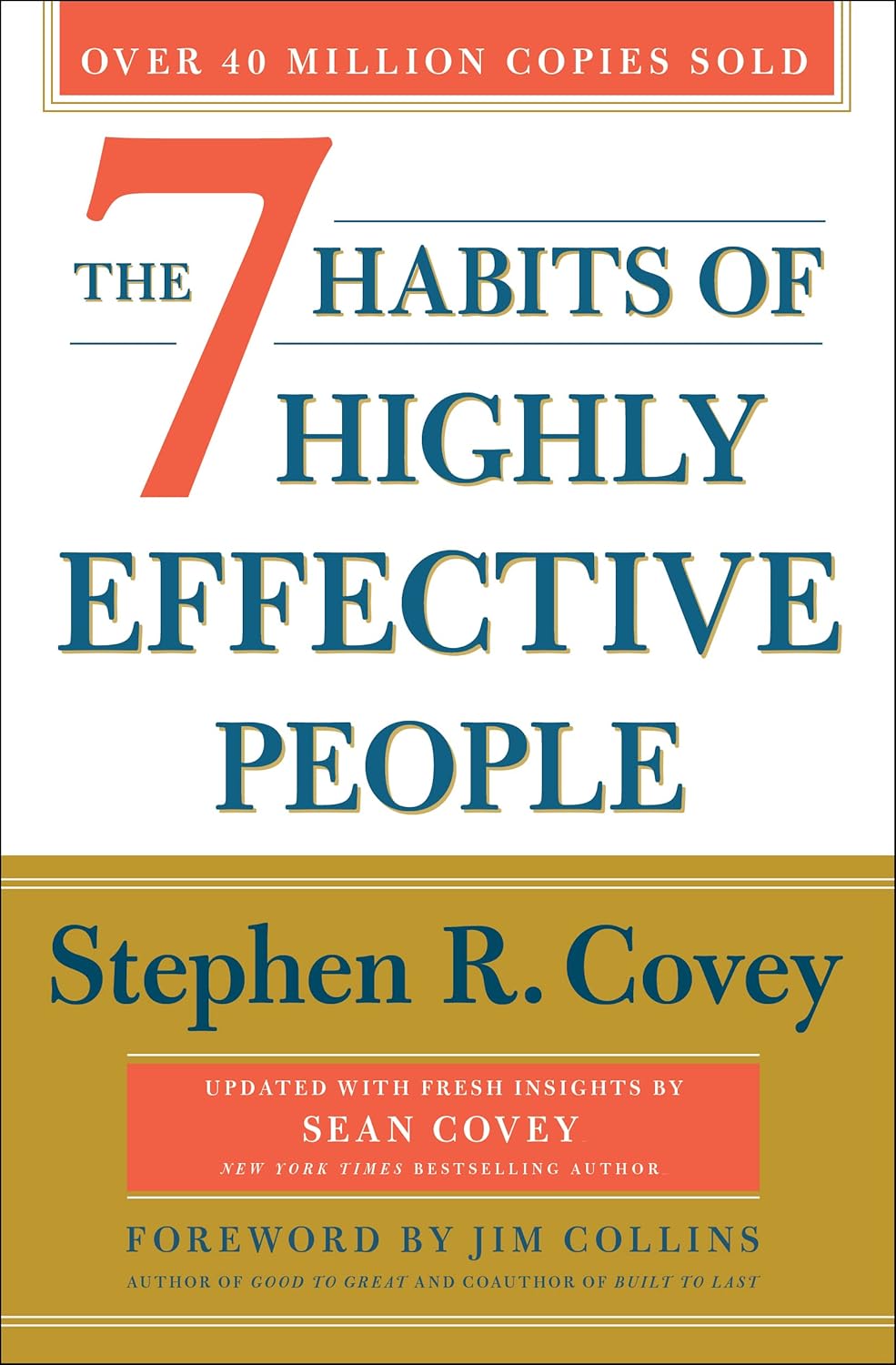
The 7 Habits of Highly Effective People: ReadSprint summary highlights
ReadSprint paraphrases for review. These highlights are not verbatim quotations from the book or its author. Check the original edition for exact wording and context.
The 7 Habits of Highly Effective People
by Stephen R. Covey
Be Proactive emphasizes that effective people take responsibility for their choices and behavior rather than reacting to external circumstances.
ReadSprint paraphrase · Not a quotation from the author.
Be Proactive emphasizes that effective people take responsibility for their choices and behavior rather than reacting to external circumstances.
Focus on your Circle of Influence - invest energy where you can make a difference rather than on what you cannot control.
Share with the ReadSprint source so others can read the context.
The 7 Habits of Highly Effective People
by Stephen R. Covey
It distinguishes between proactive responses (guided by values) and reactive responses (driven by moods or conditions), arguing that freedom to choose our response is the essence of personal effectiveness.
ReadSprint paraphrase · Not a quotation from the author.
It distinguishes between proactive responses (guided by values) and reactive responses (driven by moods or conditions), arguing that freedom to choose our response is the essence of personal effectiveness.
Between stimulus and response lies the human ability to choose; use that space to act according to principles and values.
Share with the ReadSprint source so others can read the context.
The 7 Habits of Highly Effective People
by Stephen R. Covey
Begin with the End in Mind urges readers to clarify their life and work goals by defining a personal mission and envisioning desired outcomes before acting.
ReadSprint paraphrase · Not a quotation from the author.
Begin with the End in Mind urges readers to clarify their life and work goals by defining a personal mission and envisioning desired outcomes before acting.
Proactivity means acting rather than being acted upon: take initiative, own mistakes, and shape outcomes.
Share with the ReadSprint source so others can read the context.
The 7 Habits of Highly Effective People
by Stephen R. Covey
It promotes living intentionally according to chosen values rather than reacting to external expectations or circumstances.
ReadSprint paraphrase · Not a quotation from the author.
It promotes living intentionally according to chosen values rather than reacting to external expectations or circumstances.
Language matters: use proactive language (“I will,” “I choose”) instead of reactive language (“I can’t,” “If only”).
Share with the ReadSprint source so others can read the context.
The 7 Habits of Highly Effective People
by Stephen R. Covey
Put First Things First translates your values and goals into daily actions by prioritizing important but not always urgent activities.
ReadSprint paraphrase · Not a quotation from the author.
Put First Things First translates your values and goals into daily actions by prioritizing important but not always urgent activities.
Identify one area where you feel stuck and take one deliberate action this week that is within your control.
Share with the ReadSprint source so others can read the context.
The 7 Habits of Highly Effective People
by Stephen R. Covey
It teaches time management centered on effectiveness-spending time on high-impact tasks that support long-term goals rather than reacting to crises.
ReadSprint paraphrase · Not a quotation from the author.
It teaches time management centered on effectiveness-spending time on high-impact tasks that support long-term goals rather than reacting to crises.
The chapter centers on personal responsibility and agency as the foundation for lasting change, relevant to leadership, relationships, and stress management. Developing a proactive mindset expands influence and reduces wasted effort on uncontrollable factors.
Share with the ReadSprint source so others can read the context.
Use these highlights to review the book
Which highlight from The 7 Habits of Highly Effective People changes how you would explain the book to someone else?
Which lesson here is worth testing in a real decision this week?
Which highlight feels memorable but less actionable once you slow down and examine it?