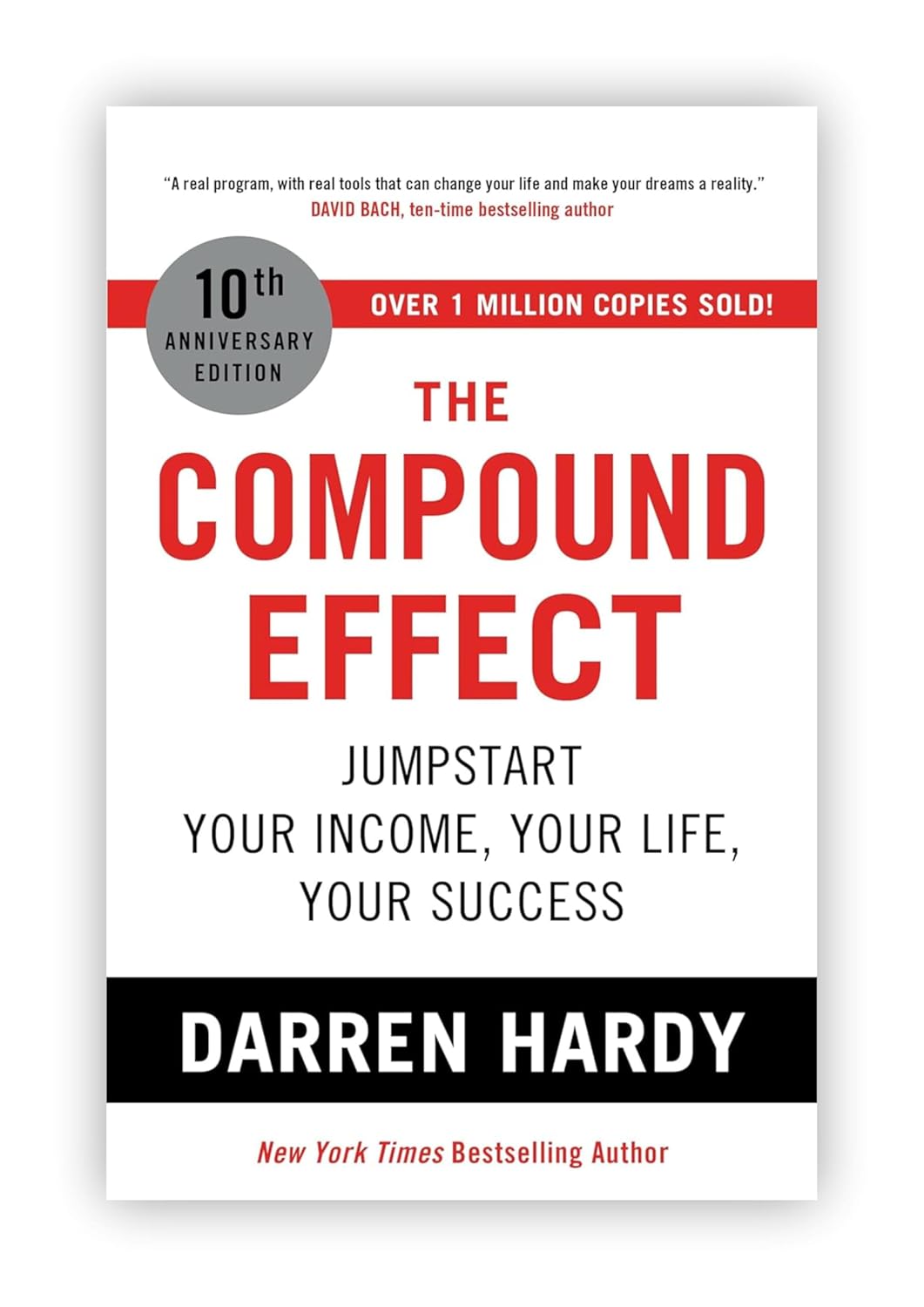
Book overview
This chapter introduces the concept of the Compound Effect, explaining how small, consistent actions can lead to significant results over time. It emphasizes the importance of patience and persistence in achieving success.
This page is built to be a compact learning hub for The Compound Effect. You can move from the high-level summary into takeaways, quiz prompts, chapter review, and related books without breaking the reading flow.
Best takeaways to keep
Small actions accumulate over time
Consistency is key to success
Patience is necessary for long
term results
The Compound Effect applies to all areas of life
Start making small, positive changes consistently to see long-term benefits.
Retrieval practice
What is the main concept introduced in the first chapter?
What is emphasized as crucial in the chapter on Choices?
How are habits described in the book?
What is necessary to build momentum according to the book?
Quiz preview
What is the main concept introduced in the first chapter?
- The importance of large actions
- The role of luck in success
- The Compound Effect
What is emphasized as crucial in the chapter on Choices?
- Ignoring small decisions
- Blaming others for outcomes
- Taking responsibility for choices
How are habits described in the book?
- Irrelevant to success
- Foundational to success
- Easy to change
What is necessary to build momentum according to the book?
- Inconsistent actions
- Immediate results
- Consistent action
Chapter map
The Compound Effect in Action
This chapter introduces the concept of the Compound Effect, explaining how small, consistent actions can lead to significant results over time. It emphasizes the importance of patience and persistence in achieving success.
Choices
This chapter focuses on the power of choices and how they shape our lives. It discusses the importance of making conscious decisions and taking responsibility for the outcomes.
Habits
The chapter delves into the role of habits in the Compound Effect, explaining how habits can either propel you towards success or hold you back.
Momentum
Momentum is explored as a critical factor in maintaining progress. The chapter explains how to build and sustain momentum to achieve goals.
Influences
This chapter examines the impact of external influences on our lives, including people, environment, and media, and how they can affect the Compound Effect.
Next best step
Move next into the questions page if you want better retention, or into the takeaways page if you want the shortest useful review loop for this book.