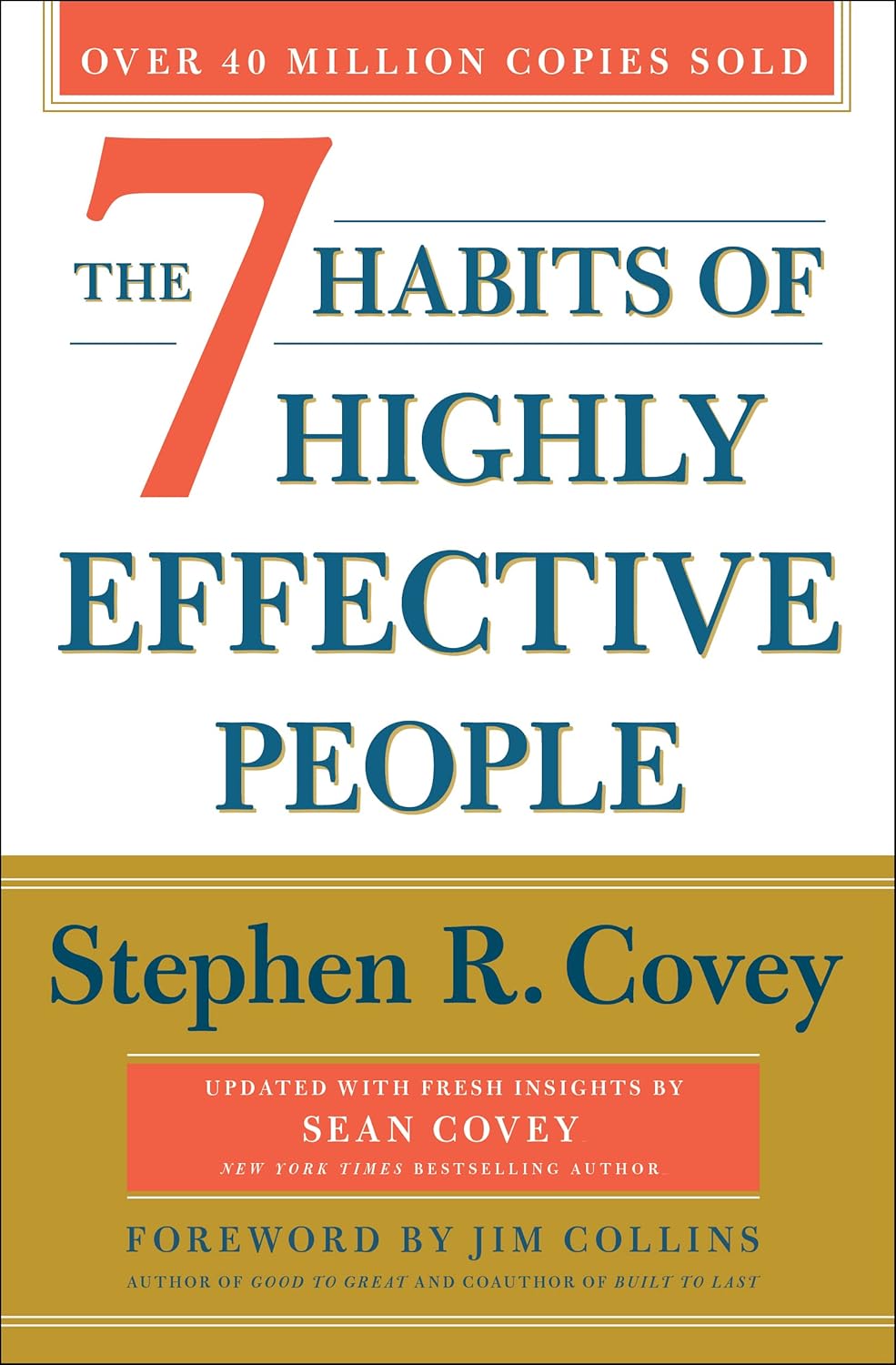
Be Proactive
Summary:
Be Proactive emphasizes that effective people take responsibility for their choices and behavior rather than reacting to external circumstances. It distinguishes between proactive responses (guided by values) and reactive responses (driven by moods or conditions), arguing that freedom to choose our response is the essence of personal effectiveness.
Key points:
- Focus on your Circle of Influence — invest energy where you can make a difference rather than on what you cannot control.
- Between stimulus and response lies the human ability to choose; use that space to act according to principles and values.
- Proactivity means acting rather than being acted upon: take initiative, own mistakes, and shape outcomes.
- Language matters: use proactive language (“I will,” “I choose”) instead of reactive language (“I can’t,” “If only”).
Themes & relevance:
The chapter centers on personal responsibility and agency as the foundation for lasting change, relevant to leadership, relationships, and stress management. Developing a proactive mindset expands influence and reduces wasted effort on uncontrollable factors.
Takeaway / How to use:
Identify one area where you feel stuck and take one deliberate action this week that is within your control.
Key points
- Focus on your Circle of Influence — invest energy where you can make a difference rather than on what you cannot control.
- Between stimulus and response lies the human ability to choose; use that space to act according to principles and values.
- Proactivity means acting rather than being acted upon: take initiative, own mistakes, and shape outcomes.
- Language matters: use proactive language (“I will,” “I choose”) instead of reactive language (“I can’t,” “If only”).
Begin with the End in Mind
Summary:
Begin with the End in Mind urges readers to clarify their life and work goals by defining a personal mission and envisioning desired outcomes before acting. It promotes living intentionally according to chosen values rather than reacting to external expectations or circumstances.
Key points:
- Create a personal mission statement to articulate your roles, values, and long-term vision.
- Leadership is about knowing where you want to go; management is about arranging resources to get there.
- Visualize desired outcomes for tasks and relationships to ensure alignment with core principles.
- Make decisions based on the end result to avoid short-term distractions and mission drift.
Themes & relevance:
This habit links purpose and effectiveness, showing how clarity of vision improves decision-making and prioritization in both personal and professional contexts. It guides strategic planning for life and work by rooting actions in principles.
Takeaway / How to use:
Write a concise personal mission statement and review it weekly to guide decisions.
Key points
- Create a personal mission statement to articulate your roles, values, and long-term vision.
- Leadership is about knowing where you want to go; management is about arranging resources to get there.
- Visualize desired outcomes for tasks and relationships to ensure alignment with core principles.
- Make decisions based on the end result to avoid short-term distractions and mission drift.
Put First Things First
Summary:
Put First Things First translates your values and goals into daily actions by prioritizing important but not always urgent activities. It teaches time management centered on effectiveness—spending time on high-impact tasks that support long-term goals rather than reacting to crises.
Key points:
- Use the Time Management Matrix: focus on Quadrant II (important, not urgent) to build relationships, plan, and prevent crises.
- Learn to say no to urgent but low-value requests and delegate or schedule appropriately.
- Balance roles and goals by planning weekly around priorities rather than daily urgencies.
- Align activities with your mission statement to ensure consistency between actions and purpose.
Themes & relevance:
This habit emphasizes disciplined execution and intentional scheduling to achieve long-term results and reduce stress from constant firefighting. It’s relevant for productivity, work-life balance, and strategic execution.
Takeaway / How to use:
Schedule one Quadrant II activity for each role in your life this week and protect that time.
Key points
- Use the Time Management Matrix: focus on Quadrant II (important, not urgent) to build relationships, plan, and prevent crises.
- Learn to say no to urgent but low-value requests and delegate or schedule appropriately.
- Balance roles and goals by planning weekly around priorities rather than daily urgencies.
- Align activities with your mission statement to ensure consistency between actions and purpose.
Think Win-Win
Summary:
Think Win-Win advocates seeking mutually beneficial outcomes in interactions, replacing competitive or self-sacrificing mindsets with cooperative problem-solving. It frames effectiveness in relationships as seeking solutions where all parties feel respected and benefit.
Key points:
- Win-Win is a mindset based on abundance, integrity, and maturity (balancing courage and consideration).
- Avoid Win-Lose (domination) and Lose-Win (accommodation) patterns; they erode trust and long-term effectiveness.
- Build agreements and standards upfront to ensure fair, sustainable outcomes.
- Win-Win often requires creative problem-solving and openness to alternative solutions.
Themes & relevance:
This habit promotes cooperative relationships and ethical negotiation as foundations for sustainable success in teams, families, and organizations. It shifts focus from short-term wins to long-term value creation and trust-building.
Takeaway / How to use:
Before negotiating, identify both parties’ core needs and propose at least two options that could satisfy both.
Key points
- Win-Win is a mindset based on abundance, integrity, and maturity (balancing courage and consideration).
- Avoid Win-Lose (domination) and Lose-Win (accommodation) patterns; they erode trust and long-term effectiveness.
- Build agreements and standards upfront to ensure fair, sustainable outcomes.
- Win-Win often requires creative problem-solving and openness to alternative solutions.
Seek First to Understand, Then to Be Understood
Summary:
This habit emphasizes empathetic listening as the basis for effective communication: understand others’ perspectives deeply before sharing your own. By truly listening, you build trust, uncover underlying concerns, and create a receptive environment for problem-solving.
Key points:
- Practice empathic listening: listen to understand feelings and intent, not just words or to prepare a rebuttal.
- Diagnose before you prescribe: seek to grasp the whole problem from the other person’s frame of reference.
- Use reflective techniques (paraphrase, confirm) to ensure accurate understanding and show respect.
- Being understood becomes easier after you have genuinely understood others; communication becomes reciprocal.
Themes & relevance:
The chapter links empathy and respect to effective influence and conflict resolution, important for leadership, counseling, and everyday relationships. Deep listening improves decision quality and reduces miscommunication.
Takeaway / How to use:
In your next important conversation, spend twice as much time listening as speaking and summarize what you heard first.
Key points
- Practice empathic listening: listen to understand feelings and intent, not just words or to prepare a rebuttal.
- Diagnose before you prescribe: seek to grasp the whole problem from the other person’s frame of reference.
- Use reflective techniques (paraphrase, confirm) to ensure accurate understanding and show respect.
- Being understood becomes easier after you have genuinely understood others; communication becomes reciprocal.
Synergize
Summary:
Synergize describes creative cooperation where the whole exceeds the sum of parts by valuing differences and building on diverse strengths. It encourages open-minded collaboration that generates novel solutions impossible to achieve individually.
Key points:
- True synergy requires humility, trust, and a high value on others’ perspectives to combine strengths constructively.
- Differences are opportunities for mutual learning and innovation, not threats to be minimized.
- Synergy moves beyond compromise to third alternatives that are superior to initial proposals.
- Effective synergy relies on prior habits: trust from Win-Win and clear principles from mission alignment.
Themes & relevance:
The habit highlights collaboration and creative problem-solving as essential in complex, interdependent environments like modern organizations and families. It shows how diversity and open dialogue produce better results than isolated effort.
Takeaway / How to use:
Convene a diverse group and use structured brainstorming to generate at least three third-alternative solutions to your current challenge.
Key points
- True synergy requires humility, trust, and a high value on others’ perspectives to combine strengths constructively.
- Differences are opportunities for mutual learning and innovation, not threats to be minimized.
- Synergy moves beyond compromise to third alternatives that are superior to initial proposals.
- Effective synergy relies on prior habits: trust from Win-Win and clear principles from mission alignment.
Sharpen the Saw
Summary:
Sharpen the Saw stresses continuous self-renewal across four dimensions—physical, mental, emotional/social, and spiritual—to sustain long-term effectiveness. Regular renewal increases capacity to perform, maintain balance, and grow personally and professionally.
Key points:
- Physical renewal: exercise, nutrition, rest; Mental renewal: learning, reading, problem-solving.
- Emotional/social renewal: meaningful relationships, empathic communication; Spiritual renewal: values clarification, reflection, purpose.
- Balance production and production capability: avoid overwork that erodes future productivity.
- Regular rhythms of renewal prevent burnout and compound effectiveness over time.
Themes & relevance:
This habit underscores that sustained performance depends on intentional self-care and lifelong learning, relevant to resilience, leadership longevity, and well-being. It ties the previous habits together by maintaining the individual who practices them.
Takeaway / How to use:
Schedule a weekly renewal routine that includes at least one activity for each of the four dimensions.
Key points
- Physical renewal: exercise, nutrition, rest; Mental renewal: learning, reading, problem-solving.
- Emotional/social renewal: meaningful relationships, empathic communication; Spiritual renewal: values clarification, reflection, purpose.
- Balance production and production capability: avoid overwork that erodes future productivity.
- Regular rhythms of renewal prevent burnout and compound effectiveness over time.