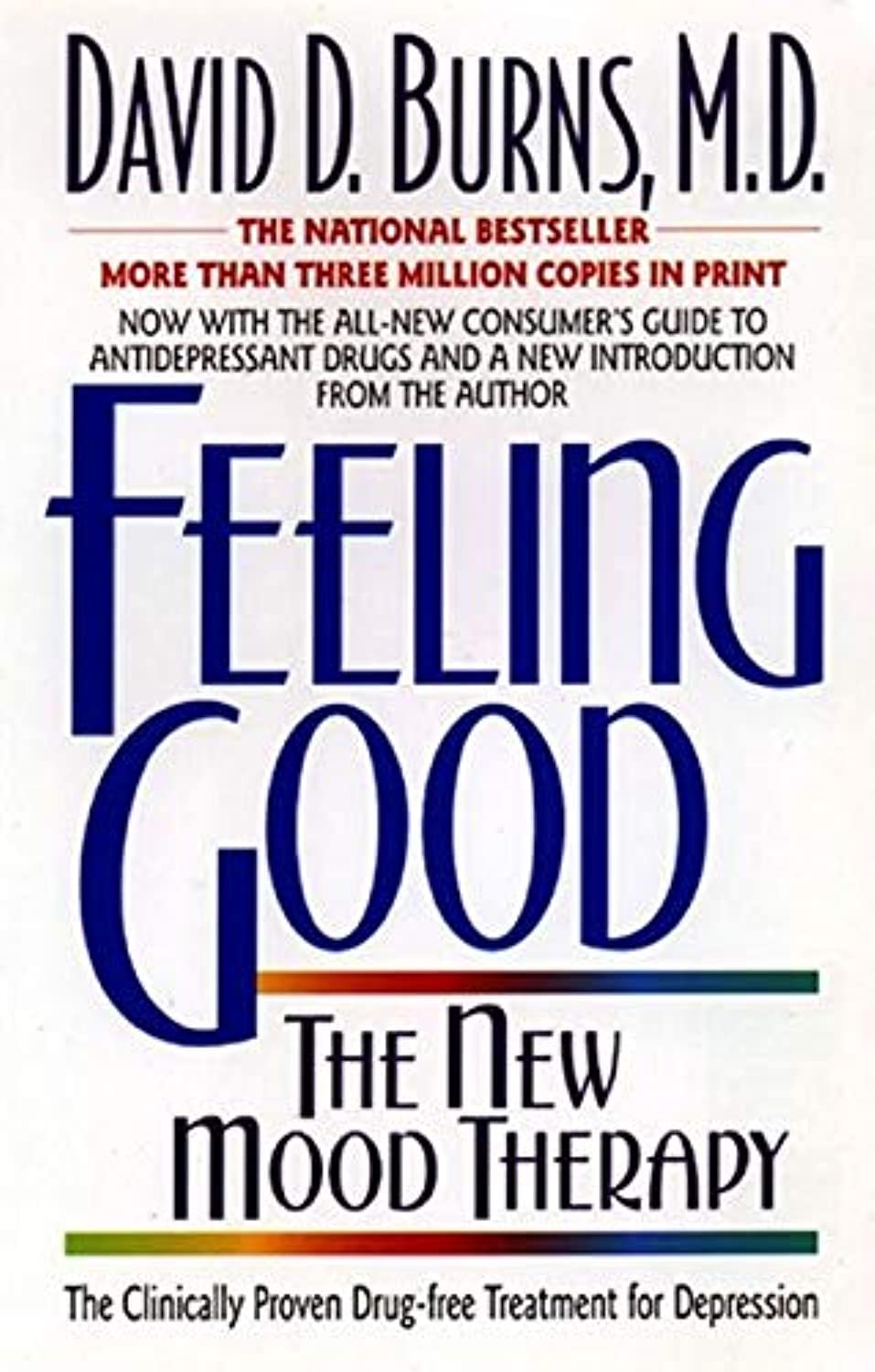
ReadSprintBooksFeeling Good: The New Mood TherapyFeeling Good: The New Mood Therapy Key Concepts and Core Ideas
Feeling Good: The New Mood Therapy
Feeling Good: The New Mood Therapy Key Concepts and Core Ideas

Feeling Good: The New Mood Therapy Key Concepts and Core Ideas

by David D. Burns, M.D.

Understand the core concepts in Feeling Good: The New Mood Therapy by David D. Burns, M.D., with explanations, recall prompts, related books, and connected learning paths.

This page isolates the core concepts carrying Feeling Good: The New Mood Therapy. Use it when you want to understand the book’s mental models, not just skim the chapter sequence.

Built for retention

ReadSprint combines concise summaries, quizzes, active recall, and related reading paths so the useful part of the book is easier to keep.

Open full summary

20

Chapter summaries

5

Quiz questions

12

Key takeaways

6

Related books

Concept map

These are the ideas doing most of the work inside Feeling Good: The New Mood Therapy. Study them as reusable mental models, then jump back into chapters or questions when you want more context.

Concept 1

Introduction: The New Mood Therapy

Feeling Good introduces cognitive therapy for depression, arguing that changing distorted thinking improves mood and behavior. David D. Burns presents a self-help, evidence based approach that makes cognitive techniques accessible to readers and supports them with exercises and case examples.

Why it matters: The chapter frames the book's core claim that mood can be improved by systematic cognitive work, making psychotherapy principles usable by nonprofessionals. This sets expectations for practical exercises and a skills-ba…

Supporting points

  • Cognitive therapy focuses on identifying and changing maladaptive thoughts to alter feelings and actions.
  • Depression is not simply a chemical imbalance; thinking patterns play a central role in creating and maintaining low mood.
  • The book offers practical self
Active recall prompt

How does introduction: the new mood therapy change the way you would explain or apply Feeling Good: The New Mood Therapy?

Related chapter

Introduction: The New Mood Therapy

Concept 2

What Causes Depression?

Burns explains depression as primarily arising from distorted thinking patterns, although he acknowledges biological and situational factors. He emphasizes that habitual negative interpretations of experience—automatic thoughts and core beliefs—are central causes that can be changed.

Why it matters: This chapter highlights the interaction of thought, environment, and biology while centering cognitive processes as the most accessible targets for intervention. It justifies learning cognitive skills as a practical rou…

Supporting points

  • Negative automatic thoughts and ingrained maladaptive beliefs produce and sustain depressive moods.
  • Life events and stressors trigger depressive episodes, but interpretation of events determines severity and duration.
  • Biological and genetic factors may influence vulnerability, but cognitive change can produce meaningful recovery.
Active recall prompt

How does what causes depression? change the way you would explain or apply Feeling Good: The New Mood Therapy?

Related chapter

What Causes Depression?

Concept 3

The Cognitive Model of Mood

Burns presents the cognitive model: events lead to automatic thoughts, which produce emotional and behavioral responses, and these are shaped by deeper core beliefs. Changing the chain of thoughts can therefore change feelings and behavior.

Why it matters: The model provides a clear, testable framework for self-observation and intervention, making mood change concrete and actionable. It underpins all subsequent techniques in the book.

Supporting points

  • The basic sequence is situation → automatic thought → feeling/behavior → longer
  • term mood.
  • Automatic thoughts are quick, often unexamined interpretations that reflect deeper cognitive distortions and core beliefs.
Active recall prompt

How does the cognitive model of mood change the way you would explain or apply Feeling Good: The New Mood Therapy?

Related chapter

The Cognitive Model of Mood

Concept 4

The Ten Cognitive Distortions

Burns catalogs ten common thinking errors that distort reality and fuel negative emotions. Recognizing these distortions is a key step toward disputing automatic thoughts and developing more balanced thinking.

Why it matters: Identifying predictable distortions gives readers a vocabulary to catch and categorize unhelpful thoughts quickly, streamlining self-therapy work. Awareness of these patterns makes corrective techniques more targeted an…

Supporting points

  • All
  • or-nothing thinking and overgeneralization create extreme, global conclusions from limited evidence.
  • Mental filter and disqualifying the positive focus attention on negatives while ignoring contrary evidence.
Active recall prompt

How does the ten cognitive distortions change the way you would explain or apply Feeling Good: The New Mood Therapy?

Related chapter

The Ten Cognitive Distortions

Concept 5

How to Be Your Own Therapist

This chapter teaches readers how to apply cognitive therapy techniques independently, emphasizing self-observation, systematic practice, and homework. Burns outlines a structured, step by-step process for monitoring thoughts, testing beliefs, and practicing alternative responses.

Why it matters: The chapter democratizes therapeutic skills by translating therapist-guided methods into practical self administered steps, increasing accessibility. It stresses that self-therapy is a skill that improves with consisten…

Supporting points

  • Successful self
  • therapy requires disciplined record-keeping, regular practice, and honest self
  • examination.
Active recall prompt

How does how to be your own therapist change the way you would explain or apply Feeling Good: The New Mood Therapy?

Related chapter

How to Be Your Own Therapist

Concept 6

The Daily Mood Log and Record-Keeping

Burns introduces the Daily Mood Log as a core tool for tracking situations, feelings, automatic thoughts, evidence, and alternative thoughts. Meticulous record-keeping helps make thinking errors visible, measure progress, and guide targeted interventions.

Why it matters: Concrete records transform subjective experience into objective material that can be analyzed and revised, making cognitive work empirical and systematic. Keeping a log is foundational for successful cognitive change.

Supporting points

  • The log records situation, mood intensity, automatic thoughts, cognitive distortions, evidence for/against thoughts, and alternative/balanced thoughts.
  • Regular entries increase self
  • awareness, reduce automaticity, and provide data for testing beliefs.
Active recall prompt

How does the daily mood log and record-keeping change the way you would explain or apply Feeling Good: The New Mood Therapy?

Related chapter

The Daily Mood Log and Record-Keeping

Concept 7

Identifying and Challenging Automatic Thoughts

This chapter details techniques for spotting automatic thoughts and subjecting them to rational scrutiny using Socratic questioning and evidence-gathering. Burns emphasizes replacing distorted automatic thoughts with balanced alternatives to alter mood and behavior.

Why it matters: Practical methods for disputing thoughts bridge insight and behavioral change, enabling readers to move from recognition to durable cognitive shifts. The approach trains a habit of critical self-inquiry that reduces rel…

Supporting points

  • Steps include noticing the automatic thought, rating mood intensity, identifying distortions, evaluating evidence, and formulating alternatives.
  • Socratic questioning helps uncover assumptions and test the validity of thoughts rather than accepting them as facts.
  • Behavioral experiments and reality testing are used to confirm or disconfirm beliefs in daily life.
Active recall prompt

How does identifying and challenging automatic thoughts change the way you would explain or apply Feeling Good: The New Mood Therapy?

Related chapter

Identifying and Challenging Automatic Thoughts

Concept 8

Practical Cognitive Techniques for Changing Mood

Burns offers a toolkit of cognitive and behavioral techniques—thought records, double-standard technique, cost benefit analyses, surveys, activity scheduling, and experiments—to change mood and strengthen new thinking patterns. He emphasizes matching techniques to the specific distortion or problem and practicing them regularly.

Why it matters: A variety of complementary techniques ensures readers can address both thinking patterns and behaviors that sustain depression, offering multiple routes to improvement. Regular practice of these techniques consolidates…

Supporting points

  • Thought records and the double
  • standard technique help generate kinder, more realistic self-statements.
  • Behavioral activation, activity scheduling, and exposure reduce avoidance and rebuild positive experiences.
Active recall prompt

How does practical cognitive techniques for changing mood change the way you would explain or apply Feeling Good: The New Mood Therapy?

Related chapter

Practical Cognitive Techniques for Changing Mood

Quiz checkpoints

Question 1

According to Feeling Good, what is the central mechanism by which mood changes occur?

Question 2

Which tool does Burns introduce for systematically recording situations, feelings, automatic thoughts, evidence, and alternative thoughts?

Question 3

Which of the following is NOT one of Burns’ Ten Cognitive Distortions?

Practice retrieval

Key concepts

Introduction: The New Mood Therapy

The chapter frames the book's core claim that mood can be improved by systematic cognitive work, making psychotherapy principles usable by nonprofessionals. This sets expectations for practical exercises and a skills-ba…

What Causes Depression?

This chapter highlights the interaction of thought, environment, and biology while centering cognitive processes as the most accessible targets for intervention. It justifies learning cognitive skills as a practical rou…

The Cognitive Model of Mood

The model provides a clear, testable framework for self-observation and intervention, making mood change concrete and actionable. It underpins all subsequent techniques in the book.

Open concept map

Similar themes and topic pages

Use topic hubs and category pages to keep reading depth aligned with what this book is actually about.

Turn Reading Into Recall

Keep Feeling Good: The New Mood Therapy review-ready instead of letting it fade.

This page is strongest when it becomes part of a review habit: save the summary, revisit the key takeaways, and use recall prompts before the next meeting, study block, or decision.

Save one strong takeaway instead of over-highlighting.
Use the questions page to test what actually stuck.
Return when the book becomes relevant again, not just when motivation is high.
See pricing
Get Book Review Notes

Get practical notes on remembering and reusing ideas from nonfiction books without building an overly heavy note system.

Retention workflow

Turn this page into a repeatable study loop

Move from summary to takeaways, test yourself with questions, revisit the concept map, and then continue into related books. That keeps Feeling Good: The New Mood Therapyconnected instead of turning into a one-time skim.

Frequently asked questions

What are the key concepts in Feeling Good: The New Mood Therapy?

The key concepts here are distilled from the chapter summaries, major themes, and action-oriented takeaways so you can quickly see the ideas carrying the whole book.

How should I study these Feeling Good: The New Mood Therapy concepts?

Start by explaining each concept from memory, connect it to a chapter or example, and then test yourself with one active recall prompt before moving on.

How are the concepts connected to other books?

Use the related books and topic links on this page to find books that reinforce, challenge, or extend the same ideas from a different angle.