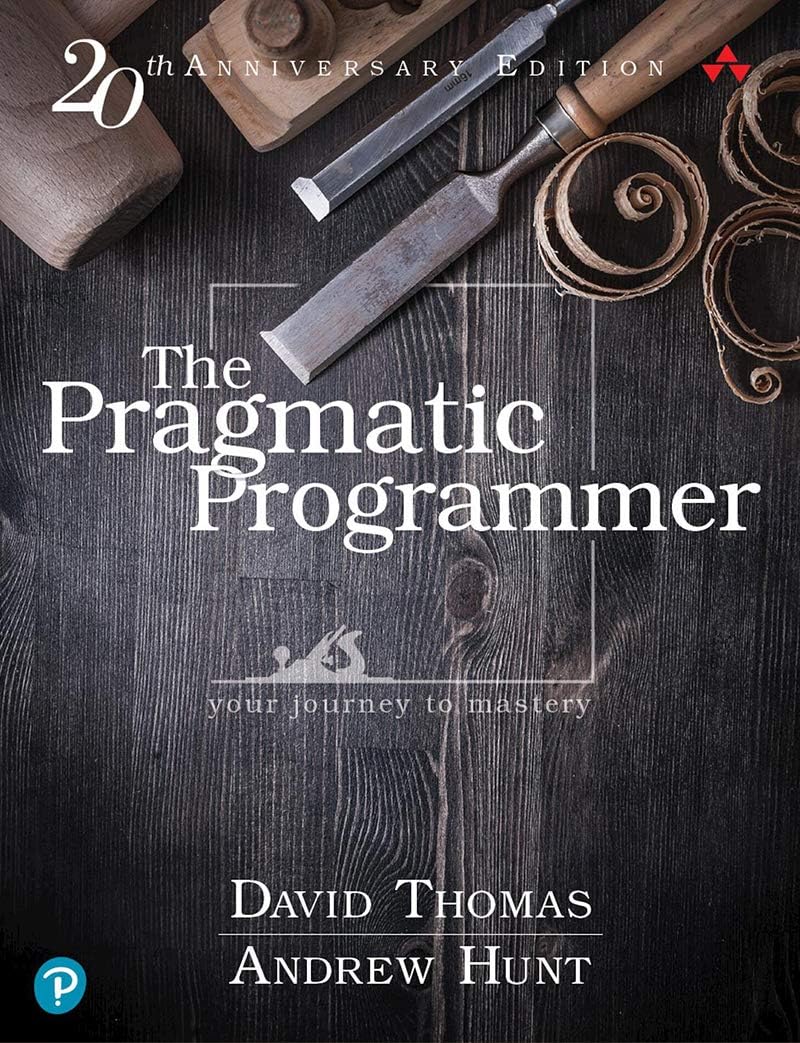
ReadSprintBooksThe Pragmatic ProgrammerThe Pragmatic Programmer Key Concepts and Core Ideas
The Pragmatic Programmer
The Pragmatic Programmer Key Concepts and Core Ideas

The Pragmatic Programmer Key Concepts and Core Ideas

by David Thomas and Andrew Hunt

Understand the core concepts in The Pragmatic Programmer by David Thomas and Andrew Hunt, with explanations, recall prompts, related books, and connected learning paths.

This page isolates the core concepts carrying The Pragmatic Programmer. Use it when you want to understand the book’s mental models, not just skim the chapter sequence.

Built for retention

ReadSprint combines concise summaries, quizzes, active recall, and related reading paths so the useful part of the book is easier to keep.

Open full summary

8

Chapter summaries

5

Quiz questions

12

Key takeaways

6

Related books

Concept map

These are the ideas doing most of the work inside The Pragmatic Programmer. Study them as reusable mental models, then jump back into chapters or questions when you want more context.

Concept 1

A Pragmatic Philosophy

This chapter introduces the core philosophy of being a pragmatic programmer, emphasizing adaptability and continuous learning.

Why it matters: The chapter sets the stage for the entire book, highlighting the importance of a flexible mindset in software development.

Supporting points

  • Embrace change and adapt to new situations
  • Continuously learn and improve your skills
  • Take responsibility for your work
Active recall prompt

How does a pragmatic philosophy change the way you would explain or apply The Pragmatic Programmer?

Related chapter

A Pragmatic Philosophy

Concept 2

A Pragmatic Approach

This chapter discusses practical techniques for effective software development, including problem-solving and decision making strategies.

Why it matters: The chapter emphasizes practical strategies that can be applied to real-world programming challenges.

Supporting points

  • Break down complex problems into manageable parts
  • Use iterative development to refine solutions
  • Make informed decisions based on data
Active recall prompt

How does a pragmatic approach change the way you would explain or apply The Pragmatic Programmer?

Related chapter

A Pragmatic Approach

Concept 3

The Basic Tools

This chapter covers essential tools and techniques that every programmer should master, such as version control and debugging.

Why it matters: The chapter provides foundational knowledge that supports efficient and effective software development.

Supporting points

  • Master version control systems like Git
  • Develop strong debugging skills
  • Use automation to streamline repetitive tasks
Active recall prompt

How does the basic tools change the way you would explain or apply The Pragmatic Programmer?

Related chapter

The Basic Tools

Concept 4

Pragmatic Paranoia

This chapter explores the concept of 'pragmatic paranoia,' encouraging programmers to anticipate and mitigate potential risks.

Why it matters: The chapter highlights the importance of foresight and caution in programming to prevent future issues.

Supporting points

  • Always plan for failure and have backups
  • Write code that is easy to understand and maintain
  • Regularly review and refactor code
Active recall prompt

How does pragmatic paranoia change the way you would explain or apply The Pragmatic Programmer?

Related chapter

Pragmatic Paranoia

Concept 5

Bend or Break

This chapter discusses the importance of flexibility in software design, encouraging programmers to create adaptable and resilient systems.

Why it matters: The chapter underscores the need for flexible and sustainable software design.

Supporting points

  • Design systems that can evolve over time
  • Use design patterns to solve common problems
  • Avoid over
Active recall prompt

How does bend or break change the way you would explain or apply The Pragmatic Programmer?

Related chapter

Bend or Break

Concept 6

While You Are Coding

This chapter provides insights into best practices while coding, including writing clean code and maintaining focus.

Why it matters: The chapter emphasizes the importance of discipline and attention to detail during the coding process.

Supporting points

  • Write clean, readable code
  • Maintain focus and avoid distractions
  • Use meaningful names for variables and functions
Active recall prompt

How does while you are coding change the way you would explain or apply The Pragmatic Programmer?

Related chapter

While You Are Coding

Concept 7

Before the Project

This chapter outlines the steps to take before starting a project, such as planning and gathering requirements.

Why it matters: The chapter stresses the importance of preparation and planning in successful project execution.

Supporting points

  • Clearly define project goals and requirements
  • Conduct thorough research and feasibility studies
  • Create a realistic timeline and budget
Active recall prompt

How does before the project change the way you would explain or apply The Pragmatic Programmer?

Related chapter

Before the Project

Concept 8

Pragmatic Projects

This chapter focuses on managing projects pragmatically, covering topics like communication and adaptability.

Why it matters: The chapter highlights the role of effective communication and adaptability in successful project management.

Supporting points

  • Foster open communication within the team
  • Be adaptable to changing project needs
  • Use agile methodologies for project management
Active recall prompt

How does pragmatic projects change the way you would explain or apply The Pragmatic Programmer?

Related chapter

Pragmatic Projects

Quiz checkpoints

Question 1

What is the core philosophy of a pragmatic programmer?

Question 2

Which tool is essential for version control?

Question 3

What is 'pragmatic paranoia'?

Practice retrieval

Key concepts

A Pragmatic Philosophy

The chapter sets the stage for the entire book, highlighting the importance of a flexible mindset in software development.

A Pragmatic Approach

The chapter emphasizes practical strategies that can be applied to real-world programming challenges.

The Basic Tools

The chapter provides foundational knowledge that supports efficient and effective software development.

Open concept map

Author relationship system

Move from this author into connected writers, nearby themes, and any other books already in the ReadSprint library.

Similar themes and topic pages

Use topic hubs and category pages to keep reading depth aligned with what this book is actually about.

Turn Reading Into Recall

Keep The Pragmatic Programmer review-ready instead of letting it fade.

This page is strongest when it becomes part of a review habit: save the summary, revisit the key takeaways, and use recall prompts before the next meeting, study block, or decision.

Save one strong takeaway instead of over-highlighting.
Use the questions page to test what actually stuck.
Return when the book becomes relevant again, not just when motivation is high.
See pricing
Get Book Review Notes

Get practical notes on remembering and reusing ideas from nonfiction books without building an overly heavy note system.

Retention workflow

Turn this page into a repeatable study loop

Move from summary to takeaways, test yourself with questions, revisit the concept map, and then continue into related books. That keeps The Pragmatic Programmerconnected instead of turning into a one-time skim.

Frequently asked questions

What are the key concepts in The Pragmatic Programmer?

The key concepts here are distilled from the chapter summaries, major themes, and action-oriented takeaways so you can quickly see the ideas carrying the whole book.

How should I study these The Pragmatic Programmer concepts?

Start by explaining each concept from memory, connect it to a chapter or example, and then test yourself with one active recall prompt before moving on.

How are the concepts connected to other books?

Use the related books and topic links on this page to find books that reinforce, challenge, or extend the same ideas from a different angle.