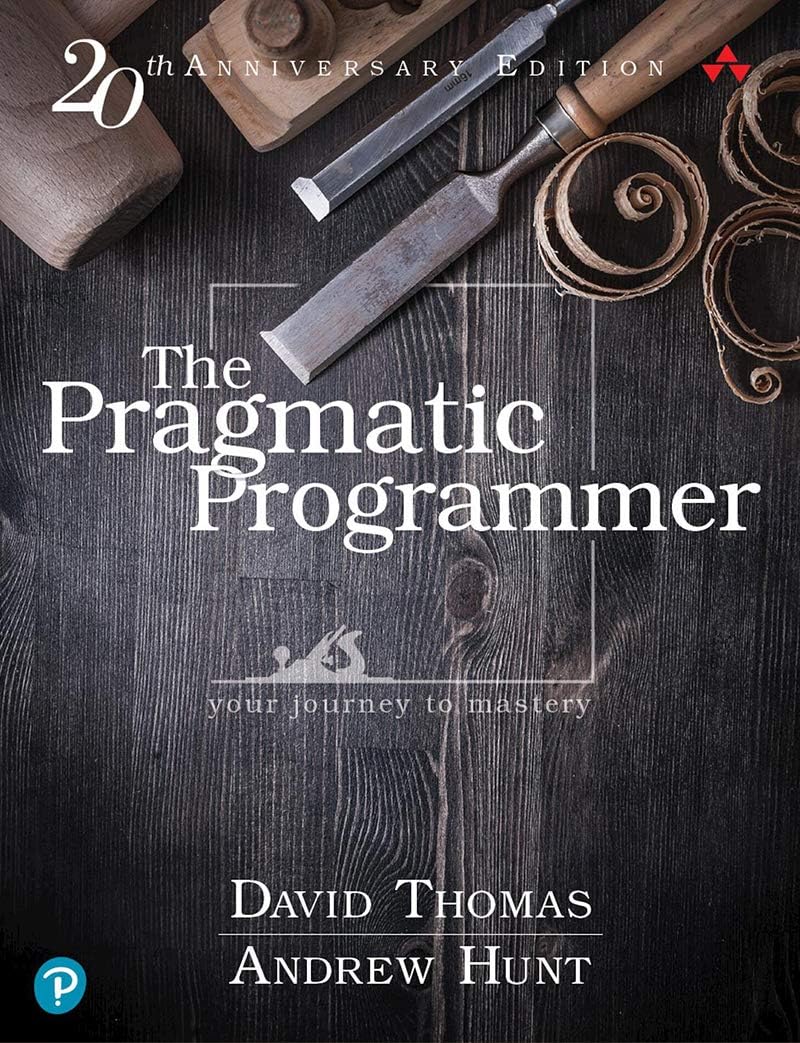
Book overview
This chapter introduces the core philosophy of being a pragmatic programmer, emphasizing adaptability and continuous learning.
This page is built to be a compact learning hub for The Pragmatic Programmer. You can move from the high-level summary into takeaways, quiz prompts, chapter review, and related books without breaking the reading flow.
Best takeaways to keep
Embrace change and adapt to new situations
Continuously learn and improve your skills
Take responsibility for your work
Think critically and question assumptions
Adopt a mindset of continuous improvement and adaptability in your programming career.
The chapter sets the stage for the entire book, highlighting the importance of a flexible mindset in software development.
Retrieval practice
What is the core philosophy of a pragmatic programmer?
Which tool is essential for version control?
What is 'pragmatic paranoia'?
What should be avoided in software design?
Quiz preview
What is the core philosophy of a pragmatic programmer?
- Embrace change and continuous learning
- Focus solely on coding skills
- Avoid taking responsibility
Which tool is essential for version control?
- Git
- Excel
- Photoshop
What is 'pragmatic paranoia'?
- Ignoring potential risks
- Anticipating and mitigating risks
- Over-engineering solutions
What should be avoided in software design?
- Over-engineering
- Using design patterns
- Embracing simplicity
Chapter map
A Pragmatic Philosophy
This chapter introduces the core philosophy of being a pragmatic programmer, emphasizing adaptability and continuous learning.
A Pragmatic Approach
This chapter discusses practical techniques for effective software development, including problem-solving and decision making strategies.
The Basic Tools
This chapter covers essential tools and techniques that every programmer should master, such as version control and debugging.
Pragmatic Paranoia
This chapter explores the concept of 'pragmatic paranoia,' encouraging programmers to anticipate and mitigate potential risks.
Bend or Break
This chapter discusses the importance of flexibility in software design, encouraging programmers to create adaptable and resilient systems.
Next best step
Move next into the questions page if you want better retention, or into the takeaways page if you want the shortest useful review loop for this book.