Concept map
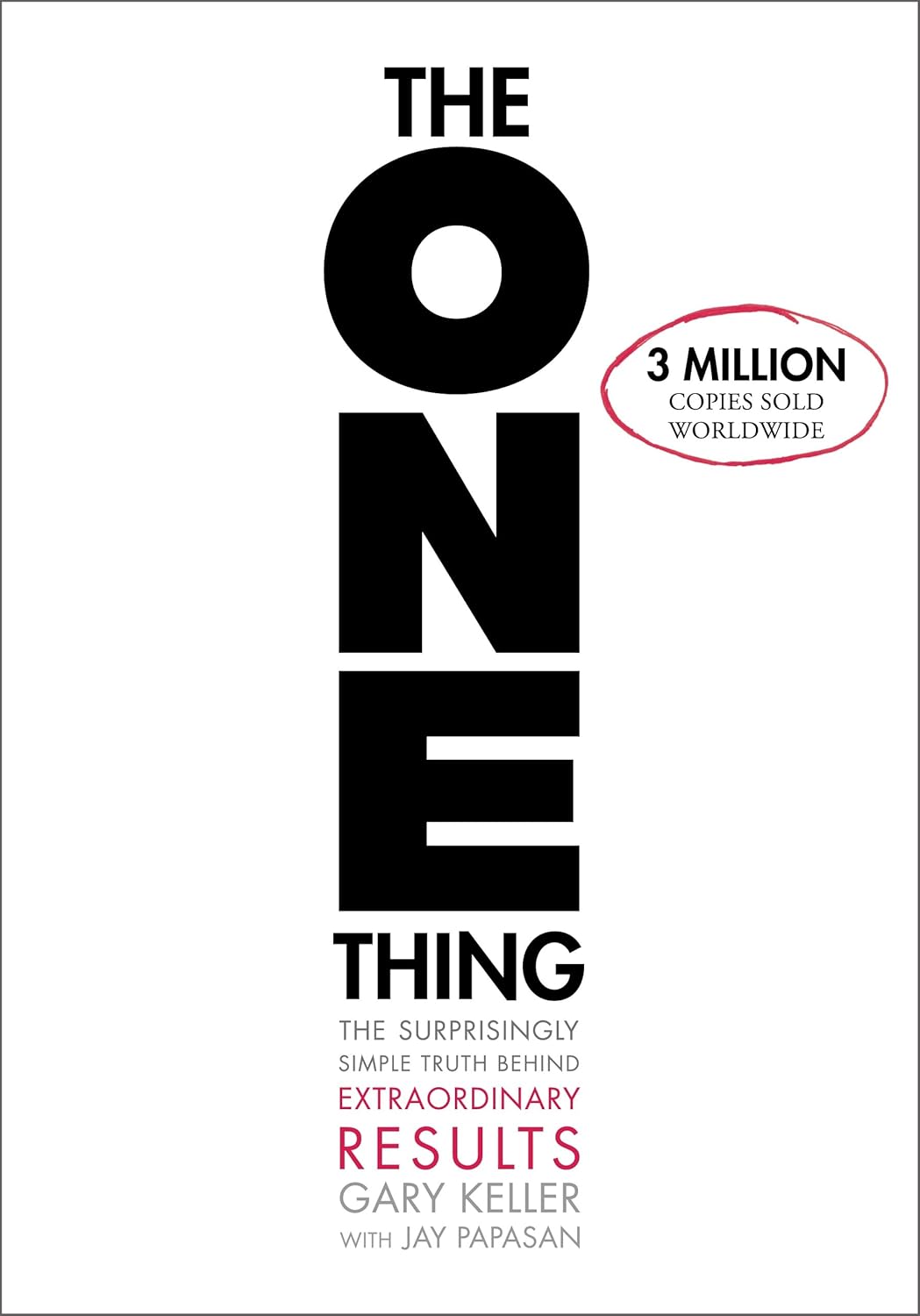
These are the ideas doing most of the work inside The One Thing. Study them as reusable mental models, then jump back into chapters or questions when you want more context.
The One Thing
The chapter introduces the core idea: focus on the single most important task that makes everything else easier or unnecessary. It argues that success is built by narrowing your attention to the One Thing that drives disproportionate results.
Supporting points
- Success comes from focusing on the most important priority, not many equal tasks.
- The One Thing is defined by asking which action will make everything else easier or unnecessary.
- Multitasking and scattered attention reduce effectiveness and slow progress.
How does the one thing change the way you would explain or apply The One Thing?
The One Thing
The Lies We Tell Ourselves
This chapter exposes common misconceptions that sabotage focus: myths like everything matters equally, multitasking works, and that balance is always attainable. It shows how these lies prevent people from committing to the One Thing.
Supporting points
- "Everything matters equally" is false: disproportionate results come from unequal focus.
- Multitasking is a productivity killer because it divides attention and increases errors.
- Believing you must be perfectly disciplined, balanced, or that willpower is constant are misconceptions that undermine sustained progress.
How does the lies we tell ourselves change the way you would explain or apply The One Thing?
The Lies We Tell Ourselves
Live with Purpose
The chapter emphasizes the importance of purpose and big-picture goals in guiding daily priorities and sustaining motivation. It encourages defining a compelling long-term target so that short-term actions align with meaningful outcomes.
Supporting points
- Purpose gives direction to identify the One Thing that matters most for your life and work.
- Thinking in long-term time horizons helps select high-leverage goals that create momentum.
- A clear mission reduces distractions and helps evaluate what to say yes or no to.
How does live with purpose change the way you would explain or apply The One Thing?
Live with Purpose
Live by Priority
This chapter teaches that priorities must be actively protected through time blocking and intentional scheduling. It presents practical ways to make your top priority nonnegotiable in daily routines.
Supporting points
- Time blocking reserves dedicated periods for your One Thing and prevents it from being crowded out.
- Daily and weekly planning aligned with your top priority ensures consistent progress.
- Saying no and removing low-value tasks preserves the space needed for high-impact work.
How does live by priority change the way you would explain or apply The One Thing?
Live by Priority
The Three Commitments
The chapter outlines essential commitments required to live the One Thing: commit to extraordinary results, to time blocking, and to building the habits that sustain focus (specific phrasing of the commitments is inferred). These commitments move intention into disciplined practice and long-term achievement.
Supporting points
- Commitment to extraordinary results means prioritizing what leads to breakthrough outcomes.
- Commitment to time blocking ensures regular, protected work on your One Thing.
- Commitment to developing habits and patience acknowledges that mastery takes time and consistent effort.
How does the three commitments change the way you would explain or apply The One Thing?
The Three Commitments
The Four Thieves
This chapter identifies four common obstacles that steal productivity and compromise the One Thing: inability to say no, fear of chaos, poor health or energy management, and an unsupportive environment. It explains how each thief undermines focus and offers ways to guard against them.
Supporting points
- Inability to say no allows low-value tasks to erode time for what matters most.
- Fear of chaos makes people avoid necessary shifts and accept short-term disorder rather than protecting priority work.
- Poor health and energy management diminish capacity to perform focused work consistently.
How does the four thieves change the way you would explain or apply The One Thing?
The Four Thieves
The Focusing Question
The chapter introduces the Focusing Question: "What's the ONE Thing I can do such that by doing it everything else will be easier or unnecessary?" It shows how repeatedly applying this question across time horizons clarifies priorities and guides decisions.
Supporting points
- The Focusing Question helps you find the highest-leverage action for any situation or time frame.
- Using the question across six time horizons (from someday to daily) connects long-term goals with daily tasks.
- The question simplifies choices and reduces decision fatigue by making priorities explicit.
How does the focusing question change the way you would explain or apply The One Thing?
The Focusing Question
The Success Habit
This chapter explains how making the One Thing a habit turns sporadic effort into reliable progress through consistent practice and time blocking. It covers techniques for habit formation, tracking, and maintaining momentum over the long term.
Supporting points
- Repetition and protected time cultivate the habit of focusing on your One Thing daily.
- Habit tracking and accountability reinforce consistency and help overcome lapses.
- Small, consistent actions compound over time to produce significant results.
How does the success habit change the way you would explain or apply The One Thing?
The Success Habit