Concept map
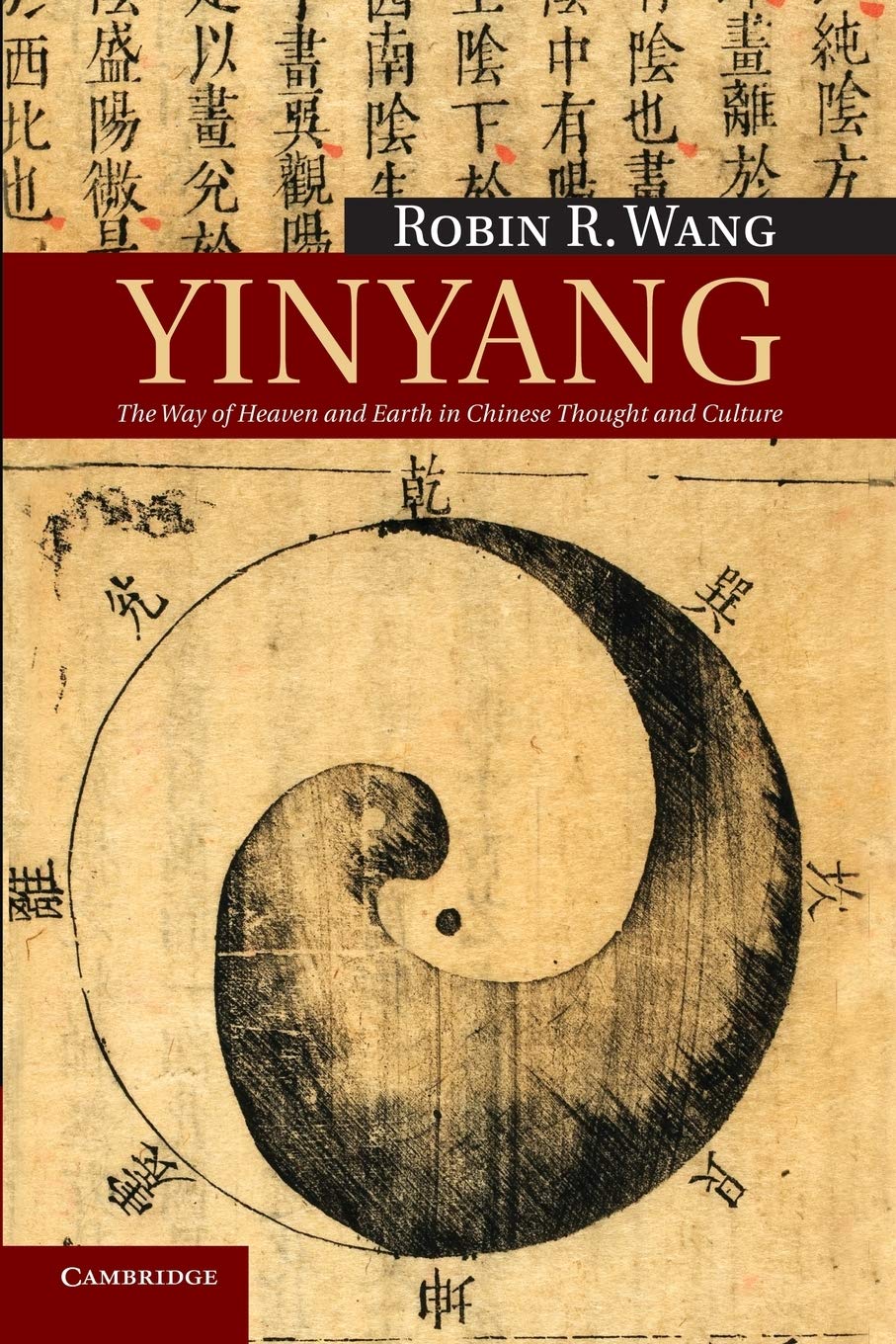
These are the ideas doing most of the work inside Yinyang: The Way of Heaven and Earth in Chinese Thought and Culture. Study them as reusable mental models, then jump back into chapters or questions when you want more context.
Introduction: The Way of Heaven and Earth
Yinyang is presented as a central organizing principle in Chinese thought that describes complementary, interdependent forces shaping the cosmos, nature, and human life. The introduction outlines the book's aim to trace the concept's historical development, expressions across disciplines, and enduring cultural influence.
Supporting points
- Yinyang defines complementary polarities (yin as receptive/dark, yang as active/light) that interact dynamically.
- It functions as a cosmological and explanatory framework rather than a rigid binary.
- The concept permeates philosophy, ritual, medicine, calendrics, and governance.
How does introduction: the way of heaven and earth change the way you would explain or apply Yinyang: The Way of Heaven and Earth in Chinese Thought and Culture?
Introduction: The Way of Heaven and Earth
1. The Meaning and Formation of Yinyang
This chapter analyzes the semantic and symbolic roots of yin and yang and explains how the pair grew from observable contrasts into a unified theory of relational dynamics. It traces linguistic, cosmological, and early philosophical moves that transformed simple oppositions into an integrative model of process.
Supporting points
- Etymology and basic semantic oppositions (shadow/light, below/above, yielding/firm) underlie the terms yin and yang.
- The pair became theorized as mutually generating and transforming principles rather than absolute opposites.
- Yinyang integrates with qi (vital energy) to explain change, motion, and patterning in the world.
How does 1. the meaning and formation of yinyang change the way you would explain or apply Yinyang: The Way of Heaven and Earth in Chinese Thought and Culture?
1. The Meaning and Formation of Yinyang
2. Yinyang in Early Texts and Cosmology
The chapter surveys early textual uses of yinyang in sources such as the I Ching, early cosmological writings, and ritual manuals, showing how the idea shaped models of heaven, earth, and human agency. It demonstrates that yinyang served both explanatory and prescriptive functions in early Chinese cosmology.
Supporting points
- The I Ching (Zhouyi) provides a formative technical vocabulary relating yin
- yang to change and hexagram structure (inferred on specific textual mechanisms).
- Ritual and calendrical texts use yinyang to align human activity with cosmic rhythms.
How does 2. yinyang in early texts and cosmology change the way you would explain or apply Yinyang: The Way of Heaven and Earth in Chinese Thought and Culture?
2. Yinyang in Early Texts and Cosmology
3. Yinyang, Numbers, and Time
This chapter explores the numerical and calendrical systems that codified yinyang relations—cycles, stems and branches, and the five phases—demonstrating how quantitative schemes embodied qualitative balances. It argues that counting and timing were ways to operationalize yinyang for agriculture, divination, and governance.
Supporting points
- Number systems (e.g., odd/even, 10 Heavenly Stems, 12 Earthly Branches) mapped onto yin and yang distinctions to structure time and ritual (inferred for specific mappings).
- The Five Phases (wuxing) intersect with yinyang to produce richer classificatory schemes linking elements, organs, directions, and seasons.
- Calendrical practices and astrological calculations used these schemes to determine auspicious dates and seasonal duties.
How does 3. yinyang, numbers, and time change the way you would explain or apply Yinyang: The Way of Heaven and Earth in Chinese Thought and Culture?
3. Yinyang, Numbers, and Time
4. Yinyang and the Human Body: Medicine and Physiology
This chapter examines how yinyang became central to Chinese medical theory, informing ideas of organ pairing, disease causation, diagnosis, and therapeutic balance. It shows medicine as an applied field where cosmological metaphors guide practical interventions to restore harmony.
Supporting points
- Health is framed as a balance between yin and yang forces within the body, with illness arising from imbalance or blockage of qi.
- Organs are paired and associated with yin/yang qualities, seasons, and emotions, forming diagnostic networks.
- Therapies (acupuncture, herbal formulas, dietary and lifestyle prescriptions) aim to restore dynamic equilibrium rather than simply eliminate symptoms.
How does 4. yinyang and the human body: medicine and physiology change the way you would explain or apply Yinyang: The Way of Heaven and Earth in Chinese Thought and Culture?
4. Yinyang and the Human Body: Medicine and Physiology
5. Yinyang in Ritual, Divination, and Calendrical Practice
This chapter traces how yinyang thinking structured ritual timing, divinatory procedures, and calendrical organization, making it central to public and private decision-making. It argues that ritual efficacy relied on aligning human acts with perceived cosmic rhythms.
Supporting points
- Ritual schedules and sacrificial protocols employed yin
- yang classifications to ensure proper alignment with seasonal and celestial cycles.
- Divination techniques (hexagrams, astrological readings) used yinyang logic to interpret signs and guide action.
How does 5. yinyang in ritual, divination, and calendrical practice change the way you would explain or apply Yinyang: The Way of Heaven and Earth in Chinese Thought and Culture?
5. Yinyang in Ritual, Divination, and Calendrical Practice
6. Yinyang in Politics, Ethics, and Society
This chapter shows how yinyang shaped political theory, ethical norms, and social institutions by offering models for harmony, role balance, and legitimate rule. It explores how rulers and thinkers used the language of balance to justify policies, moral education, and social hierarchies.
Supporting points
- Political legitimacy was often framed in terms of harmonizing yin and yang forces—e.g., flexible authority (yang) balanced with moral restraint (yin).
- Ethical frameworks adapted yinyang to argue for role complementarity, social moderation, and measured governance.
- Gender, family relations, and social roles were frequently interpreted through yinyang metaphors, producing persistent cultural patterns (inferred in specific formulations).
How does 6. yinyang in politics, ethics, and society change the way you would explain or apply Yinyang: The Way of Heaven and Earth in Chinese Thought and Culture?
6. Yinyang in Politics, Ethics, and Society
Conclusion: Yinyang in Chinese Thought and Culture
The conclusion synthesizes the book's case that yinyang is a multifunctional paradigm shaping many domains of Chinese life, from metaphysics and medicine to ritual and politics, and that its adaptability explains its longevity. It reflects on continuity and transformation, including modern reinterpretations and cross-cultural engagements.
Supporting points
- Yinyang's strength lies in its integrative, process
- oriented logic that accommodates change and multiplicity.
- Its deployment ranged from technical calendrical systems to broad moral and political discourse.
How does conclusion: yinyang in chinese thought and culture change the way you would explain or apply Yinyang: The Way of Heaven and Earth in Chinese Thought and Culture?
Conclusion: Yinyang in Chinese Thought and Culture