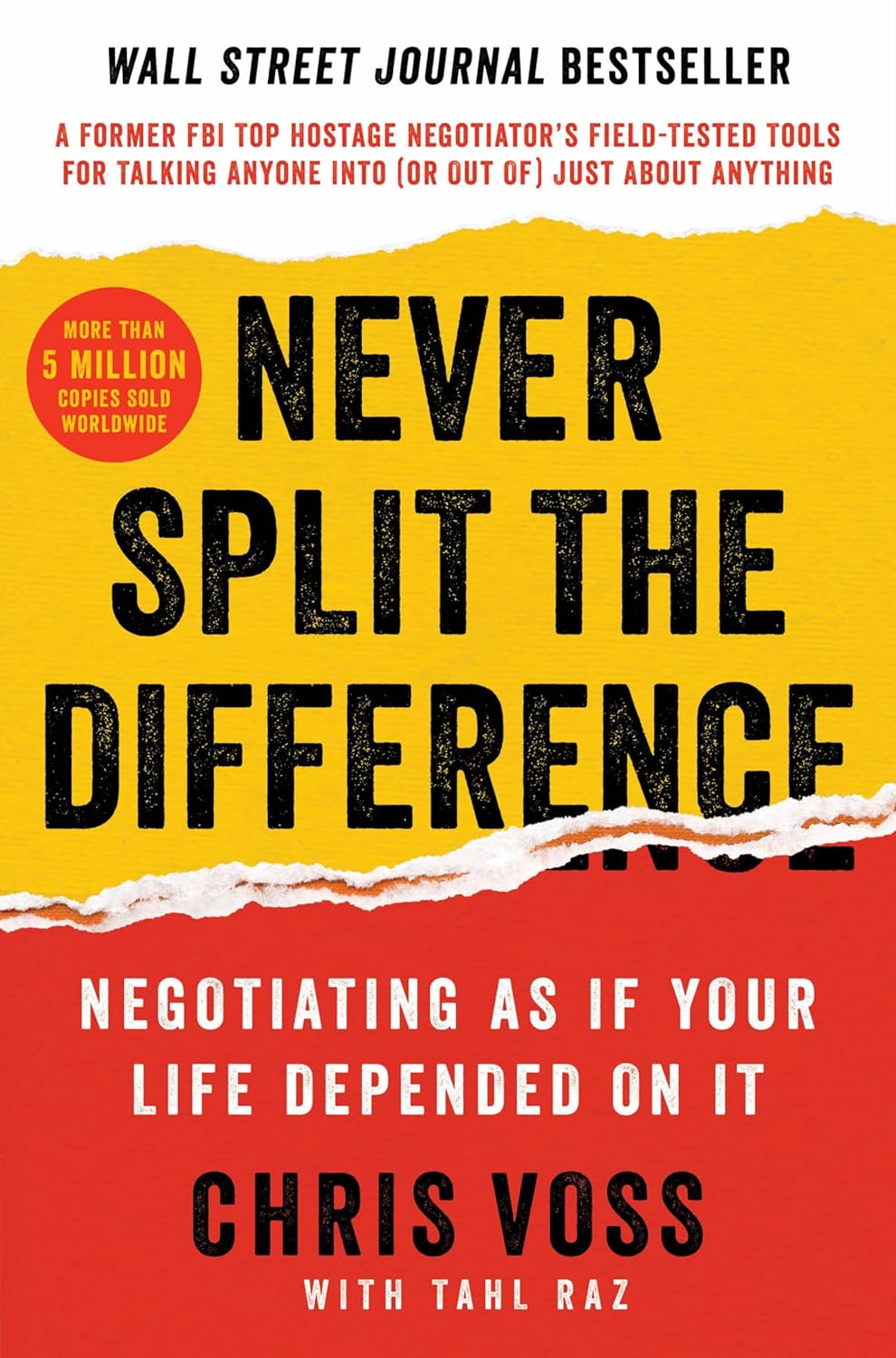
ReadSprintBooksNever Split the Difference: Negotiating As If Your Life Depended On ItNever Split the Difference: Negotiating As If Your Life Depended On It Key Concepts and Core Ideas
Never Split the Difference: Negotiating As If Your Life Depended On It
Never Split the Difference: Negotiating As If Your Life Depended On It Key Concepts and Core Ideas

Never Split the Difference: Negotiating As If Your Life Depended On It Key Concepts and Core Ideas

by Chris Voss with Tahl Raz

Understand the core concepts in Never Split the Difference: Negotiating As If Your Life Depended On It by Chris Voss with Tahl Raz, with explanations, recall prompts, related books, and connected learning paths.

This page isolates the core concepts carrying Never Split the Difference: Negotiating As If Your Life Depended On It. Use it when you want to understand the book’s mental models, not just skim the chapter sequence.

Built for retention

ReadSprint combines concise summaries, quizzes, active recall, and related reading paths so the useful part of the book is easier to keep.

Open full summary

10

Chapter summaries

5

Quiz questions

12

Key takeaways

6

Related books

Concept map

These are the ideas doing most of the work inside Never Split the Difference: Negotiating As If Your Life Depended On It. Study them as reusable mental models, then jump back into chapters or questions when you want more context.

Concept 1

The New Rules

This chapter introduces the concept of negotiation as a critical skill in everyday life, emphasizing the importance of emotional intelligence and empathy. Chris Voss shares his background as an FBI negotiator and sets the stage for the techniques he will discuss.

Why it matters: The chapter sets the foundation for understanding negotiation as a life skill, highlighting the importance of empathy and emotional intelligence.

Supporting points

  • Negotiation is a part of daily life
  • Emotional intelligence is crucial
  • Empathy can be a powerful tool
Active recall prompt

How does the new rules change the way you would explain or apply Never Split the Difference: Negotiating As If Your Life Depended On It?

Related chapter

The New Rules

Concept 2

Be a Mirror

Voss explains the technique of mirroring, a simple yet effective way to build rapport and trust. By repeating the last few words your counterpart says, you can encourage them to elaborate and feel understood.

Why it matters: Mirroring is presented as a foundational technique for effective communication, emphasizing the importance of making others feel heard.

Supporting points

  • Mirroring builds rapport
  • Encourages elaboration
  • Creates a sense of understanding
Active recall prompt

How does be a mirror change the way you would explain or apply Never Split the Difference: Negotiating As If Your Life Depended On It?

Related chapter

Be a Mirror

Concept 3

Don't Feel Their Pain, Label It

This chapter focuses on labeling emotions to diffuse tension and create a connection. By identifying and verbalizing the emotions of others, you can help them feel acknowledged and reduce conflict.

Why it matters: Labeling emotions is a key strategy in negotiation, reinforcing the theme of empathy and understanding.

Supporting points

  • Labeling emotions diffuses tension
  • Creates connection and understanding
  • Helps others feel acknowledged
Active recall prompt

How does don't feel their pain, label it change the way you would explain or apply Never Split the Difference: Negotiating As If Your Life Depended On It?

Related chapter

Don't Feel Their Pain, Label It

Concept 4

Beware 'Yes'—Master 'No'

Voss discusses the power of 'No' and how it can be more valuable than 'Yes' in negotiations. Understanding the reasons behind a 'No' can lead to more meaningful conversations and solutions.

Why it matters: The chapter challenges the traditional view of 'Yes' as the ultimate goal, promoting 'No' as a tool for deeper understanding.

Supporting points

  • 'No' can be more valuable than 'Yes'
  • Understanding 'No' leads to solutions
  • Encourages deeper conversations
Active recall prompt

How does beware 'yes'—master 'no' change the way you would explain or apply Never Split the Difference: Negotiating As If Your Life Depended On It?

Related chapter

Beware 'Yes'—Master 'No'

Concept 5

Trigger the Two Words That Immediately Transform Any Negotiation

The chapter reveals the power of getting your counterpart to say "That's right." This phrase indicates true understanding and agreement, moving the negotiation forward.

Why it matters: Achieving a "That's right" moment is crucial for successful negotiation, emphasizing the importance of genuine understanding.

Supporting points

  • "That's right" signals true understanding
  • Moves negotiation forward
  • Indicates agreement
Active recall prompt

How does trigger the two words that immediately transform any negotiation change the way you would explain or apply Never Split the Difference: Negotiating As If Your Life Depended On It?

Related chapter

Trigger the Two Words That Immediately Transform Any Negotiation

Concept 6

Bend Their Reality

Voss introduces techniques to influence your counterpart's perception of reality, such as anchoring and using deadlines. These strategies help in steering negotiations towards favorable outcomes.

Why it matters: The chapter explores psychological strategies to shape negotiations, reinforcing the theme of strategic influence.

Supporting points

  • Influence perception with anchoring
  • Use deadlines strategically
  • Steer negotiations favorably
Active recall prompt

How does bend their reality change the way you would explain or apply Never Split the Difference: Negotiating As If Your Life Depended On It?

Related chapter

Bend Their Reality

Concept 7

Create the Illusion of Control

This chapter focuses on giving your counterpart the illusion of control by asking calibrated questions. This technique encourages them to solve problems themselves, leading to better outcomes.

Why it matters: The strategy of giving control aligns with the book's emphasis on psychological tactics and effective communication.

Supporting points

  • Use calibrated questions
  • Give the illusion of control
  • Encourage problem
Active recall prompt

How does create the illusion of control change the way you would explain or apply Never Split the Difference: Negotiating As If Your Life Depended On It?

Related chapter

Create the Illusion of Control

Concept 8

Guarantee Execution

Voss discusses the importance of ensuring that agreements are executed. By using techniques like the "Rule of Three," you can confirm understanding and commitment from your counterpart.

Why it matters: Execution is key to successful negotiation, highlighting the importance of commitment and follow-through.

Supporting points

  • Ensure agreements are executed
  • Use the "Rule of Three"
  • Confirm understanding and commitment
Active recall prompt

How does guarantee execution change the way you would explain or apply Never Split the Difference: Negotiating As If Your Life Depended On It?

Related chapter

Guarantee Execution

Quiz checkpoints

Question 1

What is the main focus of the book?

Question 2

What technique does Voss suggest for building rapport?

Question 3

Which phrase indicates true understanding in a negotiation?

Practice retrieval

Key concepts

The New Rules

The chapter sets the foundation for understanding negotiation as a life skill, highlighting the importance of empathy and emotional intelligence.

Be a Mirror

Mirroring is presented as a foundational technique for effective communication, emphasizing the importance of making others feel heard.

Don't Feel Their Pain, Label It

Labeling emotions is a key strategy in negotiation, reinforcing the theme of empathy and understanding.

Open concept map
Turn Reading Into Recall

Keep Never Split the Difference: Negotiating As If Your Life Depended On It review-ready instead of letting it fade.

This page is strongest when it becomes part of a review habit: save the summary, revisit the key takeaways, and use recall prompts before the next meeting, study block, or decision.

Save one strong takeaway instead of over-highlighting.
Use the questions page to test what actually stuck.
Return when the book becomes relevant again, not just when motivation is high.
See pricing
Get Book Review Notes

Get practical notes on remembering and reusing ideas from nonfiction books without building an overly heavy note system.

Retention workflow

Turn this page into a repeatable study loop

Move from summary to takeaways, test yourself with questions, revisit the concept map, and then continue into related books. That keeps Never Split the Difference: Negotiating As If Your Life Depended On Itconnected instead of turning into a one-time skim.

Frequently asked questions

What are the key concepts in Never Split the Difference: Negotiating As If Your Life Depended On It?

The key concepts here are distilled from the chapter summaries, major themes, and action-oriented takeaways so you can quickly see the ideas carrying the whole book.

How should I study these Never Split the Difference: Negotiating As If Your Life Depended On It concepts?

Start by explaining each concept from memory, connect it to a chapter or example, and then test yourself with one active recall prompt before moving on.

How are the concepts connected to other books?

Use the related books and topic links on this page to find books that reinforce, challenge, or extend the same ideas from a different angle.