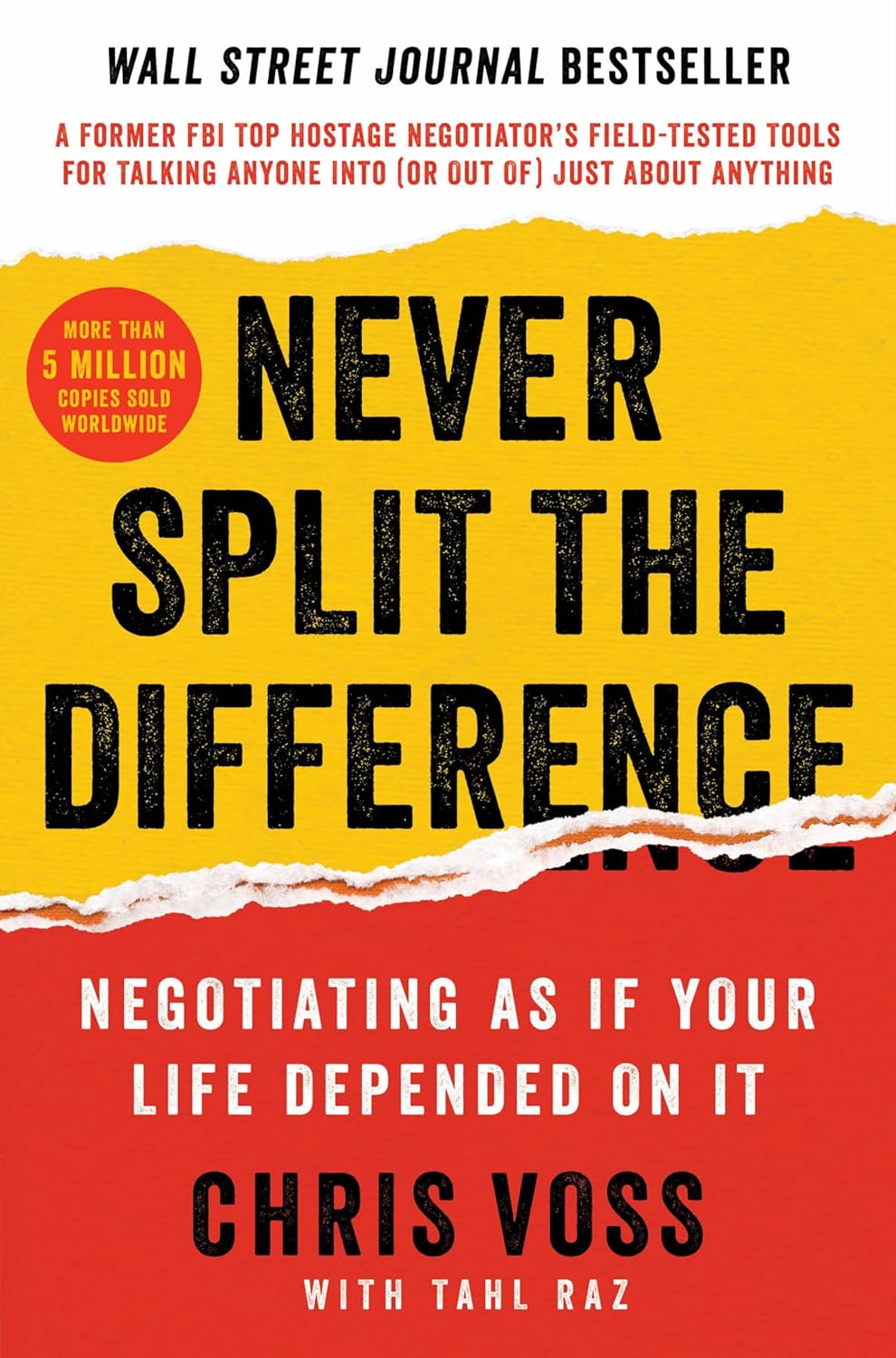
The New Rules
Summary:
This chapter introduces the concept of negotiation as a critical skill in everyday life, emphasizing the importance of emotional intelligence and empathy. Chris Voss shares his background as an FBI negotiator and sets the stage for the techniques he will discuss.
Key points:
- Negotiation is a part of daily life
- Emotional intelligence is crucial
- Empathy can be a powerful tool
- The author's background in FBI negotiations
Themes & relevance:
The chapter sets the foundation for understanding negotiation as a life skill, highlighting the importance of empathy and emotional intelligence.
Takeaway / How to use:
Approach negotiations with empathy and emotional awareness.
Key points
- Negotiation is a part of daily life
- Emotional intelligence is crucial
- Empathy can be a powerful tool
- The author's background in FBI negotiations
Be a Mirror
Summary:
Voss explains the technique of mirroring, a simple yet effective way to build rapport and trust. By repeating the last few words your counterpart says, you can encourage them to elaborate and feel understood.
Key points:
- Mirroring builds rapport
- Encourages elaboration
- Creates a sense of understanding
- Simple technique with powerful results
Themes & relevance:
Mirroring is presented as a foundational technique for effective communication, emphasizing the importance of making others feel heard.
Takeaway / How to use:
Use mirroring to make others feel understood and to gather more information.
Key points
- Mirroring builds rapport
- Encourages elaboration
- Creates a sense of understanding
- Simple technique with powerful results
Don't Feel Their Pain, Label It
Summary:
This chapter focuses on labeling emotions to diffuse tension and create a connection. By identifying and verbalizing the emotions of others, you can help them feel acknowledged and reduce conflict.
Key points:
- Labeling emotions diffuses tension
- Creates connection and understanding
- Helps others feel acknowledged
- Reduces conflict
Themes & relevance:
Labeling emotions is a key strategy in negotiation, reinforcing the theme of empathy and understanding.
Takeaway / How to use:
Identify and verbalize emotions to create a connection and reduce tension.
Key points
- Labeling emotions diffuses tension
- Creates connection and understanding
- Helps others feel acknowledged
- Reduces conflict
Beware 'Yes'—Master 'No'
Summary:
Voss discusses the power of 'No' and how it can be more valuable than 'Yes' in negotiations. Understanding the reasons behind a 'No' can lead to more meaningful conversations and solutions.
Key points:
- 'No' can be more valuable than 'Yes'
- Understanding 'No' leads to solutions
- Encourages deeper conversations
- 'No' is not the end, but a beginning
Themes & relevance:
The chapter challenges the traditional view of 'Yes' as the ultimate goal, promoting 'No' as a tool for deeper understanding.
Takeaway / How to use:
Embrace 'No' as an opportunity to explore deeper solutions.
Key points
- 'No' can be more valuable than 'Yes'
- Understanding 'No' leads to solutions
- Encourages deeper conversations
- 'No' is not the end, but a beginning
Trigger the Two Words That Immediately Transform Any Negotiation
Summary:
The chapter reveals the power of getting your counterpart to say "That's right." This phrase indicates true understanding and agreement, moving the negotiation forward.
Key points:
- "That's right" signals true understanding
- Moves negotiation forward
- Indicates agreement
- Builds trust and rapport
Themes & relevance:
Achieving a "That's right" moment is crucial for successful negotiation, emphasizing the importance of genuine understanding.
Takeaway / How to use:
Aim for "That's right" to confirm understanding and agreement.
Key points
- "That's right" signals true understanding
- Moves negotiation forward
- Indicates agreement
- Builds trust and rapport
Bend Their Reality
Summary:
Voss introduces techniques to influence your counterpart's perception of reality, such as anchoring and using deadlines. These strategies help in steering negotiations towards favorable outcomes.
Key points:
- Influence perception with anchoring
- Use deadlines strategically
- Steer negotiations favorably
- Understand psychological tactics
Themes & relevance:
The chapter explores psychological strategies to shape negotiations, reinforcing the theme of strategic influence.
Takeaway / How to use:
Use anchoring and deadlines to influence negotiation outcomes.
Key points
- Influence perception with anchoring
- Use deadlines strategically
- Steer negotiations favorably
- Understand psychological tactics
Create the Illusion of Control
Summary:
This chapter focuses on giving your counterpart the illusion of control by asking calibrated questions. This technique encourages them to solve problems themselves, leading to better outcomes.
Key points:
- Use calibrated questions
- Give the illusion of control
- Encourage problem
- solving
- Lead to better outcomes
Themes & relevance:
The strategy of giving control aligns with the book's emphasis on psychological tactics and effective communication.
Takeaway / How to use:
Ask calibrated questions to guide others to solutions.
Key points
- Use calibrated questions
- Give the illusion of control
- Encourage problem
- solving
- Lead to better outcomes
Guarantee Execution
Summary:
Voss discusses the importance of ensuring that agreements are executed. By using techniques like the "Rule of Three," you can confirm understanding and commitment from your counterpart.
Key points:
- Ensure agreements are executed
- Use the "Rule of Three"
- Confirm understanding and commitment
- Build accountability
Themes & relevance:
Execution is key to successful negotiation, highlighting the importance of commitment and follow-through.
Takeaway / How to use:
Use the "Rule of Three" to ensure commitment and execution.
Key points
- Ensure agreements are executed
- Use the "Rule of Three"
- Confirm understanding and commitment
- Build accountability
Bargain Hard
Summary:
This chapter covers the art of bargaining, including tactics like the Ackerman model. Voss provides a structured approach to negotiating prices and terms effectively.
Key points:
- Use the Ackerman model
- Structured bargaining approach
- Negotiate prices and terms
- Effective negotiation tactics
Themes & relevance:
Bargaining is a critical skill in negotiation, emphasizing structured approaches and tactical planning.
Takeaway / How to use:
Apply the Ackerman model for effective bargaining.
Key points
- Use the Ackerman model
- Structured bargaining approach
- Negotiate prices and terms
- Effective negotiation tactics
Find the Black Swan
Summary:
The final chapter introduces the concept of "Black Swans," unexpected pieces of information that can change the course of a negotiation. Identifying these can lead to breakthroughs and successful outcomes.
Key points:
- Identify "Black Swans"
- Unexpected information can change negotiations
- Lead to breakthroughs
- Successful outcomes
Themes & relevance:
The chapter ties together the book's themes, emphasizing the importance of uncovering hidden information.
Takeaway / How to use:
Look for "Black Swans" to unlock negotiation breakthroughs.
Key points
- Identify "Black Swans"
- Unexpected information can change negotiations
- Lead to breakthroughs
- Successful outcomes