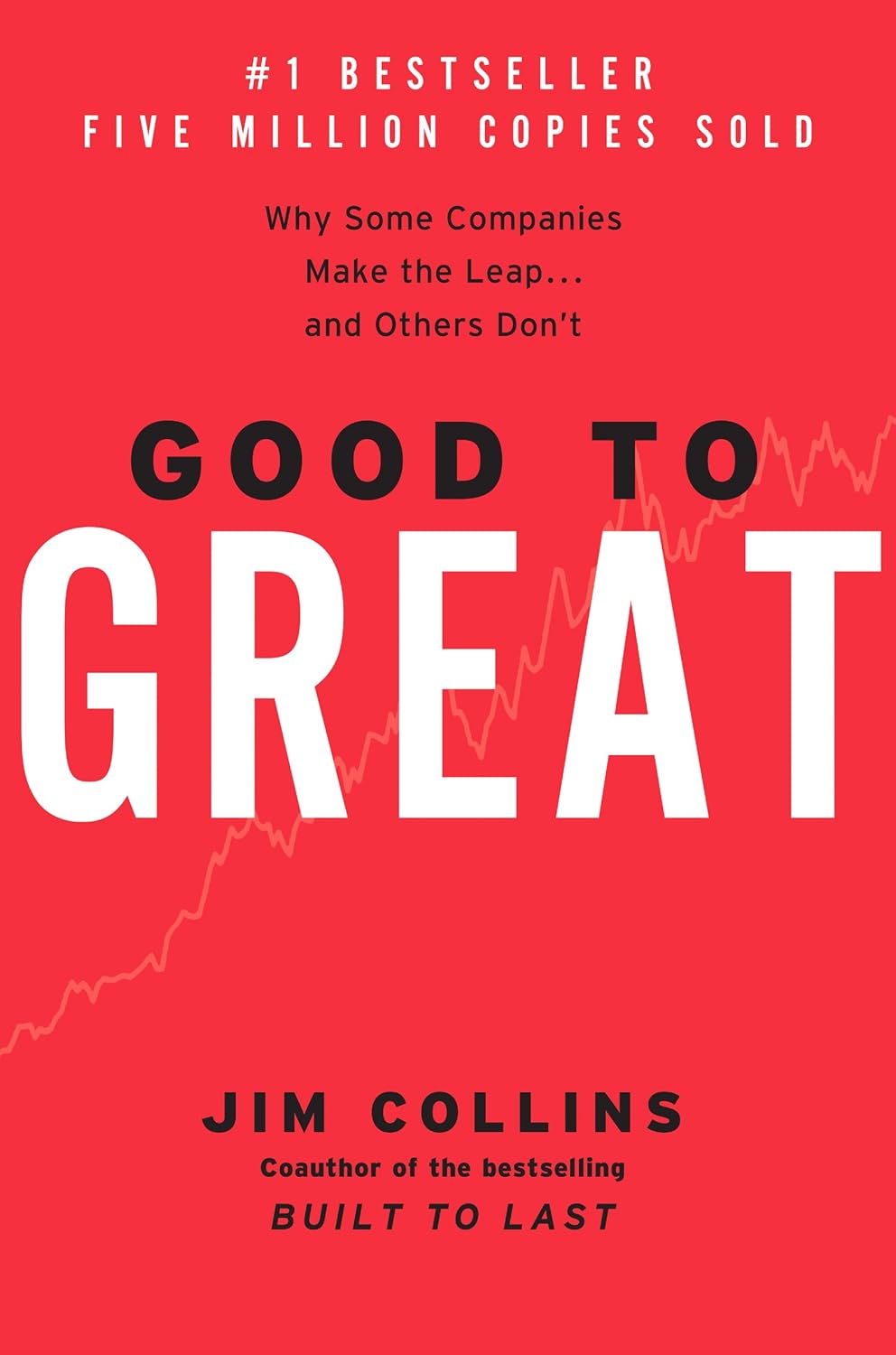
Good to Great: ReadSprint summary highlights
ReadSprint paraphrases for review. These highlights are not verbatim quotations from the book or its author. Check the original edition for exact wording and context.
Good to Great
by Jim Collins
Good is a comfortable, common state that prevents organizations from pursuing the much rarer and harder state of greatness.
ReadSprint paraphrase · Not a quotation from the author.
Good is a comfortable, common state that prevents organizations from pursuing the much rarer and harder state of greatness.
Being "good" creates complacency that stifles ambition and change.
Share with the ReadSprint source so others can read the context.
Good to Great
by Jim Collins
Collins argues that settling for good outcomes blocks the discipline and leadership required to achieve sustained superior results.
ReadSprint paraphrase · Not a quotation from the author.
Collins argues that settling for good outcomes blocks the discipline and leadership required to achieve sustained superior results.
Greatness requires rigorous, sustained effort and disciplined choices over time.
Share with the ReadSprint source so others can read the context.
Good to Great
by Jim Collins
Level 5 leaders combine personal humility with intense professional will, prioritizing company success over personal ego.
ReadSprint paraphrase · Not a quotation from the author.
Level 5 leaders combine personal humility with intense professional will, prioritizing company success over personal ego.
The research identifies a small set of companies that made the leap and sustained it, showing that greatness is achievable but uncommon.
Share with the ReadSprint source so others can read the context.
Good to Great
by Jim Collins
They channel ambition into the organization, build successors, and take responsibility for failures while crediting others for successes.
ReadSprint paraphrase · Not a quotation from the author.
They channel ambition into the organization, build successors, and take responsibility for failures while crediting others for successes.
Challenge comfort and set a clear intention to pursue greatness rather than settle for good.
Share with the ReadSprint source so others can read the context.
Good to Great
by Jim Collins
Put the right people on the bus (and the wrong people off) before deciding direction; people matter more than strategy.
ReadSprint paraphrase · Not a quotation from the author.
Put the right people on the bus (and the wrong people off) before deciding direction; people matter more than strategy.
The chapter frames the book’s central premise: overcoming the inertia of "good enough" is the first step toward lasting transformation; this is relevant to any leader or organization seeking breakthrough improvement.
Share with the ReadSprint source so others can read the context.
Good to Great
by Jim Collins
With the right team in place, effective strategies and adaptations follow more naturally.
ReadSprint paraphrase · Not a quotation from the author.
With the right team in place, effective strategies and adaptations follow more naturally.
Good is a comfortable, common state that prevents organizations from pursuing the much rarer and harder state of greatness. Collins argues that settling for good outcomes blocks the discipline and leadership required to achieve sustained superior results.
Share with the ReadSprint source so others can read the context.
Use these highlights to review the book
Which highlight from Good to Great changes how you would explain the book to someone else?
Which lesson here is worth testing in a real decision this week?
Which highlight feels memorable but less actionable once you slow down and examine it?