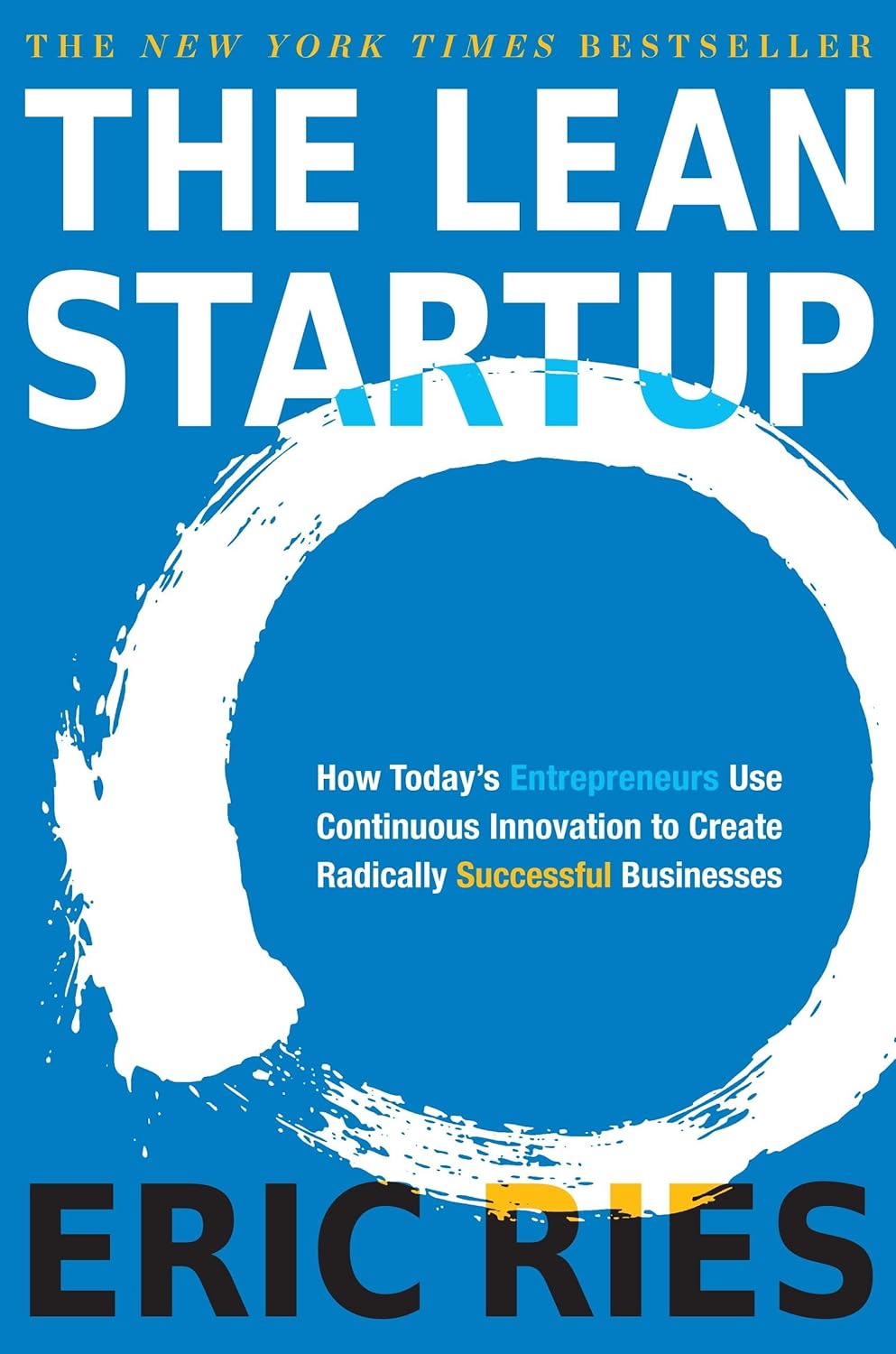
ReadSprintBooksThe Lean StartupThe Lean Startup Key Concepts and Core Ideas
The Lean Startup
The Lean Startup Key Concepts and Core Ideas

The Lean Startup Key Concepts and Core Ideas

by Eric Ries

Understand the core concepts in The Lean Startup by Eric Ries, with explanations, recall prompts, related books, and connected learning paths.

This page isolates the core concepts carrying The Lean Startup. Use it when you want to understand the book’s mental models, not just skim the chapter sequence.

Built for retention

ReadSprint combines concise summaries, quizzes, active recall, and related reading paths so the useful part of the book is easier to keep.

Open full summary

10

Chapter summaries

5

Quiz questions

12

Key takeaways

6

Related books

Concept map

These are the ideas doing most of the work inside The Lean Startup. Study them as reusable mental models, then jump back into chapters or questions when you want more context.

Concept 1

Start

This chapter introduces the concept of the Lean Startup methodology, emphasizing the importance of validated learning. It discusses how startups can efficiently test their ideas and adapt based on customer feedback.

Why it matters: The chapter sets the foundation for the Lean Startup approach, highlighting the need for agility in business. It emphasizes the importance of learning from customers to refine products.

Supporting points

  • Lean Startup focuses on rapid experimentation.
  • Validated learning is crucial for success.
  • Customer feedback drives product development.
Active recall prompt

How does start change the way you would explain or apply The Lean Startup?

Related chapter

Start

Concept 2

Define

In this chapter, Ries discusses the importance of defining what constitutes a startup and the metrics that matter. He emphasizes the need for clear objectives to measure progress effectively.

Why it matters: Defining the startup and its metrics is essential for guiding efforts and measuring success. This chapter reinforces the need for clarity in objectives.

Supporting points

  • A startup is an organization dedicated to creating something new.
  • Clear metrics help track progress.
  • Focus on actionable metrics over vanity metrics.
Active recall prompt

How does define change the way you would explain or apply The Lean Startup?

Related chapter

Define

Concept 3

Learn

This chapter delves into the concept of validated learning and how it differs from traditional learning methods. Ries explains how startups can use experiments to learn about their customers.

Why it matters: The chapter emphasizes the scientific method in entrepreneurship, advocating for a systematic approach to learning. It highlights the importance of data-driven decisions.

Supporting points

  • Validated learning is a scientific approach to entrepreneurship.
  • Experiments should be designed to test hypotheses.
  • Learning must be measurable and actionable.
Active recall prompt

How does learn change the way you would explain or apply The Lean Startup?

Related chapter

Learn

Concept 4

Experiment

Ries discusses the importance of experimentation in the Lean Startup methodology. He outlines how to create a Minimum Viable Product (MVP) to test ideas quickly and efficiently.

Why it matters: This chapter highlights the role of experimentation in reducing risk and improving product-market fit. It underscores the need for agility in product development.

Supporting points

  • An MVP is the simplest version of a product.
  • Focus on learning from customer interactions.
  • Experimentation reduces waste in product development.
Active recall prompt

How does experiment change the way you would explain or apply The Lean Startup?

Related chapter

Experiment

Concept 5

Measure

In this chapter, Ries emphasizes the importance of measuring progress through actionable metrics. He discusses how to evaluate the success of experiments and make informed decisions.

Why it matters: Measuring progress is crucial for startups to understand their trajectory. This chapter reinforces the need for data-driven decision making.

Supporting points

  • Use actionable metrics to assess progress.
  • Avoid vanity metrics that don't reflect true performance.
  • Metrics should inform decision
Active recall prompt

How does measure change the way you would explain or apply The Lean Startup?

Related chapter

Measure

Concept 6

Pivot or Persevere

This chapter discusses the critical decision of whether to pivot or persevere based on the data collected. Ries provides frameworks for making this decision effectively.

Why it matters: The ability to pivot is a key aspect of the Lean Startup methodology. This chapter emphasizes adaptability in the face of new information.

Supporting points

  • A pivot is a fundamental change in strategy.
  • Use data to inform the decision to pivot or persevere.
  • Continuous feedback loops are essential.
Active recall prompt

How does pivot or persevere change the way you would explain or apply The Lean Startup?

Related chapter

Pivot or Persevere

Concept 7

Batch

Ries discusses the importance of batch size in product development. He argues that smaller batches lead to faster feedback and more efficient learning.

Why it matters: This chapter highlights the efficiency of smaller batch sizes in the Lean Startup process. It reinforces the need for speed in learning and adaptation.

Supporting points

  • Smaller batches reduce cycle time.
  • Faster feedback improves product development.
  • Large batches can lead to waste and inefficiency.
Active recall prompt

How does batch change the way you would explain or apply The Lean Startup?

Related chapter

Batch

Concept 8

Grow

In this chapter, Ries explores strategies for scaling a startup once it has found a product-market fit. He discusses the importance of sustainable growth.

Why it matters: Scaling is a critical phase for startups, and this chapter provides insights into sustainable growth strategies. It emphasizes the importance of customer relationships.

Supporting points

  • Sustainable growth is driven by customer acquisition.
  • Focus on retention and engagement.
  • Use growth engines to scale effectively.
Active recall prompt

How does grow change the way you would explain or apply The Lean Startup?

Related chapter

Grow

Quiz checkpoints

Question 1

What is the primary focus of the Lean Startup methodology?

Question 2

What does MVP stand for in the context of Lean Startup?

Question 3

What should startups prioritize according to the Lean Startup?

Practice retrieval

Key concepts

Start

The chapter sets the foundation for the Lean Startup approach, highlighting the need for agility in business. It emphasizes the importance of learning from customers to refine products.

Define

Defining the startup and its metrics is essential for guiding efforts and measuring success. This chapter reinforces the need for clarity in objectives.

Learn

The chapter emphasizes the scientific method in entrepreneurship, advocating for a systematic approach to learning. It highlights the importance of data-driven decisions.

Open concept map
Turn Reading Into Recall

Keep The Lean Startup review-ready instead of letting it fade.

This page is strongest when it becomes part of a review habit: save the summary, revisit the key takeaways, and use recall prompts before the next meeting, study block, or decision.

Save one strong takeaway instead of over-highlighting.
Use the questions page to test what actually stuck.
Return when the book becomes relevant again, not just when motivation is high.
See pricing
Get Book Review Notes

Get practical notes on remembering and reusing ideas from nonfiction books without building an overly heavy note system.

Retention workflow

Turn this page into a repeatable study loop

Move from summary to takeaways, test yourself with questions, revisit the concept map, and then continue into related books. That keeps The Lean Startupconnected instead of turning into a one-time skim.

Frequently asked questions

What are the key concepts in The Lean Startup?

The key concepts here are distilled from the chapter summaries, major themes, and action-oriented takeaways so you can quickly see the ideas carrying the whole book.

How should I study these The Lean Startup concepts?

Start by explaining each concept from memory, connect it to a chapter or example, and then test yourself with one active recall prompt before moving on.

How are the concepts connected to other books?

Use the related books and topic links on this page to find books that reinforce, challenge, or extend the same ideas from a different angle.