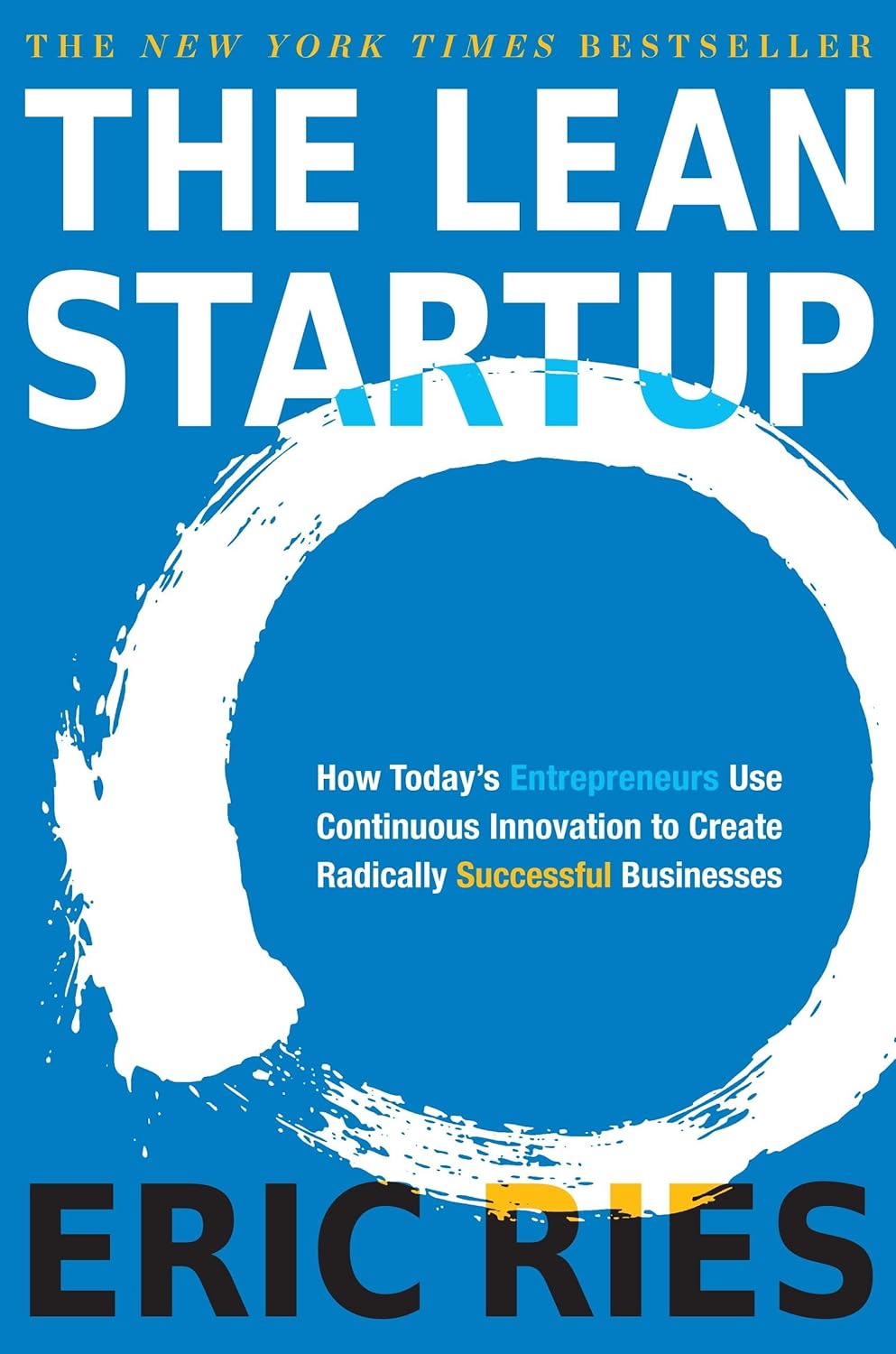
Start
Summary:
This chapter introduces the concept of the Lean Startup methodology, emphasizing the importance of validated learning. It discusses how startups can efficiently test their ideas and adapt based on customer feedback.
Key points:
- Lean Startup focuses on rapid experimentation.
- Validated learning is crucial for success.
- Customer feedback drives product development.
- Startups should pivot or persevere based on data.
Themes & relevance:
The chapter sets the foundation for the Lean Startup approach, highlighting the need for agility in business. It emphasizes the importance of learning from customers to refine products.
Takeaway / How to use:
Implement rapid testing to validate your business ideas.
Key points
- Lean Startup focuses on rapid experimentation.
- Validated learning is crucial for success.
- Customer feedback drives product development.
- Startups should pivot or persevere based on data.
Define
Summary:
In this chapter, Ries discusses the importance of defining what constitutes a startup and the metrics that matter. He emphasizes the need for clear objectives to measure progress effectively.
Key points:
- A startup is an organization dedicated to creating something new.
- Clear metrics help track progress.
- Focus on actionable metrics over vanity metrics.
- Define success in terms of customer engagement.
Themes & relevance:
Defining the startup and its metrics is essential for guiding efforts and measuring success. This chapter reinforces the need for clarity in objectives.
Takeaway / How to use:
Establish clear metrics to evaluate your startup's progress.
Key points
- A startup is an organization dedicated to creating something new.
- Clear metrics help track progress.
- Focus on actionable metrics over vanity metrics.
- Define success in terms of customer engagement.
Learn
Summary:
This chapter delves into the concept of validated learning and how it differs from traditional learning methods. Ries explains how startups can use experiments to learn about their customers.
Key points:
- Validated learning is a scientific approach to entrepreneurship.
- Experiments should be designed to test hypotheses.
- Learning must be measurable and actionable.
- Iterate based on customer feedback.
Themes & relevance:
The chapter emphasizes the scientific method in entrepreneurship, advocating for a systematic approach to learning. It highlights the importance of data-driven decisions.
Takeaway / How to use:
Design experiments to test your business hypotheses.
Key points
- Validated learning is a scientific approach to entrepreneurship.
- Experiments should be designed to test hypotheses.
- Learning must be measurable and actionable.
- Iterate based on customer feedback.
Experiment
Summary:
Ries discusses the importance of experimentation in the Lean Startup methodology. He outlines how to create a Minimum Viable Product (MVP) to test ideas quickly and efficiently.
Key points:
- An MVP is the simplest version of a product.
- Focus on learning from customer interactions.
- Experimentation reduces waste in product development.
- Iterate based on feedback from MVP testing.
Themes & relevance:
This chapter highlights the role of experimentation in reducing risk and improving product-market fit. It underscores the need for agility in product development.
Takeaway / How to use:
Create an MVP to test your product ideas with real customers.
Key points
- An MVP is the simplest version of a product.
- Focus on learning from customer interactions.
- Experimentation reduces waste in product development.
- Iterate based on feedback from MVP testing.
Measure
Summary:
In this chapter, Ries emphasizes the importance of measuring progress through actionable metrics. He discusses how to evaluate the success of experiments and make informed decisions.
Key points:
- Use actionable metrics to assess progress.
- Avoid vanity metrics that don't reflect true performance.
- Metrics should inform decision
- making processes.
- Continuous measurement is essential for growth.
Themes & relevance:
Measuring progress is crucial for startups to understand their trajectory. This chapter reinforces the need for data-driven decision
- making.
Takeaway / How to use:
Implement actionable metrics to evaluate your startup's performance.
Key points
- Use actionable metrics to assess progress.
- Avoid vanity metrics that don't reflect true performance.
- Metrics should inform decision
- making processes.
- Continuous measurement is essential for growth.
Pivot or Persevere
Summary:
This chapter discusses the critical decision of whether to pivot or persevere based on the data collected. Ries provides frameworks for making this decision effectively.
Key points:
- A pivot is a fundamental change in strategy.
- Use data to inform the decision to pivot or persevere.
- Continuous feedback loops are essential.
- Be willing to change direction based on insights.
Themes & relevance:
The ability to pivot is a key aspect of the Lean Startup methodology. This chapter emphasizes adaptability in the face of new information.
Takeaway / How to use:
Regularly assess your data to decide whether to pivot or persevere.
Key points
- A pivot is a fundamental change in strategy.
- Use data to inform the decision to pivot or persevere.
- Continuous feedback loops are essential.
- Be willing to change direction based on insights.
Batch
Summary:
Ries discusses the importance of batch size in product development. He argues that smaller batches lead to faster feedback and more efficient learning.
Key points:
- Smaller batches reduce cycle time.
- Faster feedback improves product development.
- Large batches can lead to waste and inefficiency.
- Continuous delivery enhances responsiveness.
Themes & relevance:
This chapter highlights the efficiency of smaller batch sizes in the Lean Startup process. It reinforces the need for speed in learning and adaptation.
Takeaway / How to use:
Adopt smaller batch sizes in your product development process.
Key points
- Smaller batches reduce cycle time.
- Faster feedback improves product development.
- Large batches can lead to waste and inefficiency.
- Continuous delivery enhances responsiveness.
Grow
Summary:
In this chapter, Ries explores strategies for scaling a startup once it has found a product-market fit. He discusses the importance of sustainable growth.
Key points:
- Sustainable growth is driven by customer acquisition.
- Focus on retention and engagement.
- Use growth engines to scale effectively.
- Understand the lifecycle of your product.
Themes & relevance:
Scaling is a critical phase for startups, and this chapter provides insights into sustainable growth strategies. It emphasizes the importance of customer relationships.
Takeaway / How to use:
Develop strategies for sustainable growth after achieving product-market fit.
Key points
- Sustainable growth is driven by customer acquisition.
- Focus on retention and engagement.
- Use growth engines to scale effectively.
- Understand the lifecycle of your product.
Adapt
Summary:
Ries discusses the need for organizations to adapt their structures and processes as they grow. He emphasizes the importance of maintaining a startup culture.
Key points:
- Adaptation is necessary for long
- term success.
- Maintain a culture of innovation.
- Organizational structure should support agility.
- Encourage continuous learning and improvement.
Themes & relevance:
This chapter highlights the challenges of maintaining a startup culture in a growing organization. It emphasizes the need for adaptability in processes and mindset.
Takeaway / How to use:
Foster a culture of innovation and adaptability in your organization.
Key points
- Adaptation is necessary for long
- term success.
- Maintain a culture of innovation.
- Organizational structure should support agility.
- Encourage continuous learning and improvement.
Innovate
Summary:
In the final chapter, Ries discusses the future of innovation and the role of the Lean Startup methodology in shaping it. He encourages entrepreneurs to embrace continuous innovation.
Key points:
- Continuous innovation is essential for survival.
- Embrace change and uncertainty.
- The Lean Startup methodology can guide future innovations.
- Encourage a mindset of experimentation.
Themes & relevance:
The chapter concludes the book by reinforcing the importance of innovation in entrepreneurship. It encourages readers to adopt a forward-thinking approach.
Takeaway / How to use:
Embrace continuous innovation as a core principle of your business.
Key points
- Continuous innovation is essential for survival.
- Embrace change and uncertainty.
- The Lean Startup methodology can guide future innovations.
- Encourage a mindset of experimentation.