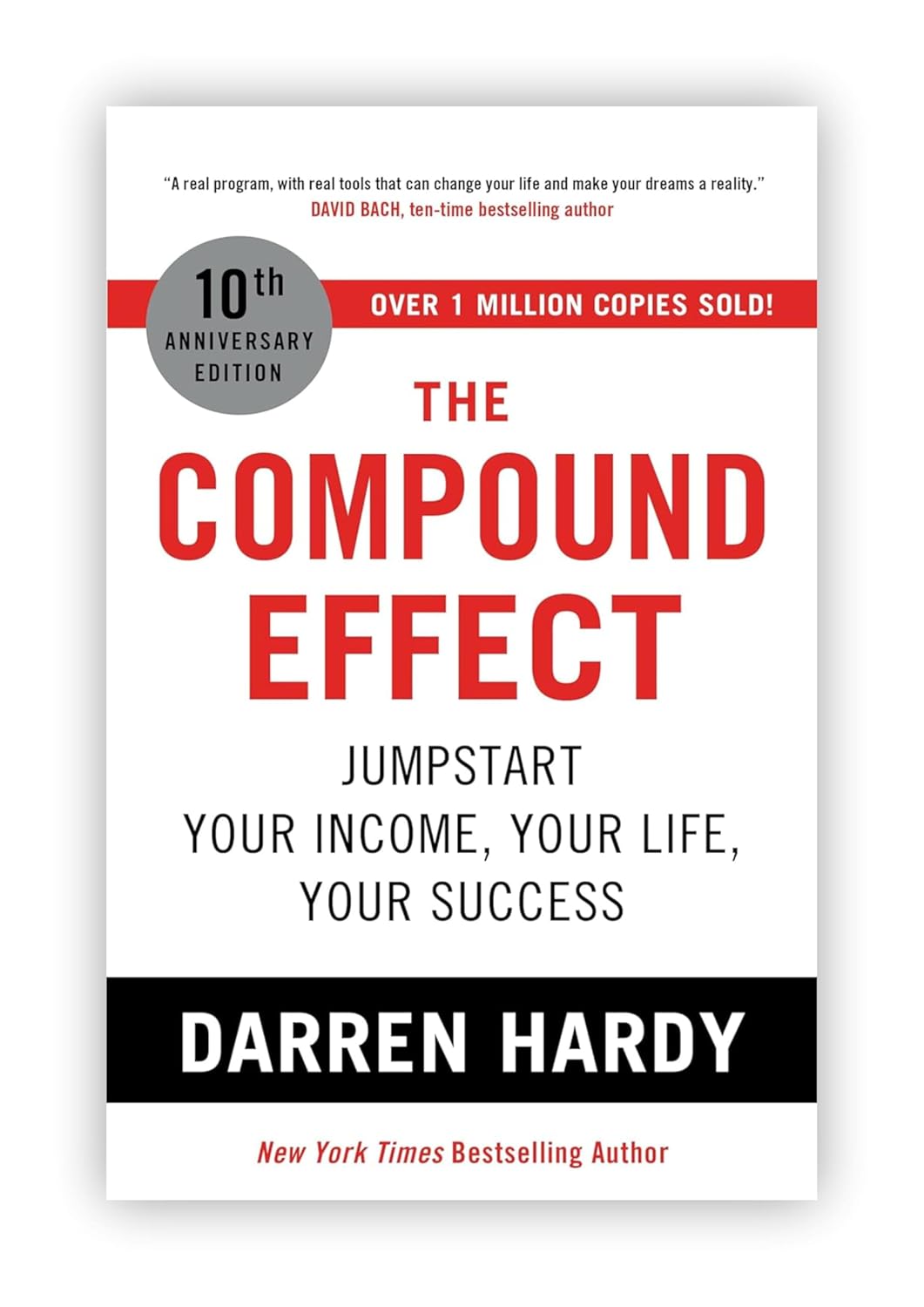
ReadSprintBooksThe Compound EffectThe Compound Effect Key Concepts and Core Ideas
The Compound Effect
The Compound Effect Key Concepts and Core Ideas

The Compound Effect Key Concepts and Core Ideas

by Darren Hardy

Understand the core concepts in The Compound Effect by Darren Hardy, with explanations, recall prompts, related books, and connected learning paths.

This page isolates the core concepts carrying The Compound Effect. Use it when you want to understand the book’s mental models, not just skim the chapter sequence.

Built for retention

ReadSprint combines concise summaries, quizzes, active recall, and related reading paths so the useful part of the book is easier to keep.

Open full summary

6

Chapter summaries

5

Quiz questions

12

Key takeaways

6

Related books

Concept map

These are the ideas doing most of the work inside The Compound Effect. Study them as reusable mental models, then jump back into chapters or questions when you want more context.

Concept 1

The Compound Effect in Action

This chapter introduces the concept of the Compound Effect, explaining how small, consistent actions can lead to significant results over time. It emphasizes the importance of patience and persistence in achieving success.

Why it matters: The chapter sets the foundation for understanding how incremental changes can lead to substantial outcomes, framing the book's central theme.

Supporting points

  • Small actions accumulate over time
  • Consistency is key to success
  • Patience is necessary for long
Active recall prompt

How does the compound effect in action change the way you would explain or apply The Compound Effect?

Related chapter

The Compound Effect in Action

Concept 2

Choices

This chapter focuses on the power of choices and how they shape our lives. It discusses the importance of making conscious decisions and taking responsibility for the outcomes.

Why it matters: The chapter highlights the role of personal responsibility and conscious decision-making in leveraging the Compound Effect.

Supporting points

  • Every choice has a consequence
  • Awareness leads to better decision
  • making
Active recall prompt

How does choices change the way you would explain or apply The Compound Effect?

Related chapter

Choices

Concept 3

Habits

The chapter delves into the role of habits in the Compound Effect, explaining how habits can either propel you towards success or hold you back.

Why it matters: This chapter emphasizes the transformative power of habits and their alignment with the Compound Effect.

Supporting points

  • Habits form the foundation of success
  • Positive habits need to be cultivated
  • Breaking bad habits is essential
Active recall prompt

How does habits change the way you would explain or apply The Compound Effect?

Related chapter

Habits

Concept 4

Momentum

Momentum is explored as a critical factor in maintaining progress. The chapter explains how to build and sustain momentum to achieve goals.

Why it matters: Momentum is presented as a driving force that enhances the Compound Effect, reinforcing the need for continuous action.

Supporting points

  • Momentum amplifies efforts
  • Consistent action builds momentum
  • Overcoming inertia is crucial
Active recall prompt

How does momentum change the way you would explain or apply The Compound Effect?

Related chapter

Momentum

Concept 5

Influences

This chapter examines the impact of external influences on our lives, including people, environment, and media, and how they can affect the Compound Effect.

Why it matters: The chapter underscores the importance of managing influences to harness the Compound Effect effectively.

Supporting points

  • Surroundings influence behavior
  • Positive influences support growth
  • Negative influences can derail progress
Active recall prompt

How does influences change the way you would explain or apply The Compound Effect?

Related chapter

Influences

Concept 6

Acceleration

The final chapter discusses how to accelerate the Compound Effect by maximizing efforts and leveraging opportunities for growth.

Why it matters: Acceleration is portrayed as the culmination of applying the Compound Effect principles, emphasizing growth and opportunity.

Supporting points

  • Acceleration requires focus and effort
  • Leveraging opportunities enhances growth
  • Continuous improvement is key
Active recall prompt

How does acceleration change the way you would explain or apply The Compound Effect?

Related chapter

Acceleration

Quiz checkpoints

Question 1

What is the main concept introduced in the first chapter?

Question 2

What is emphasized as crucial in the chapter on Choices?

Question 3

How are habits described in the book?

Practice retrieval

Key concepts

The Compound Effect in Action

The chapter sets the foundation for understanding how incremental changes can lead to substantial outcomes, framing the book's central theme.

Choices

The chapter highlights the role of personal responsibility and conscious decision-making in leveraging the Compound Effect.

Habits

This chapter emphasizes the transformative power of habits and their alignment with the Compound Effect.

Open concept map
Turn Reading Into Recall

Keep The Compound Effect review-ready instead of letting it fade.

This page is strongest when it becomes part of a review habit: save the summary, revisit the key takeaways, and use recall prompts before the next meeting, study block, or decision.

Save one strong takeaway instead of over-highlighting.
Use the questions page to test what actually stuck.
Return when the book becomes relevant again, not just when motivation is high.
See pricing
Get Book Review Notes

Get practical notes on remembering and reusing ideas from nonfiction books without building an overly heavy note system.

Retention workflow

Turn this page into a repeatable study loop

Move from summary to takeaways, test yourself with questions, revisit the concept map, and then continue into related books. That keeps The Compound Effectconnected instead of turning into a one-time skim.

Frequently asked questions

What are the key concepts in The Compound Effect?

The key concepts here are distilled from the chapter summaries, major themes, and action-oriented takeaways so you can quickly see the ideas carrying the whole book.

How should I study these The Compound Effect concepts?

Start by explaining each concept from memory, connect it to a chapter or example, and then test yourself with one active recall prompt before moving on.

How are the concepts connected to other books?

Use the related books and topic links on this page to find books that reinforce, challenge, or extend the same ideas from a different angle.