Concept map
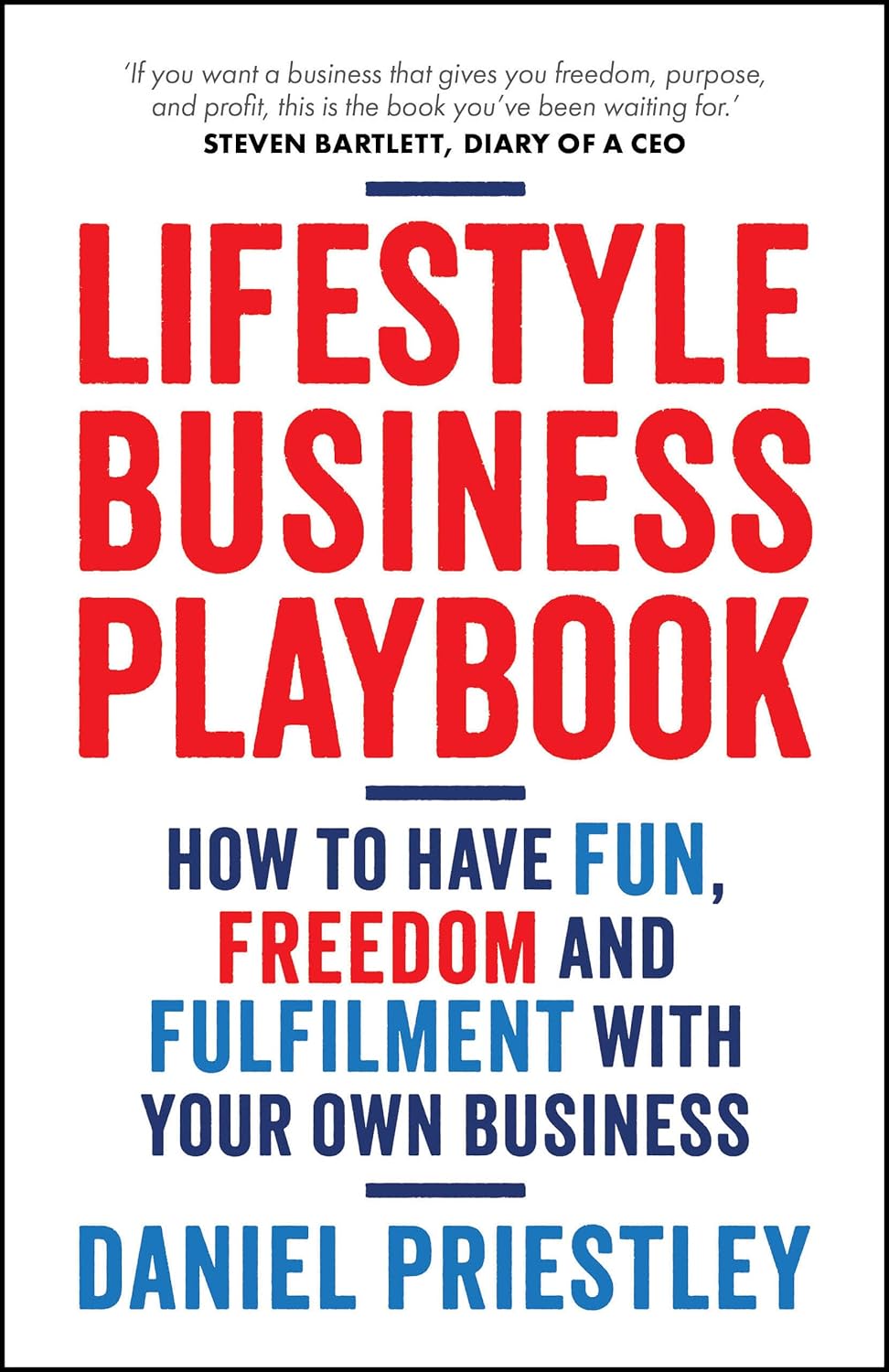
These are the ideas doing most of the work inside Lifestyle Business Playbook. Study them as reusable mental models, then jump back into chapters or questions when you want more context.
The Lifestyle Business Mindset
This chapter defines the core mindset shifts required to build a lifestyle business: prioritizing freedom, control, and sustainability over rapid scale and vanity metrics. It emphasizes systems, boundaries, and the commitment to designing work around life goals rather than the other way around.
Supporting points
- Reframe success: focus on time, autonomy, and predictable income rather than maximum growth.
- Systems over heroics: build repeatable processes to reduce dependence on owner bandwidth.
- Boundaries and trade
How does the lifestyle business mindset change the way you would explain or apply Lifestyle Business Playbook?
The Lifestyle Business Mindset
Define Your Ideal Life and Business Objectives
This chapter walks through translating life priorities into concrete business objectives, including income targets, hours worked, location flexibility, and risk tolerance. It provides exercises to quantify the lifestyle you want so product, pricing, and operations align with personal goals.
Supporting points
- Start with life
- first design: map desired daily routine, family time, travel, and financial needs.
- Translate lifestyle into business metrics: revenue targets, profit margins, customer load, and billable vs. non
How does define your ideal life and business objectives change the way you would explain or apply Lifestyle Business Playbook?
Define Your Ideal Life and Business Objectives
Identify Your High-Value Niche
This chapter shows how to find and validate a niche that matches your skills, passion, and market demand, focusing on clients who are willing and able to pay premium prices. It covers identifying profitable pain points, narrowing audience segments, and testing assumptions with low-risk experiments.
Supporting points
- Go narrow: specificity increases relevance, reduces competition, and commands higher prices.
- Validate demand: interview prospects, run paid ads, or sell a beta to test willingness to pay.
- Map value: identify the high
How does identify your high-value niche change the way you would explain or apply Lifestyle Business Playbook?
Identify Your High-Value Niche
Design Productized Offers and Packages
The chapter explains how to convert bespoke services into productized offers with clear scope, predictable pricing, and standardized delivery to increase efficiency and predictability. It outlines packaging, pricing tiers, and the balance between customization and repeatability.
Supporting points
- Define the offer: clear outcomes, deliverables, timeline, and exclusions to avoid scope creep.
- Tiering: create entry, core, and premium packages to match different budgets and commitment levels.
- Pricing strategy: use value
How does design productized offers and packages change the way you would explain or apply Lifestyle Business Playbook?
Design Productized Offers and Packages
Create a Signature System
This chapter recommends building a repeatable, branded framework—the signature system—that structures how you deliver results and differentiates your business. The system becomes the backbone for marketing, sales, and onboarding, turning expertise into teachable steps.
Supporting points
- Components: outline stages, tools, milestones, and client obligations that make up your system.
- Naming and positioning: give the system a memorable name and tie it to client outcomes for credibility.
- Documentation: create templates, scripts, and case studies to support consistent delivery.
How does create a signature system change the way you would explain or apply Lifestyle Business Playbook?
Create a Signature System
Magnetic Marketing: Attracting the Right Customers
This chapter focuses on attraction strategies that draw ideal clients to you through consistent messaging, content that demonstrates expertise, and deliberate channel selection. It emphasizes authenticity, audience value, and repeatable lead generation routines suited to a lifestyle business.
Supporting points
- Message
- first: lead with the outcomes your niche cares about and the specific problems you solve.
- Content engine: produce repeatable content formats (blogs, short videos, newsletters) that educate and attract prospects.
How does magnetic marketing: attracting the right customers change the way you would explain or apply Lifestyle Business Playbook?
Magnetic Marketing: Attracting the Right Customers
Sales That Serve: Pricing and Conversion
This chapter reframes sales as a service-centered conversation that uncovers client needs, communicates value, and converts with integrity. It covers pricing psychology, proposal structures, handling objections, and closing conversations that respect both parties.
Supporting points
- Consultative selling: ask discovery questions, diagnose the core problem, and recommend the right package.
- Value
- based pricing: anchor price to outcomes and ROI rather than inputs or time.
How does sales that serve: pricing and conversion change the way you would explain or apply Lifestyle Business Playbook?
Sales That Serve: Pricing and Conversion
Delivering Exceptional Customer Experience
The final chapter details how to deliver consistent, high-quality experiences through structured onboarding, communication standards, and feedback loops that drive retention and referrals. It highlights operational practices that protect owner time and scale delight without bespoke effort.
Supporting points
- Onboarding ritual: set expectations, milestones, and communication norms from day one.
- Predictable communication: regular updates, dashboards, or status calls to reduce anxiety and build trust.
- Quality controls: checklists, peer reviews, and client sign
How does delivering exceptional customer experience change the way you would explain or apply Lifestyle Business Playbook?
Delivering Exceptional Customer Experience