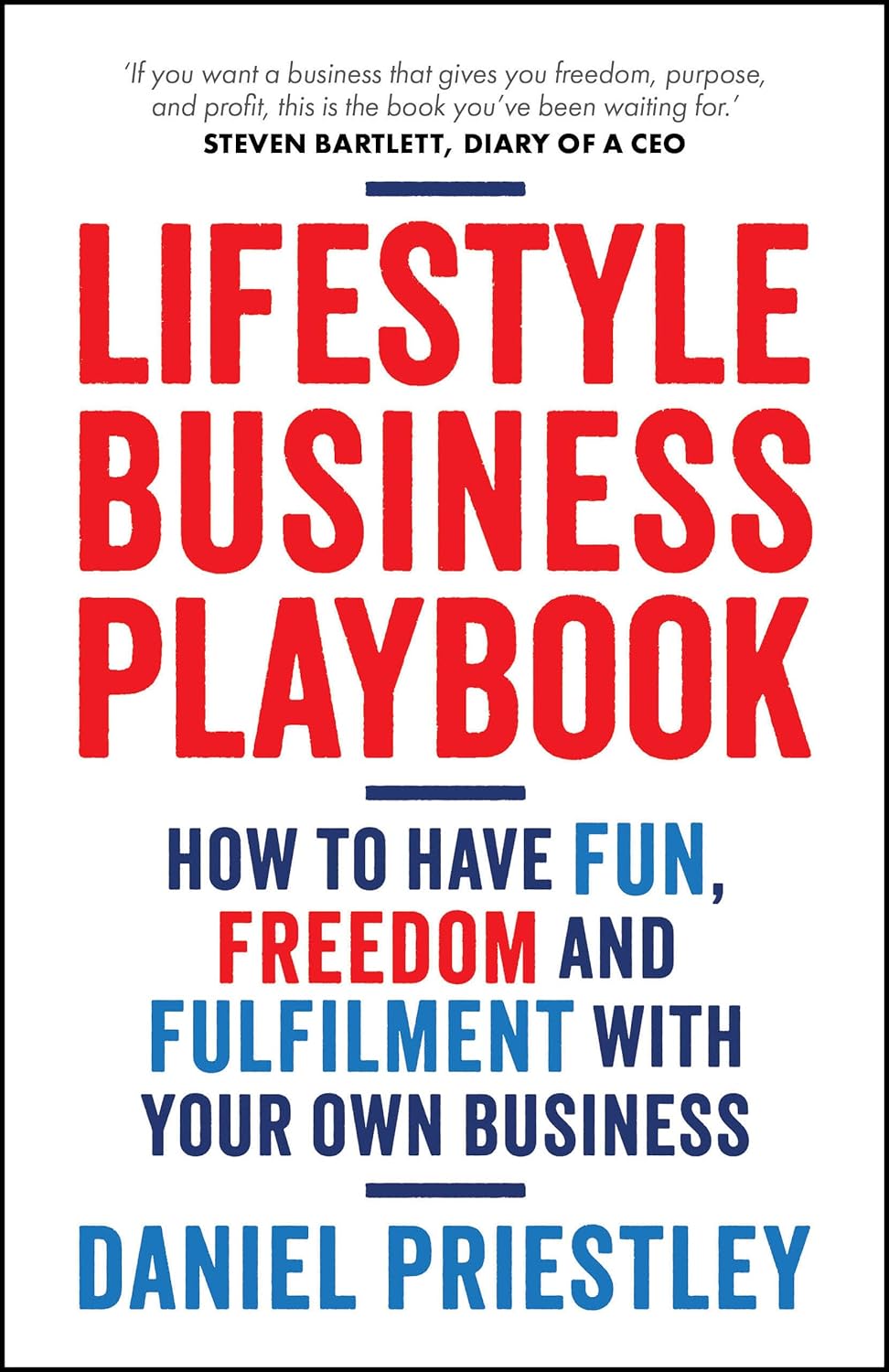
The Lifestyle Business Mindset
Summary:
This chapter defines the core mindset shifts required to build a lifestyle business: prioritizing freedom, control, and sustainability over rapid scale and vanity metrics. It emphasizes systems, boundaries, and the commitment to designing work around life goals rather than the other way around.
Key points:
- Reframe success: focus on time, autonomy, and predictable income rather than maximum growth.
- Systems over heroics: build repeatable processes to reduce dependence on owner bandwidth.
- Boundaries and trade
- offs: deliberately choose the scale, hours, and complexity you tolerate.
- Risk management: diversify income streams and protect personal time to maintain lifestyle goals.
- Mindset practices: clarity on values, daily routines, and decision rules to stay aligned.
Themes & relevance:
This chapter sets the philosophical foundation for every decision in the playbook, connecting personal values to business design to ensure sustainable choices. It establishes why different priorities and metrics are needed for a lifestyle business compared with venture-scale startups.
Takeaway / How to use:
Write a one-paragraph statement of how you define success for your lifestyle business and use it to guide decisions.
Key points
- Reframe success: focus on time, autonomy, and predictable income rather than maximum growth.
- Systems over heroics: build repeatable processes to reduce dependence on owner bandwidth.
- Boundaries and trade
- offs: deliberately choose the scale, hours, and complexity you tolerate.
- Risk management: diversify income streams and protect personal time to maintain lifestyle goals.
- Mindset practices: clarity on values, daily routines, and decision rules to stay aligned.
Define Your Ideal Life and Business Objectives
Summary:
This chapter walks through translating life priorities into concrete business objectives, including income targets, hours worked, location flexibility, and risk tolerance. It provides exercises to quantify the lifestyle you want so product, pricing, and operations align with personal goals.
Key points:
- Start with life
- first design: map desired daily routine, family time, travel, and financial needs.
- Translate lifestyle into business metrics: revenue targets, profit margins, customer load, and billable vs. non
- billable hours.
- Set minimum viable income and upside goals, plus buffers for seasonality and reinvestment.
- Define non
- negotiables (e.g., no weekends, remote-first) to constrain business decisions.
- Create a roadmap with short
- term milestones and a review cadence to stay on track.
Themes & relevance:
The chapter ties personal clarity to operational constraints so the business serves life goals rather than undermining them. Clear objectives make it easier to make trade-offs and prioritize opportunities.
Takeaway / How to use:
Complete the life-to
- business worksheet: list 3 life priorities and the specific business metrics needed to support each.
Key points
- Start with life
- first design: map desired daily routine, family time, travel, and financial needs.
- Translate lifestyle into business metrics: revenue targets, profit margins, customer load, and billable vs. non
- billable hours.
- Set minimum viable income and upside goals, plus buffers for seasonality and reinvestment.
- Define non
- negotiables (e.g., no weekends, remote-first) to constrain business decisions.
- Create a roadmap with short
- term milestones and a review cadence to stay on track.
Identify Your High-Value Niche
Summary:
This chapter shows how to find and validate a niche that matches your skills, passion, and market demand, focusing on clients who are willing and able to pay premium prices. It covers identifying profitable pain points, narrowing audience segments, and testing assumptions with low-risk experiments.
Key points:
- Go narrow: specificity increases relevance, reduces competition, and commands higher prices.
- Validate demand: interview prospects, run paid ads, or sell a beta to test willingness to pay.
- Map value: identify the high
- impact outcomes your service produces and who benefits most.
- Assess market economics: client lifetime value, acquisition cost, and churn risk.
- Positioning: craft a concise niche statement that communicates who you serve and the transformation offered.
Themes & relevance:
This chapter emphasizes that a lifestyle business thrives on well-chosen, high
- value niches that allow fewer clients to generate stable income with less friction. Proper niche selection reduces marketing waste and simplifies delivery.
Takeaway / How to use:
Write a one-sentence niche statement and validate it by conducting five qualifying conversations with target customers.
Key points
- Go narrow: specificity increases relevance, reduces competition, and commands higher prices.
- Validate demand: interview prospects, run paid ads, or sell a beta to test willingness to pay.
- Map value: identify the high
- impact outcomes your service produces and who benefits most.
- Assess market economics: client lifetime value, acquisition cost, and churn risk.
- Positioning: craft a concise niche statement that communicates who you serve and the transformation offered.
Design Productized Offers and Packages
Summary:
The chapter explains how to convert bespoke services into productized offers with clear scope, predictable pricing, and standardized delivery to increase efficiency and predictability. It outlines packaging, pricing tiers, and the balance between customization and repeatability.
Key points:
- Define the offer: clear outcomes, deliverables, timeline, and exclusions to avoid scope creep.
- Tiering: create entry, core, and premium packages to match different budgets and commitment levels.
- Pricing strategy: use value
- based pricing tied to outcomes rather than hourly rates.
- Standardize delivery: templates, checklists, and playbooks reduce time per client and improve consistency.
- Upsell and continuity: design pathways from one
- off projects to retainers or recurring revenue.
Themes & relevance:
Productization is central to scaling a lifestyle business because it reduces owner labor and makes revenue predictable without chasing bespoke gigs. Clear offers improve conversion and client satisfaction.
Takeaway / How to use:
Create one standardized offer with a fixed scope, price, and delivery timeline and pilot it with two clients this month.
Key points
- Define the offer: clear outcomes, deliverables, timeline, and exclusions to avoid scope creep.
- Tiering: create entry, core, and premium packages to match different budgets and commitment levels.
- Pricing strategy: use value
- based pricing tied to outcomes rather than hourly rates.
- Standardize delivery: templates, checklists, and playbooks reduce time per client and improve consistency.
- Upsell and continuity: design pathways from one
- off projects to retainers or recurring revenue.
Create a Signature System
Summary:
This chapter recommends building a repeatable, branded framework—the signature system—that structures how you deliver results and differentiates your business. The system becomes the backbone for marketing, sales, and onboarding, turning expertise into teachable steps.
Key points:
- Components: outline stages, tools, milestones, and client obligations that make up your system.
- Naming and positioning: give the system a memorable name and tie it to client outcomes for credibility.
- Documentation: create templates, scripts, and case studies to support consistent delivery.
- Client journey alignment: map how the system informs marketing messaging and onboarding flows.
- Leverage: a documented system enables delegation, licensing, and potential productization.
Themes & relevance:
A signature system creates clarity for clients and team members, speeds onboarding, and strengthens your brand promise. It turns tacit expertise into a scalable asset.
Takeaway / How to use:
Draft a 3–6 step outline of your signature system and test it in your next client engagement.
Key points
- Components: outline stages, tools, milestones, and client obligations that make up your system.
- Naming and positioning: give the system a memorable name and tie it to client outcomes for credibility.
- Documentation: create templates, scripts, and case studies to support consistent delivery.
- Client journey alignment: map how the system informs marketing messaging and onboarding flows.
- Leverage: a documented system enables delegation, licensing, and potential productization.
Magnetic Marketing: Attracting the Right Customers
Summary:
This chapter focuses on attraction strategies that draw ideal clients to you through consistent messaging, content that demonstrates expertise, and deliberate channel selection. It emphasizes authenticity, audience value, and repeatable lead generation routines suited to a lifestyle business.
Key points:
- Message
- first: lead with the outcomes your niche cares about and the specific problems you solve.
- Content engine: produce repeatable content formats (blogs, short videos, newsletters) that educate and attract prospects.
- Channel fit: prioritize 1–2 channels where your audience congregates rather than being everywhere.
- Lead magnets and funnels: use simple opt
- ins and nurture sequences to convert interest into conversations.
- Community and referrals: cultivate a small, engaged audience and ask for introductions to lower acquisition cost.
Themes & relevance:
Marketing for lifestyle businesses should be efficient, aligned with the brand and niche, and sustainable long-term—favoring quality relationships over volume. Consistent, value
- driven outreach produces higher-intent leads.
Takeaway / How to use:
Pick one marketing channel and publish a consistent weekly piece of content for 8 weeks to test traction.
Key points
- Message
- first: lead with the outcomes your niche cares about and the specific problems you solve.
- Content engine: produce repeatable content formats (blogs, short videos, newsletters) that educate and attract prospects.
- Channel fit: prioritize 1–2 channels where your audience congregates rather than being everywhere.
- Lead magnets and funnels: use simple opt
- ins and nurture sequences to convert interest into conversations.
- Community and referrals: cultivate a small, engaged audience and ask for introductions to lower acquisition cost.
Sales That Serve: Pricing and Conversion
Summary:
This chapter reframes sales as a service-centered conversation that uncovers client needs, communicates value, and converts with integrity. It covers pricing psychology, proposal structures, handling objections, and closing conversations that respect both parties.
Key points:
- Consultative selling: ask discovery questions, diagnose the core problem, and recommend the right package.
- Value
- based pricing: anchor price to outcomes and ROI rather than inputs or time.
- Proposal design: clear deliverables, timelines, guarantees, and next steps reduce friction.
- Handle objections with empathy: address risk, timeline, and budget concerns transparently.
- Sales process automation: qualification forms, booking links, and proposal templates streamline conversions.
Themes & relevance:
Effective sales align client outcomes with pricing and streamline decisions so the process feels helpful rather than pushy. This approach increases close rates and client satisfaction while preserving lifestyle boundaries.
Takeaway / How to use:
Replace hourly estimates with an outcome-based price and test it in your next proposal.
Key points
- Consultative selling: ask discovery questions, diagnose the core problem, and recommend the right package.
- Value
- based pricing: anchor price to outcomes and ROI rather than inputs or time.
- Proposal design: clear deliverables, timelines, guarantees, and next steps reduce friction.
- Handle objections with empathy: address risk, timeline, and budget concerns transparently.
- Sales process automation: qualification forms, booking links, and proposal templates streamline conversions.
Delivering Exceptional Customer Experience
Summary:
The final chapter details how to deliver consistent, high-quality experiences through structured onboarding, communication standards, and feedback loops that drive retention and referrals. It highlights operational practices that protect owner time and scale delight without bespoke effort.
Key points:
- Onboarding ritual: set expectations, milestones, and communication norms from day one.
- Predictable communication: regular updates, dashboards, or status calls to reduce anxiety and build trust.
- Quality controls: checklists, peer reviews, and client sign
- offs to maintain standards.
- Feedback and iteration: solicit client feedback, measure outcomes, and refine the system.
- Delight and retention: small, memorable touches and renewal pathways increase lifetime value.
Themes & relevance:
Delivering a great experience is how a lifestyle business sustains referrals and recurring revenue while minimizing firefighting; it turns satisfied clients into repeat customers and advocates. Operational discipline preserves the lifestyle you designed.
Takeaway / How to use:
Implement a standardized onboarding checklist for every new client and use it on your next engagement.
Key points
- Onboarding ritual: set expectations, milestones, and communication norms from day one.
- Predictable communication: regular updates, dashboards, or status calls to reduce anxiety and build trust.
- Quality controls: checklists, peer reviews, and client sign
- offs to maintain standards.
- Feedback and iteration: solicit client feedback, measure outcomes, and refine the system.
- Delight and retention: small, memorable touches and renewal pathways increase lifetime value.
Automate, Delegate and Build a Small Team
Summary:
This chapter explains how to free the founder from day-to
- day operations by using automation, clear delegation and a small, high-impact team. It emphasizes creating repeatable processes and the right hiring/outsourcing choices to scale without sacrificing lifestyle goals.
Key points:
- Map your workflows and identify repetitive tasks that can be automated or delegated.
- Create simple Standard Operating Procedures (SOPs) to make delegation reliable and scalable.
- Use automation tools for marketing, billing, and customer support to reduce manual work.
- Hire or contract for complementary skills and start with outcome
- focused roles, not long job descriptions.
- Invest in onboarding and feedback loops to keep a small team efficient and aligned.
Themes & relevance:
Building systems and a lean team turns founder time into a scarce, protected resource while maintaining quality and consistency. These practices are essential for anyone aiming to run a lifestyle business that doesn’t require their constant involvement.
Takeaway / How to use:
Document one repeatable process today and automate or delegate the first step to test the system.
Key points
- Map your workflows and identify repetitive tasks that can be automated or delegated.
- Create simple Standard Operating Procedures (SOPs) to make delegation reliable and scalable.
- Use automation tools for marketing, billing, and customer support to reduce manual work.
- Hire or contract for complementary skills and start with outcome
- focused roles, not long job descriptions.
- Invest in onboarding and feedback loops to keep a small team efficient and aligned.
Financials for Freedom: Cashflow, Pricing and Profit
Summary:
This chapter covers the financial foundations that let a lifestyle business be both sustainable and freeing: understanding cashflow, setting pricing that reflects value, and ensuring healthy profit margins. It provides practical frameworks for forecasting, controlling expenses and deciding where to reinvest.
Key points:
- Prioritize cashflow visibility: track inflows, outflows, and runway on a simple monthly basis.
- Price for value and margin, not just cost or competition; use tiered offers and anchoring.
- Know your unit economics (customer acquisition cost, lifetime value) to make informed growth decisions.
- Maintain a profit buffer and build conservative budgets to protect lifestyle choices.
- Use simple forecasting and scenario planning to guide hiring, automation, and investment decisions.
Themes & relevance:
Financial discipline enables freedom by preventing burnout from reactive money problems and by giving clear signals for when to scale or conserve. Mastering these basics is critical for long-term stability and intentional growth.
Takeaway / How to use:
Build a one-page monthly cashflow snapshot and a simple price
- test to validate margins this month.
Key points
- Prioritize cashflow visibility: track inflows, outflows, and runway on a simple monthly basis.
- Price for value and margin, not just cost or competition; use tiered offers and anchoring.
- Know your unit economics (customer acquisition cost, lifetime value) to make informed growth decisions.
- Maintain a profit buffer and build conservative budgets to protect lifestyle choices.
- Use simple forecasting and scenario planning to guide hiring, automation, and investment decisions.
Scale Sustainably While Protecting Your Time
Summary:
This chapter teaches how to grow the business without eroding the founder’s time and lifestyle through deliberate leverage, boundary-setting and metric
- driven decisions. It advocates pacing growth, automating decision points, and institutionalizing practices that preserve free time.
Key points:
- Define non
- negotiable time blocks and guardrails for the founder’s availability.
- Scale incrementally: test new channels/product lines with small experiments before full investment.
- Use metrics and thresholds (e.g., CAC:LTV, margin targets) to trigger hires or automation, not ego.
- Delegate decision
- making with clear escalation rules so routine choices don’t reach the founder.
- Protect simplicity: avoid feature bloat and complexity that consumes time and support resources.
Themes & relevance:
Sustainable scaling balances growth ambitions with the original lifestyle goals, using systems and clear thresholds to prevent mission creep. Maintaining this balance is key for entrepreneurs who value freedom as much as profit.
Takeaway / How to use:
Set one growth threshold metric that must be met before adding headcount or major spend.
Key points
- Define non
- negotiable time blocks and guardrails for the founder’s availability.
- Scale incrementally: test new channels/product lines with small experiments before full investment.
- Use metrics and thresholds (e.g., CAC:LTV, margin targets) to trigger hires or automation, not ego.
- Delegate decision
- making with clear escalation rules so routine choices don’t reach the founder.
- Protect simplicity: avoid feature bloat and complexity that consumes time and support resources.
Putting It All Together: Launch, Iterate and Grow
Summary:
The final chapter integrates previous lessons into a repeatable launch, iterate and growth cycle: validate, launch minimally, collect feedback, refine, and scale. It stresses continuous measurement, disciplined iteration and keeping the business aligned with lifestyle objectives.
Key points:
- Launch with a minimum viable offer and prioritize real customer feedback over perfection.
- Establish feedback loops (surveys, usage metrics, support input) to prioritize iterations.
- Use a framework for experiments: hypothesis, small test, measure, decide to scale or kill.
- Align growth actions with financial and time
- protection rules established earlier.
- Document wins and failures to speed future launches and reduce repeated mistakes.
Themes & relevance:
A disciplined, iterative approach turns uncertainty into learnable steps and prevents runaway complexity or time demands. This cycle is how lifestyle businesses grow intentionally while staying true to the founder’s priorities.
Takeaway / How to use:
Run one rapid customer-validation experiment this week and decide on the next action based on results.
Key points
- Launch with a minimum viable offer and prioritize real customer feedback over perfection.
- Establish feedback loops (surveys, usage metrics, support input) to prioritize iterations.
- Use a framework for experiments: hypothesis, small test, measure, decide to scale or kill.
- Align growth actions with financial and time
- protection rules established earlier.
- Document wins and failures to speed future launches and reduce repeated mistakes.