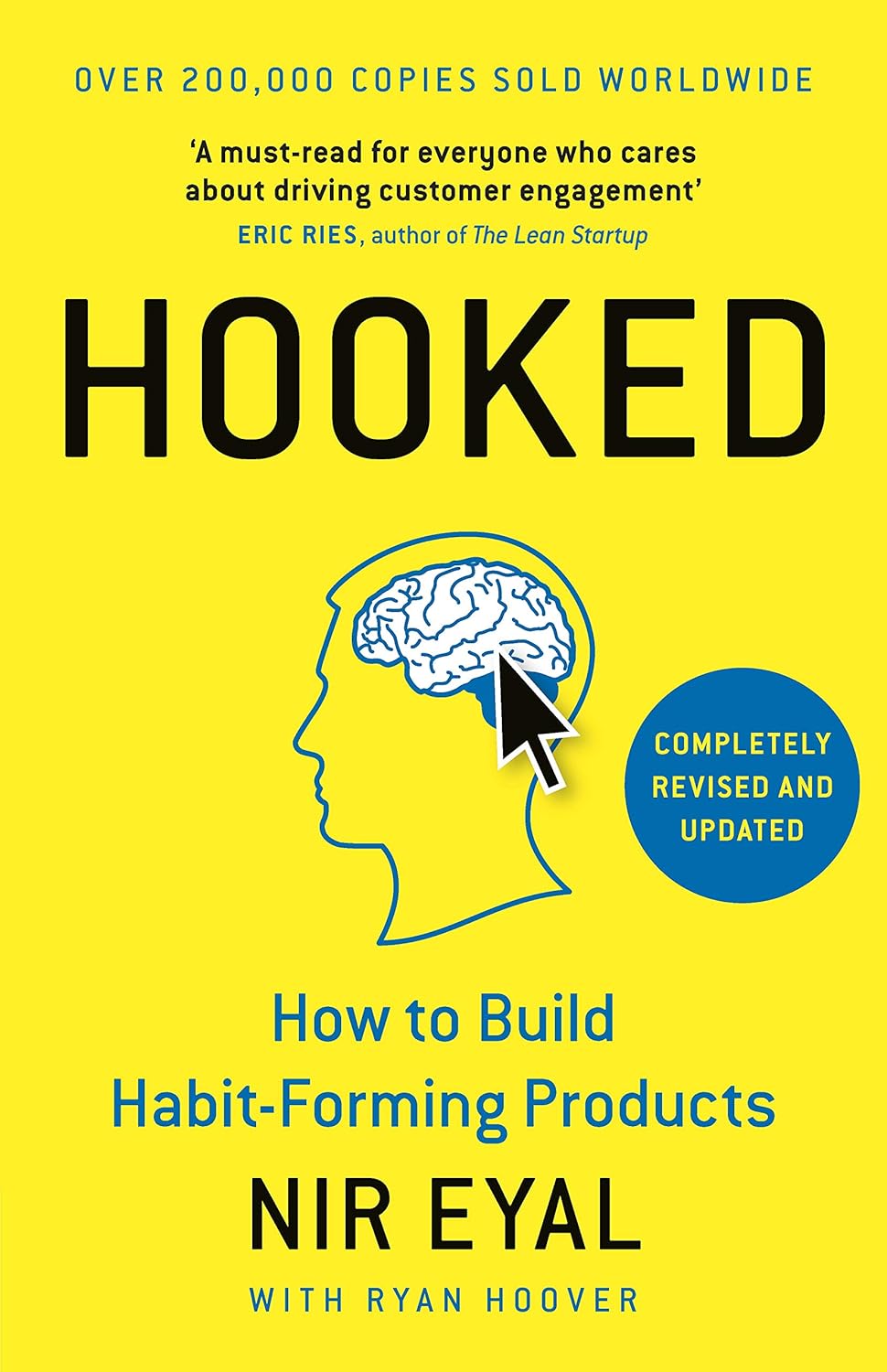
Hooked: How to Build Habit-Forming Products: ReadSprint summary highlights
ReadSprint paraphrases for review. These highlights are not verbatim quotations from the book or its author. Check the original edition for exact wording and context.
Hooked: How to Build Habit-Forming Products
by Nir Eyal with Ryan Hoover
The Hook Model introduces a framework for creating habit-forming products.
ReadSprint paraphrase · Not a quotation from the author.
The Hook Model introduces a framework for creating habit-forming products.
The Hook Model is essential for product design.
Share with the ReadSprint source so others can read the context.
Hooked: How to Build Habit-Forming Products
by Nir Eyal with Ryan Hoover
It consists of four key components: Trigger, Action, Variable Reward, and Investment, which together drive user engagement.
ReadSprint paraphrase · Not a quotation from the author.
It consists of four key components: Trigger, Action, Variable Reward, and Investment, which together drive user engagement.
Triggers can be external or internal.
Share with the ReadSprint source so others can read the context.
Hooked: How to Build Habit-Forming Products
by Nir Eyal with Ryan Hoover
Triggers are cues that prompt users to take action.
ReadSprint paraphrase · Not a quotation from the author.
Triggers are cues that prompt users to take action.
Actions are behaviors performed in anticipation of rewards.
Share with the ReadSprint source so others can read the context.
Hooked: How to Build Habit-Forming Products
by Nir Eyal with Ryan Hoover
This chapter differentiates between external triggers, like notifications, and internal triggers, which are tied to emotions and experiences.
ReadSprint paraphrase · Not a quotation from the author.
This chapter differentiates between external triggers, like notifications, and internal triggers, which are tied to emotions and experiences.
Variable rewards increase user engagement.
Share with the ReadSprint source so others can read the context.
Hooked: How to Build Habit-Forming Products
by Nir Eyal with Ryan Hoover
This chapter explores the actions users take in response to triggers.
ReadSprint paraphrase · Not a quotation from the author.
This chapter explores the actions users take in response to triggers.
Investment leads to future returns and user commitment.
Share with the ReadSprint source so others can read the context.
Hooked: How to Build Habit-Forming Products
by Nir Eyal with Ryan Hoover
It discusses the Fogg Behavior Model, which states that behavior occurs when motivation, ability, and prompts converge.
ReadSprint paraphrase · Not a quotation from the author.
It discusses the Fogg Behavior Model, which states that behavior occurs when motivation, ability, and prompts converge.
Apply the Hook Model to your product design to enhance user engagement.
Share with the ReadSprint source so others can read the context.
Use these highlights to review the book
Which highlight from Hooked: How to Build Habit-Forming Products changes how you would explain the book to someone else?
Which lesson here is worth testing in a real decision this week?
Which highlight feels memorable but less actionable once you slow down and examine it?