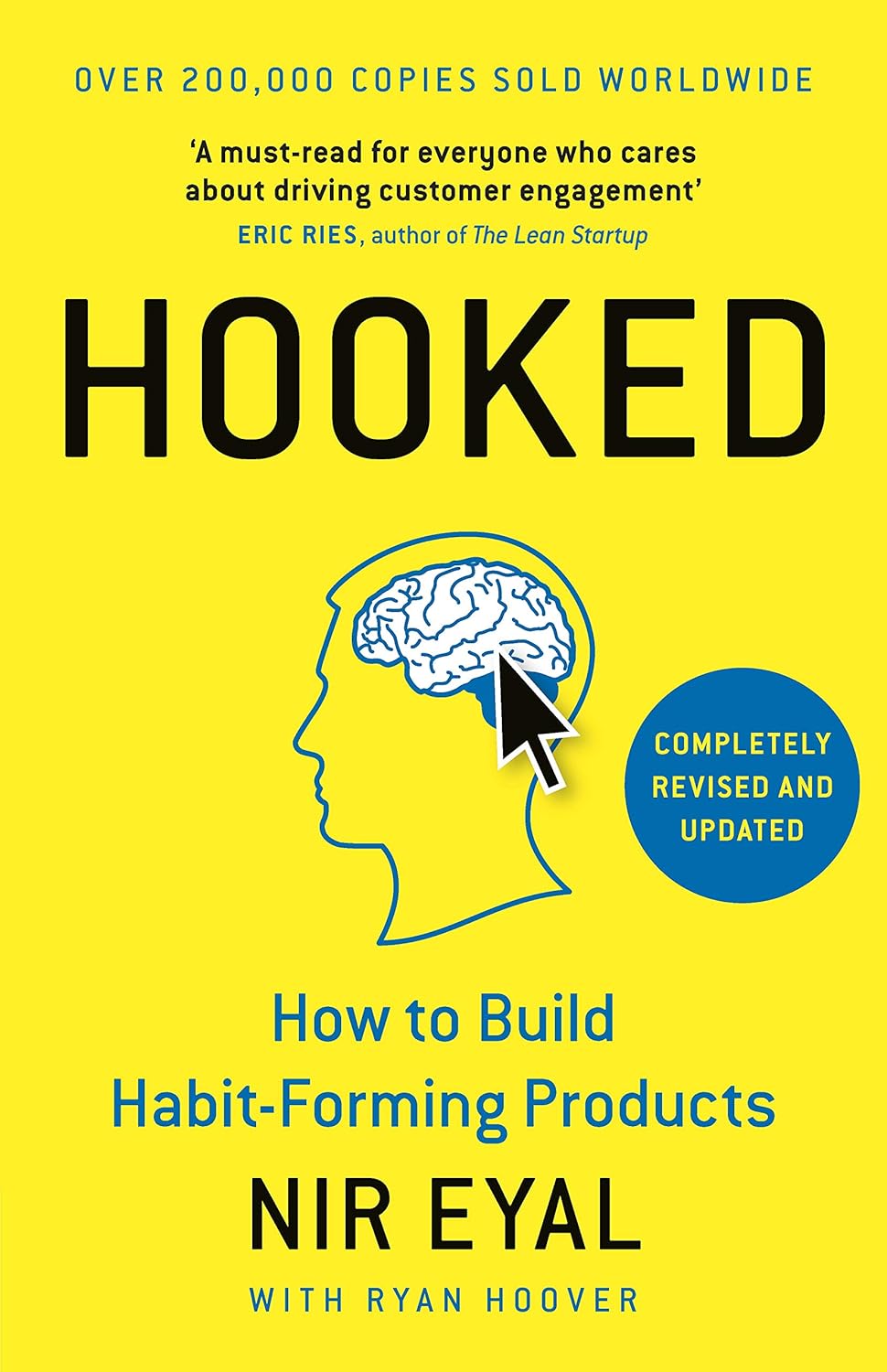
Chapter 1: The Hook Model
Summary:
The Hook Model introduces a framework for creating habit-forming products. It consists of four key components: Trigger, Action, Variable Reward, and Investment, which together drive user engagement.
Key points:
- The Hook Model is essential for product design.
- Triggers can be external or internal.
- Actions are behaviors performed in anticipation of rewards.
- Variable rewards increase user engagement.
- Investment leads to future returns and user commitment.
Themes & relevance:
This chapter sets the foundation for understanding how habits are formed and the psychological principles behind user engagement. It emphasizes the importance of designing products that create lasting user habits.
Takeaway / How to use:
Apply the Hook Model to your product design to enhance user engagement.
Key points
- The Hook Model is essential for product design.
- Triggers can be external or internal.
- Actions are behaviors performed in anticipation of rewards.
- Variable rewards increase user engagement.
- Investment leads to future returns and user commitment.
Chapter 2: Triggers
Summary:
Triggers are cues that prompt users to take action. This chapter differentiates between external triggers, like notifications, and internal triggers, which are tied to emotions and experiences.
Key points:
- External triggers include notifications and advertisements.
- Internal triggers are linked to user emotions.
- Successful products create strong internal triggers.
- Understanding triggers helps in product design.
- Triggers must be relevant to the user’s context.
Themes & relevance:
The chapter highlights the significance of triggers in habit formation, emphasizing that effective products rely on both external and internal cues to drive user behavior.
Takeaway / How to use:
Identify and design effective triggers that resonate with your target audience.
Key points
- External triggers include notifications and advertisements.
- Internal triggers are linked to user emotions.
- Successful products create strong internal triggers.
- Understanding triggers helps in product design.
- Triggers must be relevant to the user’s context.
Chapter 3: Action
Summary:
This chapter explores the actions users take in response to triggers. It discusses the Fogg Behavior Model, which states that behavior occurs when motivation, ability, and prompts converge.
Key points:
- Action is the behavior performed in response to a trigger.
- The Fogg Behavior Model outlines key factors for action.
- Motivation, ability, and prompts must align.
- Simplicity increases the likelihood of action.
- User experience design impacts user actions.
Themes & relevance:
Understanding the dynamics of user action is crucial for creating products that encourage engagement. This chapter emphasizes the need for simplicity and alignment in user experience.
Takeaway / How to use:
Ensure your product actions are simple and accessible to maximize user engagement.
Key points
- Action is the behavior performed in response to a trigger.
- The Fogg Behavior Model outlines key factors for action.
- Motivation, ability, and prompts must align.
- Simplicity increases the likelihood of action.
- User experience design impacts user actions.
Chapter 4: Variable Rewards
Summary:
Variable rewards are unpredictable outcomes that keep users engaged. This chapter discusses the psychology behind variable rewards and how they can enhance user satisfaction and retention.
Key points:
- Variable rewards create excitement and anticipation.
- Types of rewards include material, social, and intrinsic.
- Unpredictability increases user engagement.
- Understanding user desires helps in reward design.
- Rewards should align with user motivations.
Themes & relevance:
The chapter illustrates the power of variable rewards in habit formation, emphasizing their role in maintaining user interest and satisfaction over time.
Takeaway / How to use:
Incorporate variable rewards into your product to enhance user engagement and retention.
Key points
- Variable rewards create excitement and anticipation.
- Types of rewards include material, social, and intrinsic.
- Unpredictability increases user engagement.
- Understanding user desires helps in reward design.
- Rewards should align with user motivations.
Chapter 5: Investment
Summary:
Investment refers to the effort users put into a product, which increases the likelihood of future engagement. This chapter discusses how investment leads to a cycle of habit formation.
Key points:
- Investment increases user commitment to a product.
- Users are more likely to return after investing effort.
- Investment can take various forms, including time and data.
- The cycle of investment reinforces user habits.
- Understanding user motivations is key to fostering investment.
Themes & relevance:
This chapter emphasizes the importance of user investment in creating lasting habits, highlighting how it contributes to the overall Hook Model.
Takeaway / How to use:
Encourage user investment in your product to foster long-term engagement.
Key points
- Investment increases user commitment to a product.
- Users are more likely to return after investing effort.
- Investment can take various forms, including time and data.
- The cycle of investment reinforces user habits.
- Understanding user motivations is key to fostering investment.
Chapter 6: Case Studies
Summary:
This chapter presents case studies of successful habit-forming products, illustrating how they apply the Hook Model. Each case study highlights different aspects of the model in action.
Key points:
- Real
- world examples demonstrate the Hook Model's effectiveness.
- Each case study highlights unique applications of the model.
- Analyzing successes provides insights for product design.
- Understanding user behavior is crucial for success.
- Lessons learned can be applied to various industries.
Themes & relevance:
The case studies reinforce the principles of the Hook Model, providing practical examples of how to create habit-forming products across different sectors.
Takeaway / How to use:
Analyze successful products to identify strategies that can be applied to your own designs.
Key points
- Real
- world examples demonstrate the Hook Model's effectiveness.
- Each case study highlights unique applications of the model.
- Analyzing successes provides insights for product design.
- Understanding user behavior is crucial for success.
- Lessons learned can be applied to various industries.
Chapter 7: Ethical Considerations
Summary:
This chapter addresses the ethical implications of creating habit-forming products. It discusses the responsibility of designers to consider the impact of their products on users.
Key points:
- Ethical design is crucial in product development.
- Designers must consider user well
- being.
- Habit
- forming products can have negative consequences.
- Transparency and user consent are essential.
- Balancing business goals with ethical considerations is vital.
Themes & relevance:
The chapter highlights the importance of ethical considerations in product design, urging creators to prioritize user welfare alongside business objectives.
Takeaway / How to use:
Incorporate ethical considerations into your product design process to ensure user well-being.
Key points
- Ethical design is crucial in product development.
- Designers must consider user well
- being.
- Habit
- forming products can have negative consequences.
- Transparency and user consent are essential.
- Balancing business goals with ethical considerations is vital.
Chapter 8: The Future of Habit-Forming Products
Summary:
The final chapter explores the future of habit-forming products and the evolving landscape of user engagement. It discusses emerging trends and technologies that may shape future products.
Key points:
- Technology continues to evolve, impacting user habits.
- Future products will need to adapt to changing user needs.
- Trends in AI and personalization will influence design.
- Understanding user behavior will remain crucial.
- Innovation will drive the next generation of products.
Themes & relevance:
This chapter looks ahead, encouraging readers to think about the future of product design and the ongoing importance of understanding user habits and needs.
Takeaway / How to use:
Stay informed about emerging trends to adapt your product strategies effectively.
Key points
- Technology continues to evolve, impacting user habits.
- Future products will need to adapt to changing user needs.
- Trends in AI and personalization will influence design.
- Understanding user behavior will remain crucial.
- Innovation will drive the next generation of products.