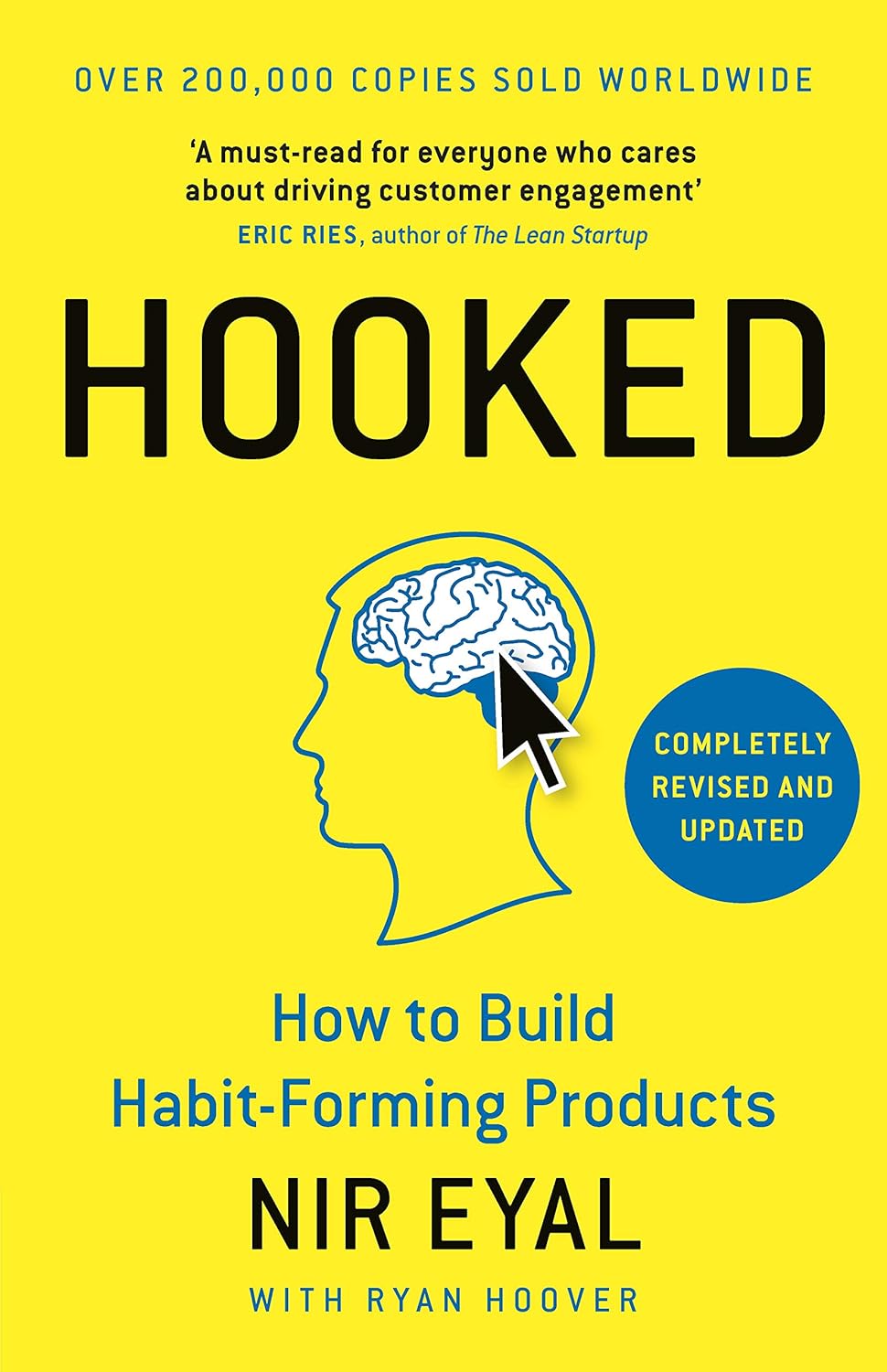
ReadSprintBooksHooked: How to Build Habit-Forming ProductsHooked: How to Build Habit-Forming Products Key Concepts and Core Ideas
Hooked: How to Build Habit-Forming Products
Hooked: How to Build Habit-Forming Products Key Concepts and Core Ideas

Hooked: How to Build Habit-Forming Products Key Concepts and Core Ideas

by Nir Eyal with Ryan Hoover

Understand the core concepts in Hooked: How to Build Habit-Forming Products by Nir Eyal with Ryan Hoover, with explanations, recall prompts, related books, and connected learning paths.

This page isolates the core concepts carrying Hooked: How to Build Habit-Forming Products. Use it when you want to understand the book’s mental models, not just skim the chapter sequence.

Built for retention

ReadSprint combines concise summaries, quizzes, active recall, and related reading paths so the useful part of the book is easier to keep.

Open full summary

8

Chapter summaries

5

Quiz questions

12

Key takeaways

6

Related books

Concept map

These are the ideas doing most of the work inside Hooked: How to Build Habit-Forming Products. Study them as reusable mental models, then jump back into chapters or questions when you want more context.

Concept 1

The Hook Model

The Hook Model introduces a framework for creating habit-forming products. It consists of four key components: Trigger, Action, Variable Reward, and Investment, which together drive user engagement.

Why it matters: This chapter sets the foundation for understanding how habits are formed and the psychological principles behind user engagement. It emphasizes the importance of designing products that create lasting user habits.

Supporting points

  • The Hook Model is essential for product design.
  • Triggers can be external or internal.
  • Actions are behaviors performed in anticipation of rewards.
Active recall prompt

How does the hook model change the way you would explain or apply Hooked: How to Build Habit-Forming Products?

Related chapter

Chapter 1: The Hook Model

Concept 2

Triggers

Triggers are cues that prompt users to take action. This chapter differentiates between external triggers, like notifications, and internal triggers, which are tied to emotions and experiences.

Why it matters: The chapter highlights the significance of triggers in habit formation, emphasizing that effective products rely on both external and internal cues to drive user behavior.

Supporting points

  • External triggers include notifications and advertisements.
  • Internal triggers are linked to user emotions.
  • Successful products create strong internal triggers.
Active recall prompt

How does triggers change the way you would explain or apply Hooked: How to Build Habit-Forming Products?

Related chapter

Chapter 2: Triggers

Concept 3

Action

This chapter explores the actions users take in response to triggers. It discusses the Fogg Behavior Model, which states that behavior occurs when motivation, ability, and prompts converge.

Why it matters: Understanding the dynamics of user action is crucial for creating products that encourage engagement. This chapter emphasizes the need for simplicity and alignment in user experience.

Supporting points

  • Action is the behavior performed in response to a trigger.
  • The Fogg Behavior Model outlines key factors for action.
  • Motivation, ability, and prompts must align.
Active recall prompt

How does action change the way you would explain or apply Hooked: How to Build Habit-Forming Products?

Related chapter

Chapter 3: Action

Concept 4

Variable Rewards

Variable rewards are unpredictable outcomes that keep users engaged. This chapter discusses the psychology behind variable rewards and how they can enhance user satisfaction and retention.

Why it matters: The chapter illustrates the power of variable rewards in habit formation, emphasizing their role in maintaining user interest and satisfaction over time.

Supporting points

  • Variable rewards create excitement and anticipation.
  • Types of rewards include material, social, and intrinsic.
  • Unpredictability increases user engagement.
Active recall prompt

How does variable rewards change the way you would explain or apply Hooked: How to Build Habit-Forming Products?

Related chapter

Chapter 4: Variable Rewards

Concept 5

Investment

Investment refers to the effort users put into a product, which increases the likelihood of future engagement. This chapter discusses how investment leads to a cycle of habit formation.

Why it matters: This chapter emphasizes the importance of user investment in creating lasting habits, highlighting how it contributes to the overall Hook Model.

Supporting points

  • Investment increases user commitment to a product.
  • Users are more likely to return after investing effort.
  • Investment can take various forms, including time and data.
Active recall prompt

How does investment change the way you would explain or apply Hooked: How to Build Habit-Forming Products?

Related chapter

Chapter 5: Investment

Concept 6

Case Studies

This chapter presents case studies of successful habit-forming products, illustrating how they apply the Hook Model. Each case study highlights different aspects of the model in action.

Why it matters: The case studies reinforce the principles of the Hook Model, providing practical examples of how to create habit-forming products across different sectors.

Supporting points

  • Real
  • world examples demonstrate the Hook Model's effectiveness.
  • Each case study highlights unique applications of the model.
Active recall prompt

How does case studies change the way you would explain or apply Hooked: How to Build Habit-Forming Products?

Related chapter

Chapter 6: Case Studies

Concept 7

Ethical Considerations

This chapter addresses the ethical implications of creating habit-forming products. It discusses the responsibility of designers to consider the impact of their products on users.

Why it matters: The chapter highlights the importance of ethical considerations in product design, urging creators to prioritize user welfare alongside business objectives.

Supporting points

  • Ethical design is crucial in product development.
  • Designers must consider user well
  • being.
Active recall prompt

How does ethical considerations change the way you would explain or apply Hooked: How to Build Habit-Forming Products?

Related chapter

Chapter 7: Ethical Considerations

Concept 8

The Future of Habit-Forming Products

The final chapter explores the future of habit-forming products and the evolving landscape of user engagement. It discusses emerging trends and technologies that may shape future products.

Why it matters: This chapter looks ahead, encouraging readers to think about the future of product design and the ongoing importance of understanding user habits and needs.

Supporting points

  • Technology continues to evolve, impacting user habits.
  • Future products will need to adapt to changing user needs.
  • Trends in AI and personalization will influence design.
Active recall prompt

How does the future of habit-forming products change the way you would explain or apply Hooked: How to Build Habit-Forming Products?

Related chapter

Chapter 8: The Future of Habit-Forming Products

Quiz checkpoints

Question 1

What is the primary focus of the Hook Model?

Question 2

What are the four components of the Hook Model?

Question 3

What type of triggers are linked to emotions?

Practice retrieval

Key concepts

The Hook Model

This chapter sets the foundation for understanding how habits are formed and the psychological principles behind user engagement. It emphasizes the importance of designing products that create lasting user habits.

Triggers

The chapter highlights the significance of triggers in habit formation, emphasizing that effective products rely on both external and internal cues to drive user behavior.

Action

Understanding the dynamics of user action is crucial for creating products that encourage engagement. This chapter emphasizes the need for simplicity and alignment in user experience.

Open concept map
Turn Reading Into Recall

Keep Hooked: How to Build Habit-Forming Products review-ready instead of letting it fade.

This page is strongest when it becomes part of a review habit: save the summary, revisit the key takeaways, and use recall prompts before the next meeting, study block, or decision.

Save one strong takeaway instead of over-highlighting.
Use the questions page to test what actually stuck.
Return when the book becomes relevant again, not just when motivation is high.
See pricing
Get Book Review Notes

Get practical notes on remembering and reusing ideas from nonfiction books without building an overly heavy note system.

Retention workflow

Turn this page into a repeatable study loop

Move from summary to takeaways, test yourself with questions, revisit the concept map, and then continue into related books. That keeps Hooked: How to Build Habit-Forming Productsconnected instead of turning into a one-time skim.

Frequently asked questions

What are the key concepts in Hooked: How to Build Habit-Forming Products?

The key concepts here are distilled from the chapter summaries, major themes, and action-oriented takeaways so you can quickly see the ideas carrying the whole book.

How should I study these Hooked: How to Build Habit-Forming Products concepts?

Start by explaining each concept from memory, connect it to a chapter or example, and then test yourself with one active recall prompt before moving on.

How are the concepts connected to other books?

Use the related books and topic links on this page to find books that reinforce, challenge, or extend the same ideas from a different angle.