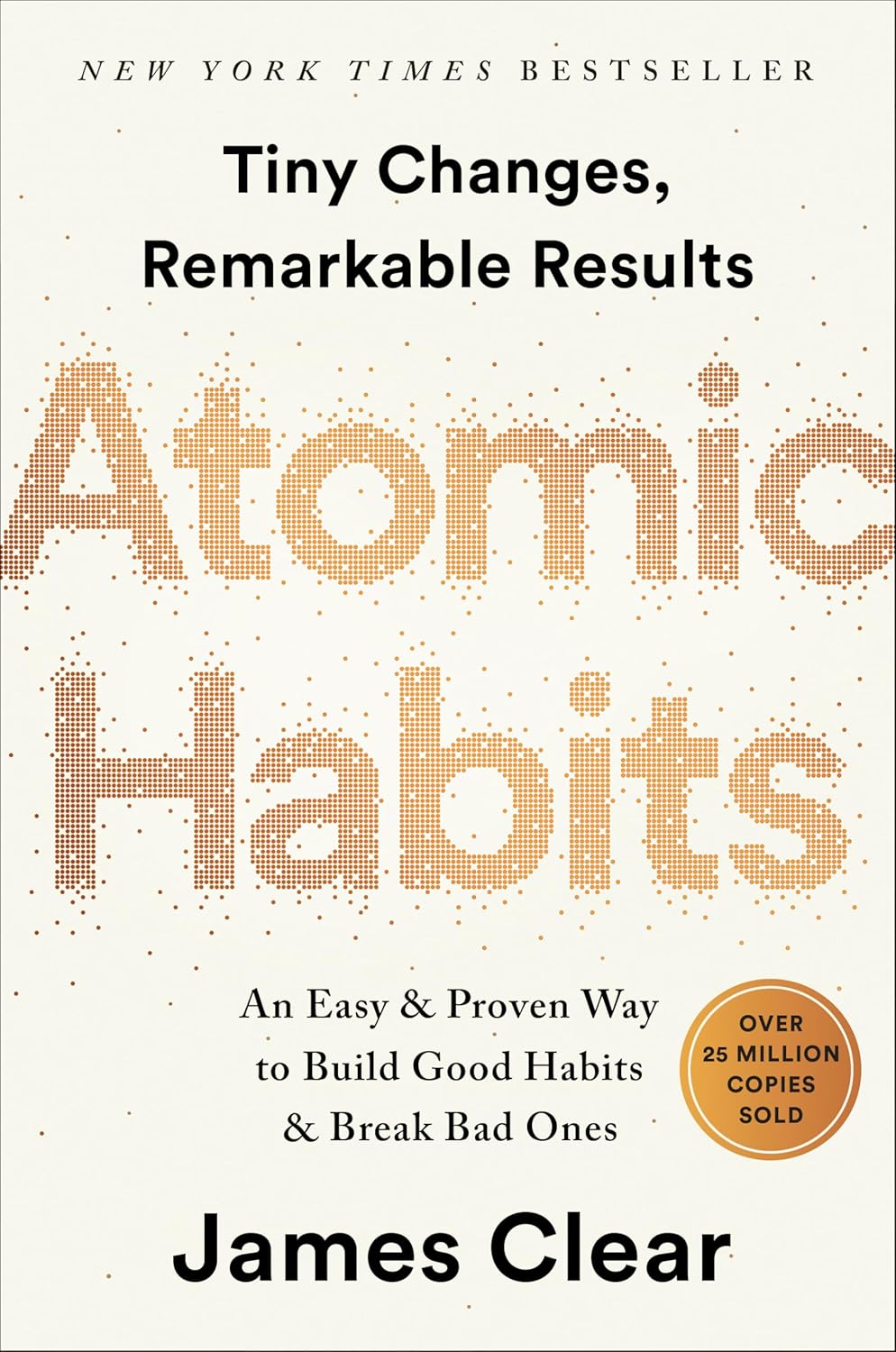
The Surprising Power of Atomic Habits
Summary:
This chapter introduces the concept of atomic habits, emphasizing how small changes can lead to remarkable results. The author explains the compounding effect of habits and how they shape our identity over time.
Key points:
- Small habits compound over time
- Habits shape identity
- Focus on systems, not goals
Themes & relevance:
The chapter sets the stage for understanding the power of incremental change and how focusing on systems rather than goals can lead to success.
Takeaway / How to use:
Start by making small, consistent changes to build effective habits.
Key points
- Small habits compound over time
- Habits shape identity
- Focus on systems, not goals
How Your Habits Shape Your Identity (and Vice Versa)
Summary:
This chapter explores the relationship between habits and identity, illustrating how our actions define who we are. The author discusses the importance of aligning habits with the person you want to become.
Key points:
- Identity
- based habits
- Align actions with desired identity
- Habits as a reflection of self
Themes & relevance:
Understanding the connection between habits and identity helps readers see the importance of aligning daily actions with long-term goals.
Takeaway / How to use:
Define the type of person you want to be and align your habits accordingly.
Key points
- Identity
- based habits
- Align actions with desired identity
- Habits as a reflection of self
The 1st Law: Make It Obvious
Summary:
The first law of behavior change is to make habits obvious. This chapter discusses the importance of cues in habit formation and how to design your environment to make good habits more visible.
Key points:
- Importance of cues
- Environment design
- Habit stacking
Themes & relevance:
By making habits obvious, readers can create an environment that naturally encourages positive behavior.
Takeaway / How to use:
Design your environment to make good habits more visible and accessible.
Key points
- Importance of cues
- Environment design
- Habit stacking
The 2nd Law: Make It Attractive
Summary:
This chapter focuses on the second law of behavior change: making habits attractive. The author explains how to use temptation bundling and the role of dopamine in habit formation.
Key points:
- Temptation bundling
- Role of dopamine
- Making habits appealing
Themes & relevance:
Understanding how to make habits attractive helps in creating a positive feedback loop that encourages repetition.
Takeaway / How to use:
Pair habits with activities you enjoy to make them more appealing.
Key points
- Temptation bundling
- Role of dopamine
- Making habits appealing
The 3rd Law: Make It Easy
Summary:
The third law of behavior change is to make habits easy. This chapter discusses reducing friction, the two-minute rule, and the importance of starting small.
Key points:
- Reduce friction
- Two
- minute rule
- Start small
Themes & relevance:
By simplifying habits, readers can lower the barrier to entry and increase the likelihood of consistency.
Takeaway / How to use:
Break down habits into small, manageable actions to ensure consistency.
Key points
- Reduce friction
- Two
- minute rule
- Start small
The 4th Law: Make It Satisfying
Summary:
The fourth law of behavior change is to make habits satisfying. The author discusses the importance of immediate rewards and how to create a sense of satisfaction to reinforce habits.
Key points:
- Immediate rewards
- Reinforcement
- Habit tracking
Themes & relevance:
Creating satisfying experiences around habits ensures they are more likely to stick.
Takeaway / How to use:
Use immediate rewards to reinforce positive habits.
Key points
- Immediate rewards
- Reinforcement
- Habit tracking
The Secret to Self-Control
Summary:
This chapter delves into the concept of self-control, arguing that it is more about removing temptations than sheer willpower. The author provides strategies for designing environments that minimize distractions.
Key points:
- Remove temptations
- Environment design
- Focus on systems
Themes & relevance:
By understanding self-control as a design problem, readers can create environments that naturally support their goals.
Takeaway / How to use:
Design your environment to minimize temptations and distractions.
Key points
- Remove temptations
- Environment design
- Focus on systems
How to Make a Habit Stick
Summary:
This chapter provides strategies for making habits stick, including the importance of repetition and the role of accountability. The author emphasizes the need for patience and persistence.
Key points:
- Repetition
- Accountability
- Patience and persistence
Themes & relevance:
The chapter reinforces the idea that consistency and support are key to long-term habit formation.
Takeaway / How to use:
Be patient and consistent, and seek accountability to reinforce habits.
Key points
- Repetition
- Accountability
- Patience and persistence
The Role of Family and Friends in Shaping Your Habits
Summary:
This chapter explores how social influences affect habit formation. The author discusses the impact of family and friends and how to leverage social networks to support positive habits.
Key points:
- Social influences
- Leverage social networks
- Positive reinforcement
Themes & relevance:
Understanding the role of social dynamics helps readers harness the power of community in habit formation.
Takeaway / How to use:
Surround yourself with people who support and reinforce your positive habits.
Key points
- Social influences
- Leverage social networks
- Positive reinforcement
How to Find and Fix the Causes of Your Bad Habits
Summary:
This chapter focuses on identifying and addressing the root causes of bad habits. The author provides a framework for analyzing triggers and implementing change.
Key points:
- Identify triggers
- Analyze root causes
- Implement change
Themes & relevance:
By understanding the underlying causes of bad habits, readers can develop targeted strategies for change.
Takeaway / How to use:
Identify triggers and root causes to effectively change bad habits.
Key points
- Identify triggers
- Analyze root causes
- Implement change
Advanced Tactics: How to Go from Being Merely Good to Being Truly Great
Summary:
This chapter discusses advanced strategies for taking habits to the next level. The author explores the concepts of deliberate practice and mastery.
Key points:
- Deliberate practice
- Mastery
- Continuous improvement
Themes & relevance:
The chapter encourages readers to pursue excellence by refining and mastering their habits.
Takeaway / How to use:
Engage in deliberate practice to elevate your habits and achieve mastery.
Key points
- Deliberate practice
- Mastery
- Continuous improvement
The Truth About Talent (When Genes Matter and When They Don’t)
Summary:
This chapter examines the role of talent and genetics in habit formation. The author discusses when natural ability is relevant and how effort and practice can overcome limitations.
Key points:
- Role of talent
- Effort vs. genetics
- Overcoming limitations
Themes & relevance:
Understanding the balance between talent and effort helps readers focus on what they can control.
Takeaway / How to use:
Focus on effort and practice to overcome genetic limitations.
Key points
- Role of talent
- Effort vs. genetics
- Overcoming limitations
The Goldilocks Rule: How to Stay Motivated in Life and Work
Summary:
The Goldilocks Rule is about finding the right level of challenge to maintain motivation. The author explains how to keep tasks engaging without being overwhelming.
Key points:
- Right level of challenge
- Maintaining motivation
- Avoiding boredom and burnout
Themes & relevance:
The chapter provides insights into maintaining motivation by balancing challenge and skill.
Takeaway / How to use:
Find tasks that are challenging but achievable to stay motivated.
Key points
- Right level of challenge
- Maintaining motivation
- Avoiding boredom and burnout
The Downside of Creating Good Habits
Summary:
This chapter explores potential downsides of habits, such as rigidity and over-reliance. The author discusses how to maintain flexibility and adaptability.
Key points:
- Rigidity
- Over
- reliance
- Flexibility and adaptability
Themes & relevance:
Understanding the potential pitfalls of habits helps readers maintain balance and adaptability.
Takeaway / How to use:
Stay flexible and adaptable to avoid becoming overly reliant on habits.
Key points
- Rigidity
- Over
- reliance
- Flexibility and adaptability
How to Break a Bad Habit
Summary:
This chapter provides a step-by
- step guide to breaking bad habits. The author discusses the importance of awareness, substitution, and support systems.
Key points:
- Awareness
- Substitution
- Support systems
Themes & relevance:
By understanding the process of breaking bad habits, readers can develop effective strategies for change.
Takeaway / How to use:
Use awareness and substitution to break bad habits effectively.
Key points
- Awareness
- Substitution
- Support systems
The Habits of Successful Organizations
Summary:
This chapter examines how successful organizations implement habits at a systemic level. The author discusses the role of culture and leadership in shaping organizational habits.
Key points:
- Organizational habits
- Role of culture
- Leadership
Themes & relevance:
Understanding organizational habits helps readers see the broader application of habit principles.
Takeaway / How to use:
Foster a culture of positive habits within organizations for systemic success.
Key points
- Organizational habits
- Role of culture
- Leadership
The Power of Small Wins
Summary:
This chapter highlights the importance of small wins in building momentum and confidence. The author explains how celebrating small victories can lead to larger successes.
Key points:
- Small wins
- Building momentum
- Celebrating success
Themes & relevance:
Recognizing the power of small wins helps readers build confidence and motivation.
Takeaway / How to use:
Celebrate small victories to build momentum and confidence.
Key points
- Small wins
- Building momentum
- Celebrating success
The Importance of Environment in Habit Formation
Summary:
This chapter emphasizes the critical role of environment in shaping habits. The author discusses how to design spaces that naturally encourage positive behavior.
Key points:
- Role of environment
- Designing spaces
- Encouraging positive behavior
Themes & relevance:
Understanding the influence of environment helps readers create spaces that support their goals.
Takeaway / How to use:
Design your environment to naturally encourage positive habits.
Key points
- Role of environment
- Designing spaces
- Encouraging positive behavior
The Role of Accountability in Habit Formation
Summary:
This chapter explores the importance of accountability in maintaining habits. The author discusses various accountability strategies and their effectiveness.
Key points:
- Accountability strategies
- Importance of support
- Measuring progress
Themes & relevance:
By understanding the role of accountability, readers can leverage support systems to maintain habits.
Takeaway / How to use:
Use accountability partners or systems to reinforce habit formation.
Key points
- Accountability strategies
- Importance of support
- Measuring progress
Conclusion: The Journey of Habit Formation
Summary:
The conclusion ties together the key concepts of the book, emphasizing the ongoing journey of habit formation. The author encourages readers to continue refining their habits for lifelong success.
Key points:
- Ongoing journey
- Refinement
- Lifelong success
Themes & relevance:
The conclusion reinforces the idea that habit formation is a continuous process that requires dedication and refinement.
Takeaway / How to use:
Continue to refine and adapt your habits for ongoing success.
Key points
- Ongoing journey
- Refinement
- Lifelong success