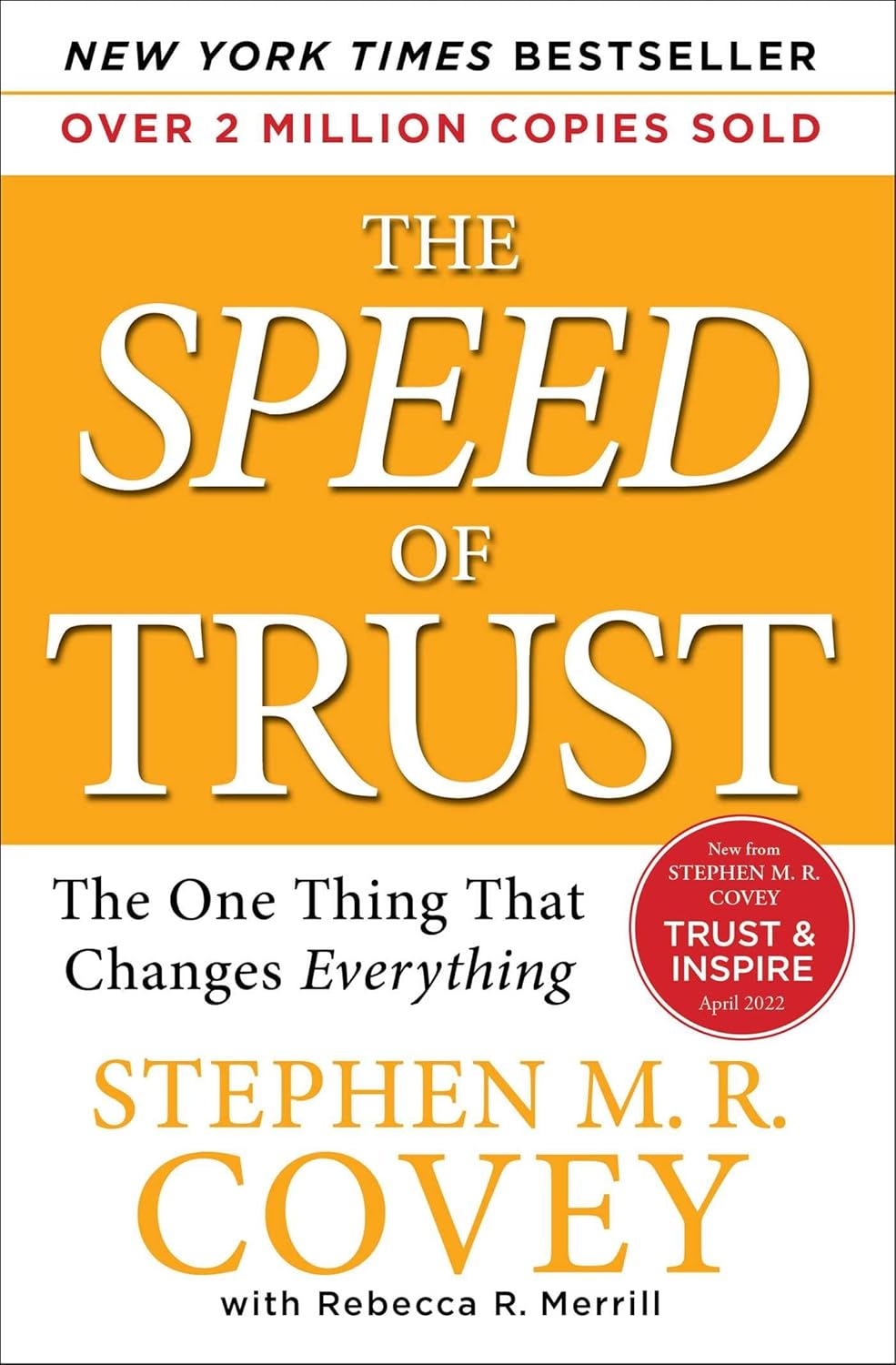
The One Thing That Changes Everything
Summary:
This chapter introduces the concept of trust as a critical component in personal and professional relationships. It argues that trust is the foundation for success and efficiency in any organization.
Key points:
- Trust is a key driver of success
- Lack of trust leads to inefficiency
- Trust can be built and rebuilt
Themes & relevance:
Trust is presented as the single most important factor that can change the dynamics of any relationship or organization. It sets the stage for the rest of the book by emphasizing its foundational role.
Takeaway / How to use:
Focus on building trust to improve relationships and efficiency.
Key points
- Trust is a key driver of success
- Lack of trust leads to inefficiency
- Trust can be built and rebuilt
The First Wave: Self Trust
Summary:
Self Trust is about developing confidence in oneself and one's ability to achieve goals. It emphasizes the importance of integrity and intent in building self-trust.
Key points:
- Integrity is crucial for self
- trust
- Intent aligns actions with values
- Self
- trust leads to credibility
Themes & relevance:
This chapter highlights the internal aspect of trust, focusing on personal integrity and intent as the basis for building trust with oneself and others.
Takeaway / How to use:
Cultivate integrity and align your actions with your values to build self-trust.
Key points
- Integrity is crucial for self
- trust
- Intent aligns actions with values
- Self
- trust leads to credibility
The Second Wave: Relationship Trust
Summary:
Relationship Trust focuses on the importance of consistent behavior and communication in building trust with others. It introduces the concept of the "13 Behaviors" that enhance trust.
Key points:
- Consistency builds trust
- Communication is key
- 13 Behaviors to enhance trust
Themes & relevance:
The chapter emphasizes the role of behavior and communication in establishing trust in relationships, providing practical steps to enhance trustworthiness.
Takeaway / How to use:
Practice consistent behavior and clear communication to build trust in relationships.
Key points
- Consistency builds trust
- Communication is key
- 13 Behaviors to enhance trust
The Third Wave: Organizational Trust
Summary:
Organizational Trust explores how trust can be institutionalized within organizations. It discusses the importance of alignment, transparency, and accountability.
Key points:
- Alignment with organizational goals
- Transparency fosters trust
- Accountability is essential
Themes & relevance:
This chapter focuses on the systemic aspect of trust, showing how organizations can create a culture of trust through alignment and transparency.
Takeaway / How to use:
Foster a culture of transparency and accountability to build organizational trust.
Key points
- Alignment with organizational goals
- Transparency fosters trust
- Accountability is essential
The Fourth Wave: Market Trust
Summary:
Market Trust examines how trust affects brand reputation and customer loyalty. It highlights the importance of delivering on promises and maintaining a positive brand image.
Key points:
- Trust impacts brand reputation
- Customer loyalty is built on trust
- Delivering on promises is crucial
Themes & relevance:
The chapter connects trust with market dynamics, showing how it influences brand perception and customer relationships.
Takeaway / How to use:
Ensure your brand consistently delivers on promises to build market trust.
Key points
- Trust impacts brand reputation
- Customer loyalty is built on trust
- Delivering on promises is crucial
The Fifth Wave: Societal Trust
Summary:
Societal Trust addresses the broader impact of trust on society. It discusses the role of contribution and ethical behavior in building trust at a societal level.
Key points:
- Trust impacts societal well
- being
- Contribution builds societal trust
- Ethical behavior is foundational
Themes & relevance:
This chapter expands the concept of trust to a societal level, emphasizing the importance of ethical behavior and contribution to societal trust.
Takeaway / How to use:
Engage in ethical behavior and contribute positively to society to build societal trust.
Key points
- Trust impacts societal well
- being
- Contribution builds societal trust
- Ethical behavior is foundational
The Economics of Trust
Summary:
This chapter explores the economic benefits of trust, including increased efficiency and reduced costs. It presents trust as a valuable economic asset.
Key points:
- Trust reduces transaction costs
- Efficiency is increased with trust
- Trust is an economic asset
Themes & relevance:
The chapter highlights the tangible economic benefits of trust, framing it as a critical component of economic success.
Takeaway / How to use:
Leverage trust to reduce costs and increase efficiency in economic transactions.
Key points
- Trust reduces transaction costs
- Efficiency is increased with trust
- Trust is an economic asset
The Tax and Dividend of Trust
Summary:
This chapter introduces the concepts of the "trust tax" and "trust dividend," illustrating how trust can either hinder or enhance performance and outcomes.
Key points:
- Trust tax increases costs
- Trust dividend enhances performance
- Trust impacts outcomes
Themes & relevance:
The chapter provides a framework for understanding the costs and benefits of trust, emphasizing its impact on performance and outcomes.
Takeaway / How to use:
Aim to minimize the trust tax and maximize the trust dividend in your interactions.
Key points
- Trust tax increases costs
- Trust dividend enhances performance
- Trust impacts outcomes
The Principle of Behavior
Summary:
This chapter focuses on the principle of behavior as a foundation for building trust. It outlines specific behaviors that foster trust and credibility.
Key points:
- Behavior is foundational to trust
- Specific behaviors enhance trust
- Credibility is built through actions
Themes & relevance:
The chapter underscores the importance of behavior in building trust, providing actionable steps to enhance credibility.
Takeaway / How to use:
Adopt behaviors that foster trust and credibility in your interactions.
Key points
- Behavior is foundational to trust
- Specific behaviors enhance trust
- Credibility is built through actions
The Principle of Transparency
Summary:
Transparency is presented as a key principle in building trust. The chapter discusses how openness and honesty contribute to trustworthiness.
Key points:
- Transparency builds trust
- Openness fosters credibility
- Honesty is essential
Themes & relevance:
The chapter emphasizes the role of transparency in trust-building, highlighting its importance in fostering credibility and openness.
Takeaway / How to use:
Be open and honest in your communications to build trust.
Key points
- Transparency builds trust
- Openness fosters credibility
- Honesty is essential
The Principle of Accountability
Summary:
Accountability is explored as a principle that enhances trust. The chapter discusses the importance of taking responsibility for actions and outcomes.
Key points:
- Accountability builds trust
- Responsibility enhances credibility
- Outcomes are linked to accountability
Themes & relevance:
The chapter highlights accountability as a critical component of trust, linking it to responsibility and outcomes.
Takeaway / How to use:
Take responsibility for your actions to build trust and credibility.
Key points
- Accountability builds trust
- Responsibility enhances credibility
- Outcomes are linked to accountability
The Principle of Results
Summary:
This chapter focuses on the principle of results, emphasizing the importance of delivering on promises and achieving outcomes to build trust.
Key points:
- Results build trust
- Delivering on promises is crucial
- Outcomes enhance credibility
Themes & relevance:
The chapter connects trust with results, showing how delivering on promises enhances credibility and trustworthiness.
Takeaway / How to use:
Focus on achieving results to build trust and credibility.
Key points
- Results build trust
- Delivering on promises is crucial
- Outcomes enhance credibility
The Principle of Listening
Summary:
Listening is presented as a fundamental principle in building trust. The chapter discusses how active listening fosters understanding and trust.
Key points:
- Listening builds trust
- Active listening fosters understanding
- Communication is enhanced by listening
Themes & relevance:
The chapter emphasizes the role of listening in trust-building, highlighting its importance in fostering understanding and communication.
Takeaway / How to use:
Practice active listening to enhance trust and understanding in your interactions.
Key points
- Listening builds trust
- Active listening fosters understanding
- Communication is enhanced by listening
The Principle of Commitment
Summary:
Commitment is explored as a principle that strengthens trust. The chapter discusses the importance of keeping commitments and following through on promises.
Key points:
- Commitment builds trust
- Following through is essential
- Promises enhance credibility
Themes & relevance:
The chapter highlights commitment as a key component of trust, linking it to credibility and follow-through.
Takeaway / How to use:
Keep your commitments to build trust and credibility.
Key points
- Commitment builds trust
- Following through is essential
- Promises enhance credibility
The Principle of Extending Trust
Summary:
The final chapter discusses the principle of extending trust to others. It emphasizes the importance of giving trust to receive trust in return.
Key points:
- Extending trust builds relationships
- Trust is reciprocal
- Giving trust enhances credibility
Themes & relevance:
The chapter concludes the book by emphasizing the reciprocal nature of trust, encouraging readers to extend trust to build strong relationships.
Takeaway / How to use:
Extend trust to others to build strong, trusting relationships.
Key points
- Extending trust builds relationships
- Trust is reciprocal
- Giving trust enhances credibility