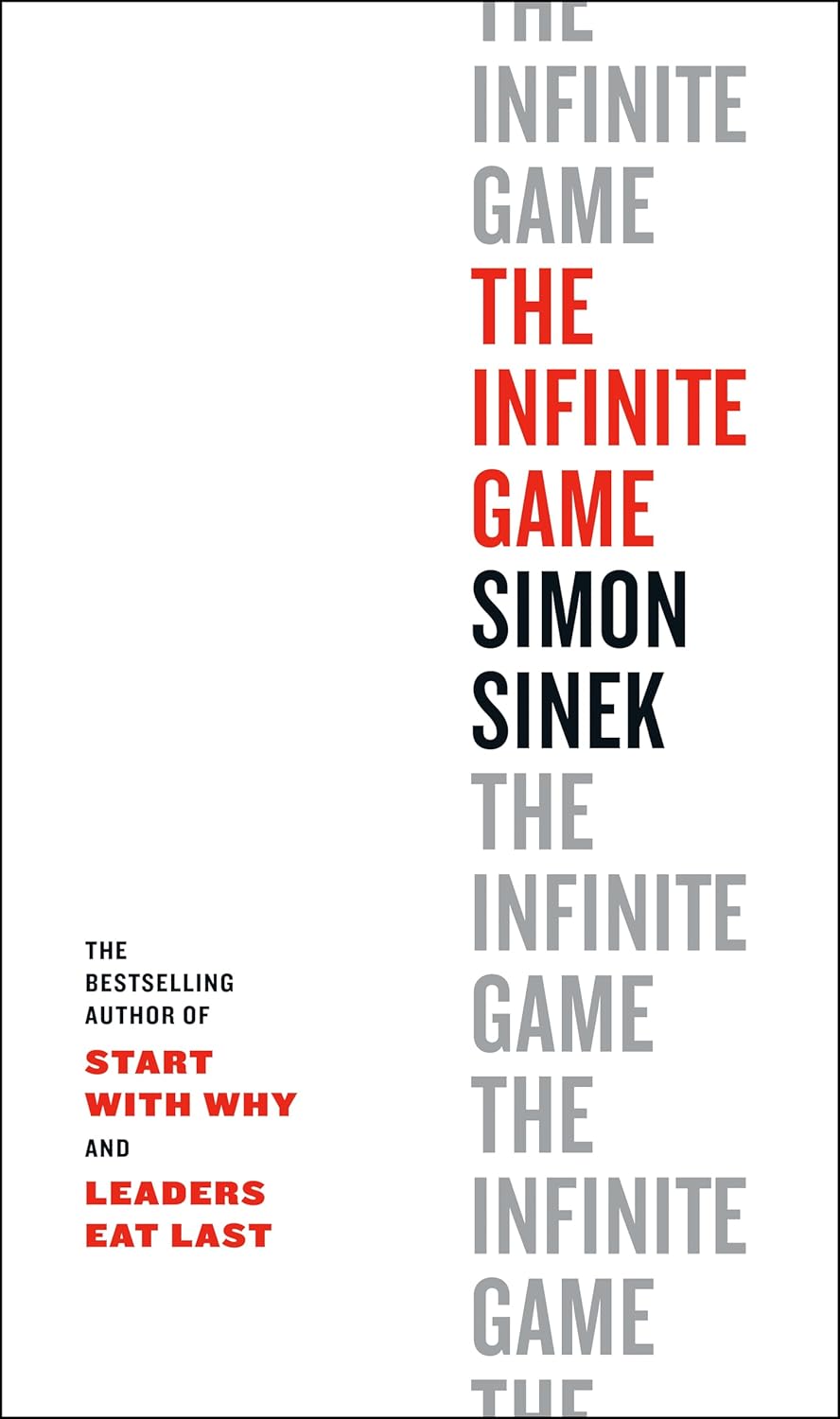
The Infinite Game: ReadSprint summary highlights
ReadSprint paraphrases for review. These highlights are not verbatim quotations from the book or its author. Check the original edition for exact wording and context.
The Infinite Game
by Simon Sinek
The book introduces the distinction between finite and infinite games: finite games have known players, fixed rules and defined endings, while infinite games have changing players, no fixed rules and the objective is to continue play.
ReadSprint paraphrase · Not a quotation from the author.
The book introduces the distinction between finite and infinite games: finite games have known players, fixed rules and defined endings, while infinite games have changing players, no fixed rules and the objective is to continue play.
Finite games = clear winners and losers; infinite games = continuing play and long
Share with the ReadSprint source so others can read the context.
The Infinite Game
by Simon Sinek
Sinek argues that many leaders and organizations mistakenly operate with a finite mindset, and shifting to an infinite mindset produces more resilient, ethical and sustainable organizations.
ReadSprint paraphrase · Not a quotation from the author.
Sinek argues that many leaders and organizations mistakenly operate with a finite mindset, and shifting to an infinite mindset produces more resilient, ethical and sustainable organizations.
term endurance.
Share with the ReadSprint source so others can read the context.
The Infinite Game
by Simon Sinek
A Just Cause is a specific, optimistic and inclusive vision of a future state that inspires people to sacrifice and contribute over the long term.
ReadSprint paraphrase · Not a quotation from the author.
A Just Cause is a specific, optimistic and inclusive vision of a future state that inspires people to sacrifice and contribute over the long term.
Playing with an infinite mindset changes decisions, strategies and what success means.
Share with the ReadSprint source so others can read the context.
The Infinite Game
by Simon Sinek
Sinek explains the attributes of a valid Just Cause and how it directs decisions, attracts people, and keeps an organization focused on an infinite game.
ReadSprint paraphrase · Not a quotation from the author.
Sinek explains the attributes of a valid Just Cause and how it directs decisions, attracts people, and keeps an organization focused on an infinite game.
Short
Share with the ReadSprint source so others can read the context.
The Infinite Game
by Simon Sinek
Trusting teams are the organizational condition that allow people to take risks, admit mistakes and be candid without fear of punishment-essential for playing an infinite game.
ReadSprint paraphrase · Not a quotation from the author.
Trusting teams are the organizational condition that allow people to take risks, admit mistakes and be candid without fear of punishment-essential for playing an infinite game.
term metrics and competition-focused thinking can undermine long
Share with the ReadSprint source so others can read the context.
The Infinite Game
by Simon Sinek
Sinek shows that leaders create trust by prioritizing safety, reducing internal competition and demonstrating vulnerability.
ReadSprint paraphrase · Not a quotation from the author.
Sinek shows that leaders create trust by prioritizing safety, reducing internal competition and demonstrating vulnerability.
term viability.
Share with the ReadSprint source so others can read the context.
Use these highlights to review the book
Which highlight from The Infinite Game changes how you would explain the book to someone else?
Which lesson here is worth testing in a real decision this week?
Which highlight feels memorable but less actionable once you slow down and examine it?