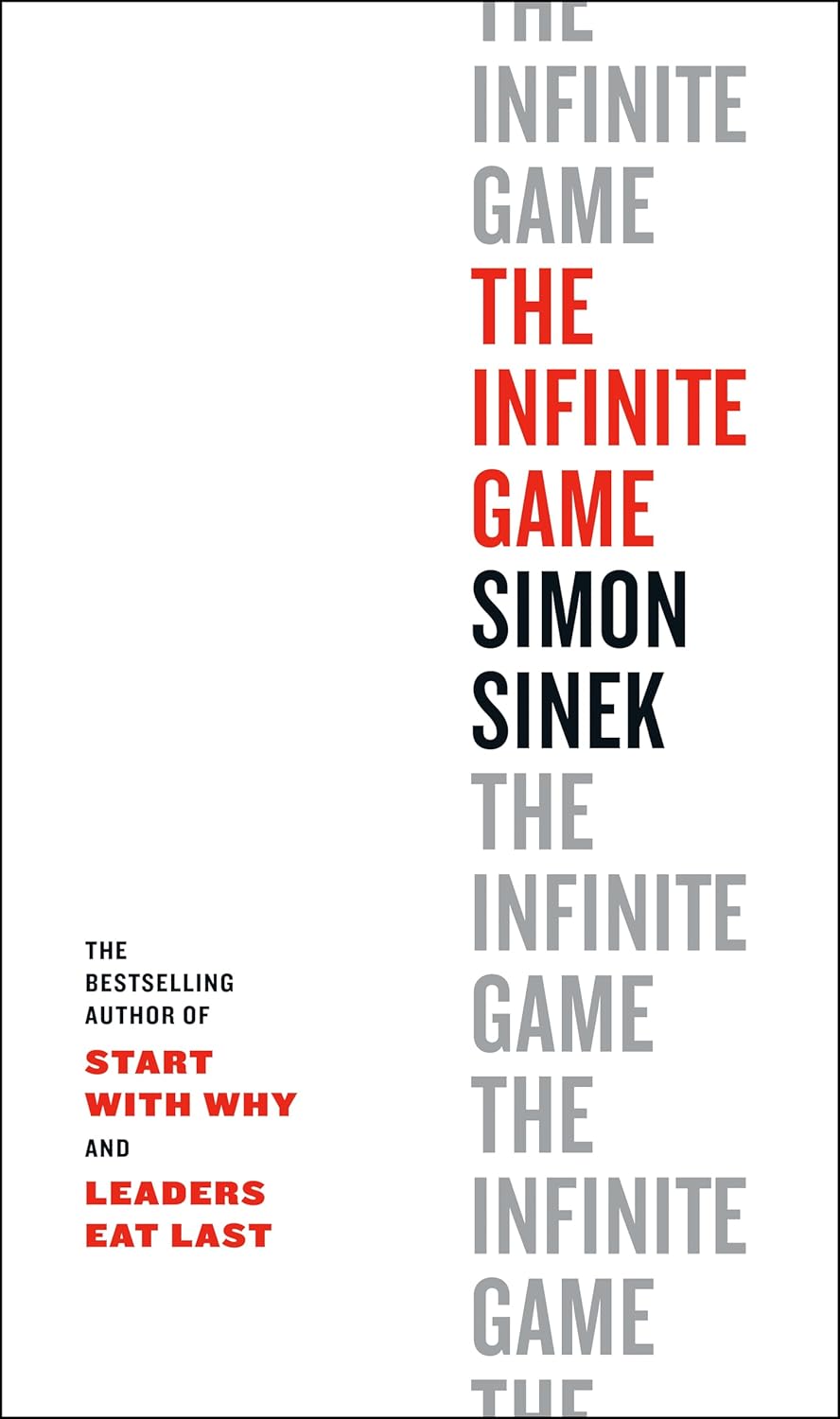
Introduction
Summary:
The book introduces the distinction between finite and infinite games: finite games have known players, fixed rules and defined endings, while infinite games have changing players, no fixed rules and the objective is to continue play. Sinek argues that many leaders and organizations mistakenly operate with a finite mindset, and shifting to an infinite mindset produces more resilient, ethical and sustainable organizations.
Key points:
- Finite games = clear winners and losers; infinite games = continuing play and long
- term endurance.
- Playing with an infinite mindset changes decisions, strategies and what success means.
- Short
- term metrics and competition-focused thinking can undermine long
- term viability.
- Leaders must redefine victory as staying in the game and advancing a purpose beyond profit.
Themes & relevance:
The chapter reframes leadership and strategy as long-term activities, framing contemporary business challenges as problems best addressed by an infinite mindset. This is relevant for organizations seeking sustainability over quarterly wins.
Takeaway / How to use:
Begin reframing goals from winning to enduring by prioritizing long-term purpose over short
- term metrics.
Key points
- Finite games = clear winners and losers; infinite games = continuing play and long
- term endurance.
- Playing with an infinite mindset changes decisions, strategies and what success means.
- Short
- term metrics and competition-focused thinking can undermine long
- term viability.
- Leaders must redefine victory as staying in the game and advancing a purpose beyond profit.
A Just Cause
Summary:
A Just Cause is a specific, optimistic and inclusive vision of a future state that inspires people to sacrifice and contribute over the long term. Sinek explains the attributes of a valid Just Cause and how it directs decisions, attracts people, and keeps an organization focused on an infinite game.
Key points:
- A Just Cause is prospective, specific, actionable and for something beyond the organization itself.
- It must be inclusive and durable so people can commit across time and leadership changes.
- A strong Just Cause motivates people to endure hardships and prioritize long
- term success.
- Without a Just Cause, organizations default to short
- termism and transactional relationships.
Themes & relevance:
The chapter connects purpose-driven leadership to sustained organizational health, showing how a compelling cause aligns stakeholders and informs strategy. For leaders, a Just Cause becomes the north star for decisions in uncertainty.
Takeaway / How to use:
Draft or refine a short, clear Just Cause that describes the future you want to help bring about and share it widely.
Key points
- A Just Cause is prospective, specific, actionable and for something beyond the organization itself.
- It must be inclusive and durable so people can commit across time and leadership changes.
- A strong Just Cause motivates people to endure hardships and prioritize long
- term success.
- Without a Just Cause, organizations default to short
- termism and transactional relationships.
Trusting Teams
Summary:
Trusting teams are the organizational condition that allow people to take risks, admit mistakes and be candid without fear of punishment—essential for playing an infinite game. Sinek shows that leaders create trust by prioritizing safety, reducing internal competition and demonstrating vulnerability.
Key points:
- Psychological safety enables experimentation, learning and honest communication.
- Leaders build trust through small acts: showing humility, protecting teams and admitting errors.
- Metrics and incentives that pit employees against one another erode trust and shorten time horizons.
- Trusting teams increase resilience and the capacity to pursue a Just Cause over time.
Themes & relevance:
This chapter emphasizes the human and cultural foundations of long-term success, highlighting that strategy alone fails without teams who feel safe to contribute. It’s relevant for anyone seeking to transform organizational behavior.
Takeaway / How to use:
Take concrete steps to increase psychological safety, such as soliciting dissenting views and protecting team members from internal blame.
Key points
- Psychological safety enables experimentation, learning and honest communication.
- Leaders build trust through small acts: showing humility, protecting teams and admitting errors.
- Metrics and incentives that pit employees against one another erode trust and shorten time horizons.
- Trusting teams increase resilience and the capacity to pursue a Just Cause over time.
Worthy Rivals
Summary:
Worthy rivals are competitors or peers who expose our weaknesses and motivate us to improve rather than enemies to be destroyed. Sinek argues that recognizing rivals as worthy encourages humility, continuous learning and better performance in an infinite game.
Key points:
- Treat competitors as mirrors that reveal where you need to improve, not as opponents to eliminate.
- The concept discourages zero
- sum thinking and promotes learning from others’ strengths.
- Identifying worthy rivals refocuses energy from beating others to becoming better at pursuing your cause.
- This mindset reduces fear and helps organizations adapt through honest assessment.
Themes & relevance:
Reframing competition as an opportunity for growth aligns with the infinite mindset and supports long-term improvement. It’s useful for leaders seeking to foster constructive benchmarking and humility.
Takeaway / How to use:
Identify a worthy rival and analyze what they do well to inform your own improvement priorities.
Key points
- Treat competitors as mirrors that reveal where you need to improve, not as opponents to eliminate.
- The concept discourages zero
- sum thinking and promotes learning from others’ strengths.
- Identifying worthy rivals refocuses energy from beating others to becoming better at pursuing your cause.
- This mindset reduces fear and helps organizations adapt through honest assessment.
Existential Flexibility
Summary:
Existential flexibility is the capacity to make a dramatic, sometimes costly strategic shift to protect or advance a Just Cause when circumstances demand it. Sinek explains that organizations need the will, resources and alignment to pivot decisively when incremental change is insufficient.
Key points:
- Existential flexibility involves radical, preemptive changes that preserve the long
- term purpose.
- It requires leaders to prioritize the Just Cause over short
- term comfort or established success.
- Building flexibility means investing in reserves, culture and alignment so a pivot is possible.
- Waiting too long or clinging to past models risks obsolescence and failure in an infinite game.
Themes & relevance:
This chapter stresses adaptability as a strategic virtue in an unpredictable landscape, linking readiness to the moral courage to abandon comfortable paths. It’s relevant for organizations that must navigate disruptive change.
Takeaway / How to use:
Assess and build the resources and alignment needed to make bold strategic pivots when your cause requires it.
Key points
- Existential flexibility involves radical, preemptive changes that preserve the long
- term purpose.
- It requires leaders to prioritize the Just Cause over short
- term comfort or established success.
- Building flexibility means investing in reserves, culture and alignment so a pivot is possible.
- Waiting too long or clinging to past models risks obsolescence and failure in an infinite game.
Courage to Lead
Summary:
Leadership in an infinite game demands courage: to set and defend a Just Cause, to create trusting teams, and to act with integrity despite short-term pressures. Sinek argues that leaders must be willing to sacrifice immediate advantage to preserve the lifetime of the organization and its purpose.
Key points:
- Courageous leaders choose the infinite mindset over comfortable short
- term wins.
- They communicate purpose clearly, protect their people and model the values of the cause.
- Courage includes standing up to stakeholders when necessary and making unpopular but principled choices.
- Leadership is framed as a responsibility to sustain the game for future players, not a pursuit of personal success.
Themes & relevance:
The chapter ties together the book’s principles into a call for moral and strategic bravery in leadership, reinforcing that sustainable success requires steady conviction. It reminds readers that leadership is a practice cultivated through daily choices.
Takeaway / How to use:
Practice one courageous leadership action this week that prioritizes purpose over short-term approval.
Key points
- Courageous leaders choose the infinite mindset over comfortable short
- term wins.
- They communicate purpose clearly, protect their people and model the values of the cause.
- Courage includes standing up to stakeholders when necessary and making unpopular but principled choices.
- Leadership is framed as a responsibility to sustain the game for future players, not a pursuit of personal success.