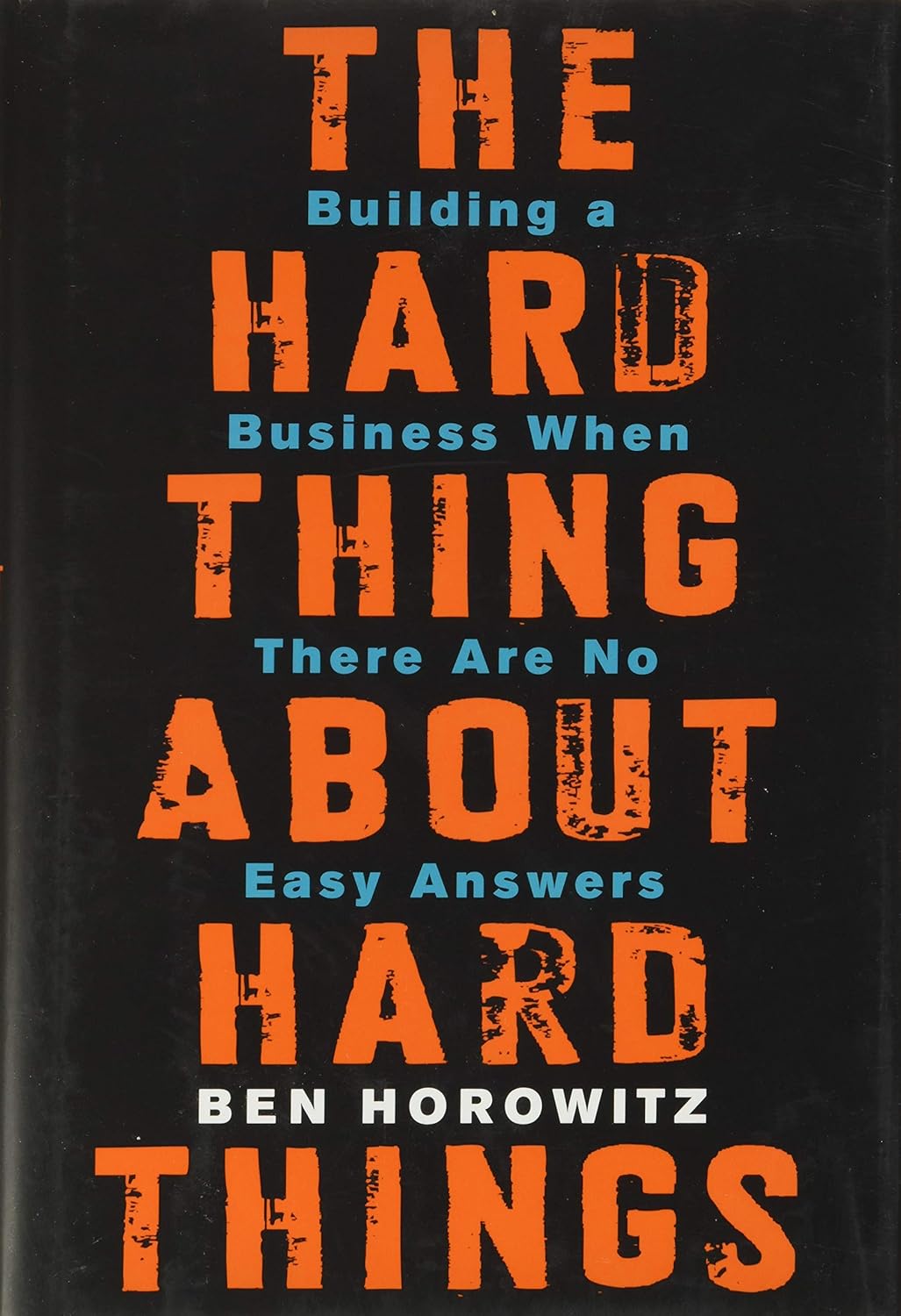
ReadSprintBooksThe Hard Thing About Hard Things: Building a Business When There Are No Easy AnswersThe Hard Thing About Hard Things: Building a Business When There Are No Easy Answers Questions, Quiz, and Active Recall Prompts
The Hard Thing About Hard Things: Building a Business When There Are No Easy Answers
The Hard Thing About Hard Things: Building a Business When There Are No Easy Answers Questions, Quiz, and Active Recall Prompts

The Hard Thing About Hard Things: Building a Business When There Are No Easy Answers Questions, Quiz, and Active Recall Prompts

by Ben Horowitz

Test your understanding of The Hard Thing About Hard Things: Building a Business When There Are No Easy Answers by Ben Horowitz with quiz questions, active recall prompts, and related learning resources.

Reading without retrieval fades fast. Use these The Hard Thing About Hard Things: Building a Business When There Are No Easy Answers questions and active recall prompts to pressure-test what you understood and keep the book usable later.

Built for retention

ReadSprint combines concise summaries, quizzes, active recall, and related reading paths so the useful part of the book is easier to keep.

Open full summary

13

Chapter summaries

5

Quiz questions

12

Key takeaways

6

Related books

Quiz questions

Question 1

What does Horowitz mean by "The Struggle" in running a company?

  • An intense, often lonely experience where CEOs face brutal problems with no easy answers
  • A phase of rapid growth with many opportunities and little stress
  • A hiring methodology focused solely on technical skills
  • A fundraising strategy to secure venture capital
Question 2

According to Horowitz, what is the correct operating priority for troubled companies?

  • People, Product, Cash
  • Cash, Product, People
  • Product, People, Cash
  • People, Cash, Product
Question 3

What does Horowitz advocate with the phrase "Lead bullets, not silver bullets"?

  • Waiting for a single breakthrough solution to fix problems
  • Using hard, pragmatic, high-effort tactics and disciplined execution
  • Outsourcing key decisions to consultants
  • Focusing only on product innovation while ignoring operations
Question 4

When hiring or replacing senior executives, Horowitz suggests the most important criterion is:

  • Hiring based primarily on charisma and vision
  • Relying on formal credentials like degrees
  • Looking for evidence of past performance and pattern recognition
  • Choosing friends and long-time employees to preserve culture
Question 5

How does Horowitz define company culture and how should it be managed?

  • A written mission statement that guides all decisions
  • How employees behave when no one is watching; culture must be actively created and reinforced by leadership
  • A byproduct of product design and market fit
  • Primarily determined by the compensation and perks offered

Active recall prompts

What does Horowitz mean by "The Struggle" in running a company?

According to Horowitz, what is the correct operating priority for troubled companies?

What does Horowitz advocate with the phrase "Lead bullets, not silver bullets"?

When hiring or replacing senior executives, Horowitz suggests the most important criterion is:

What is the main idea of "The Struggle", and how would you explain it without looking back?

What is the main idea of "Embracing the Struggle", and how would you explain it without looking back?

What is the main idea of "When Things Fall Apart", and how would you explain it without looking back?

What is the main idea of "Take Care of the People, the Product, and the Cash", and how would you explain it without looking back?

Quiz checkpoints

Question 1

What does Horowitz mean by "The Struggle" in running a company?

Question 2

According to Horowitz, what is the correct operating priority for troubled companies?

Question 3

What does Horowitz advocate with the phrase "Lead bullets, not silver bullets"?

Practice retrieval

Key concepts

The Struggle

The chapter underscores resilience, ownership, and emotional honesty as core leadership traits; it’s relevant to founders and managers facing high-stakes ambiguity.

Embracing the Struggle

This chapter links personal leadership development to company resilience, showing how mindset shifts improve organizational outcomes.

When Things Fall Apart

The chapter is a pragmatic guide to crisis leadership, relevant when firms face sudden downward turns or need to restructure dramatically.

Open concept map
Turn Reading Into Recall

Keep The Hard Thing About Hard Things: Building a Business When There Are No Easy Answers review-ready instead of letting it fade.

This page is strongest when it becomes part of a review habit: save the summary, revisit the key takeaways, and use recall prompts before the next meeting, study block, or decision.

Save one strong takeaway instead of over-highlighting.
Use the questions page to test what actually stuck.
Return when the book becomes relevant again, not just when motivation is high.
See pricing
Get Book Review Notes

Get practical notes on remembering and reusing ideas from nonfiction books without building an overly heavy note system.

Retention workflow

Turn this page into a repeatable study loop

Move from summary to takeaways, test yourself with questions, revisit the concept map, and then continue into related books. That keeps The Hard Thing About Hard Things: Building a Business When There Are No Easy Answersconnected instead of turning into a one-time skim.

Frequently asked questions

Why use quiz questions for The Hard Thing About Hard Things: Building a Business When There Are No Easy Answers?

Quiz-style recall is more durable than passive rereading because it forces you to retrieve the idea instead of merely recognizing it.

How should I answer active recall prompts?

Answer from memory first, then review the relevant chapter summary only after you have tried to explain the idea on your own.

What if I miss several questions about The Hard Thing About Hard Things: Building a Business When There Are No Easy Answers?

That usually means the book needs a shorter review loop. Revisit the chapter summaries, keep only a few high-value takeaways, and test yourself again later.