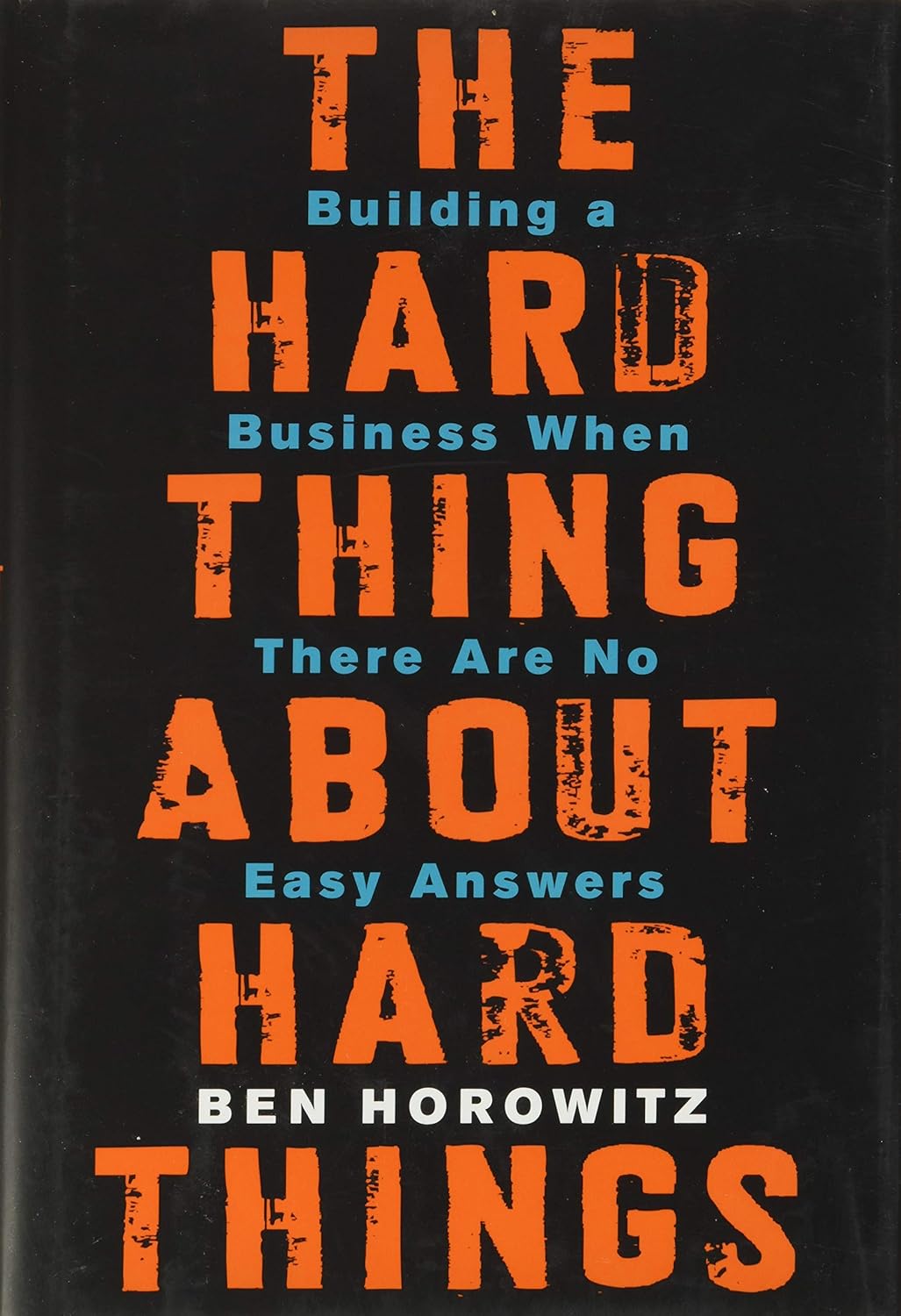
Book overview
Ben Horowitz describes the CEO experience as an intense, often lonely struggle where there are no easy answers; success requires facing brutal problems head-on and accepting that many choices will be painful. He frames ‘the struggle’ as the defining experience that separates founders and leaders who endure from those who fail.
This page is built to be a compact learning hub for The Hard Thing About Hard Things: Building a Business When There Are No Easy Answers. You can move from the high-level summary into takeaways, quiz prompts, chapter review, and related books without breaking the reading flow.
Best takeaways to keep
The role of a CEO is characterized by constant, emotionally draining hard decisions.
Loneliness and self
doubt are normal parts of leadership and must be managed, not avoided.
There are no playbooks for many of the hardest situations; judgment and resilience matter most.
Surviving the struggle often requires making trade
offs that feel morally and personally costly.
Retrieval practice
What does Horowitz mean by "The Struggle" in running a company?
According to Horowitz, what is the correct operating priority for troubled companies?
What does Horowitz advocate with the phrase "Lead bullets, not silver bullets"?
When hiring or replacing senior executives, Horowitz suggests the most important criterion is:
Quiz preview
What does Horowitz mean by "The Struggle" in running a company?
- An intense, often lonely experience where CEOs face brutal problems with no easy answers
- A phase of rapid growth with many opportunities and little stress
- A hiring methodology focused solely on technical skills
According to Horowitz, what is the correct operating priority for troubled companies?
- People, Product, Cash
- Cash, Product, People
- Product, People, Cash
What does Horowitz advocate with the phrase "Lead bullets, not silver bullets"?
- Waiting for a single breakthrough solution to fix problems
- Using hard, pragmatic, high-effort tactics and disciplined execution
- Outsourcing key decisions to consultants
When hiring or replacing senior executives, Horowitz suggests the most important criterion is:
- Hiring based primarily on charisma and vision
- Relying on formal credentials like degrees
- Looking for evidence of past performance and pattern recognition
Chapter map
The Struggle
Ben Horowitz describes the CEO experience as an intense, often lonely struggle where there are no easy answers; success requires facing brutal problems head-on and accepting that many choices will be painful. He frames ‘the struggle’ as the defining experience that separates founders and leaders who endure from those who fail.
Embracing the Struggle
Horowitz argues that leaders must stop wishing the struggle away and instead embrace it as the central job of building a company, learning to act ethically and decisively under pressure. Embracing the struggle means cultivating personal toughness and creating organizational systems that tolerate and learn from hard problems.
When Things Fall Apart
Horowitz details how to lead during crises — layoffs, product failures, and existential threats — emphasizing rapid, honest action and clear communication. He lays out practical steps for triage, choosing whom to keep, and how to handle morale and public messaging during collapse scenarios.
Take Care of the People, the Product, and the Cash
Horowitz prescribes the operating priority for troubled companies: first the people, then the product, and finally the cash — because the right team can fix product and financial problems. He explains why hiring, firing, and team structure are the levers that most influence a company’s fate.
Lead Bullets, Not Silver Bullets
Horowitz rejects the idea of quick, magical fixes and urges leaders to use 'lead bullets' — hard, pragmatic, high-effort tactics — rather than waiting for silver bullets. He emphasizes disciplined execution, personal involvement, and multiple coordinated actions to solve deep problems.
Next best step
Move next into the questions page if you want better retention, or into the takeaways page if you want the shortest useful review loop for this book.