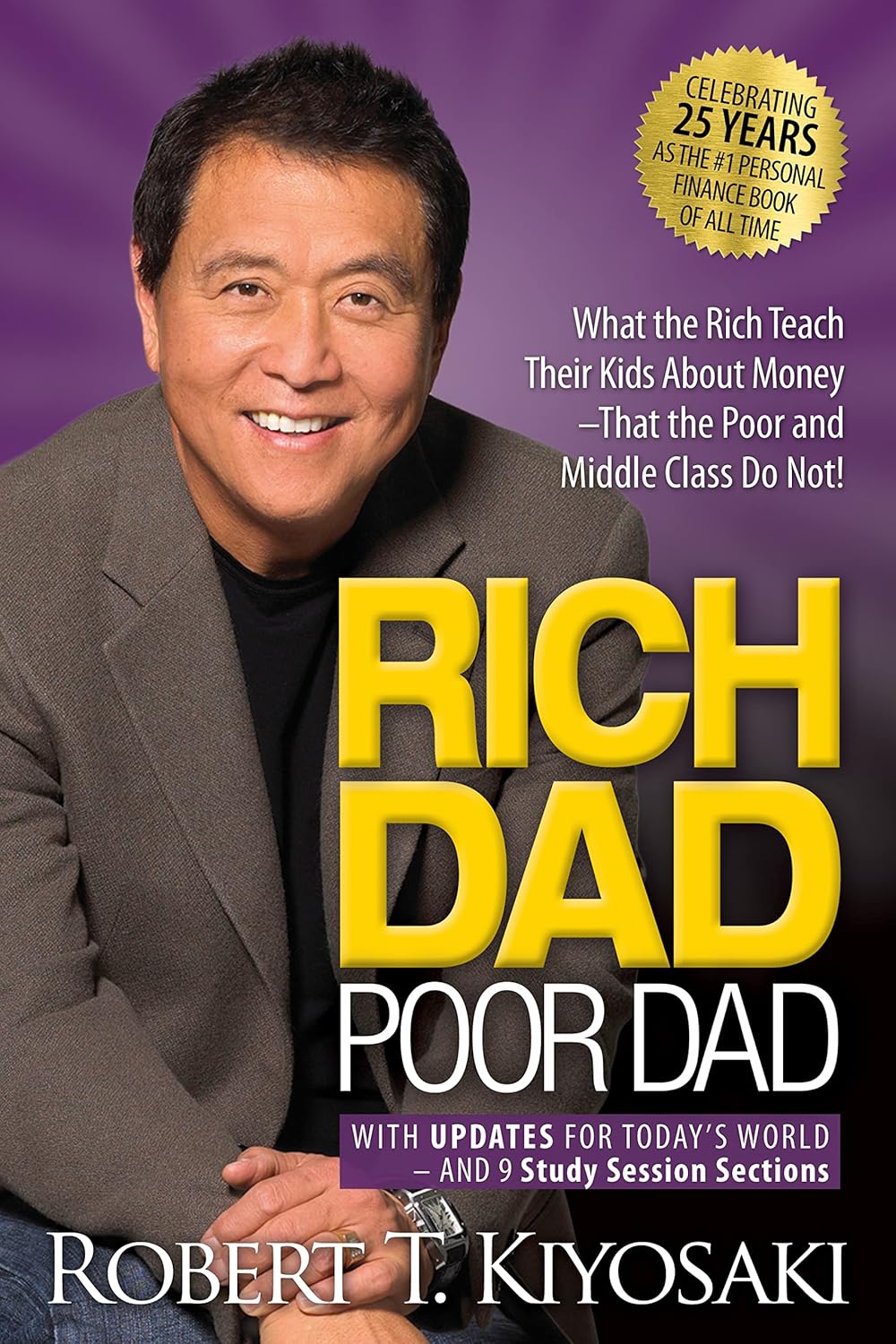
ReadSprintBooksRich Dad Poor DadRich Dad Poor Dad Key Concepts and Core Ideas
Rich Dad Poor Dad
Rich Dad Poor Dad Key Concepts and Core Ideas

Rich Dad Poor Dad Key Concepts and Core Ideas

by Robert T. Kiyosaki

Understand the core concepts in Rich Dad Poor Dad by Robert T. Kiyosaki, with explanations, recall prompts, related books, and connected learning paths.

This page isolates the core concepts carrying Rich Dad Poor Dad. Use it when you want to understand the book’s mental models, not just skim the chapter sequence.

Built for retention

ReadSprint combines concise summaries, quizzes, active recall, and related reading paths so the useful part of the book is easier to keep.

Open full summary

6

Chapter summaries

5

Quiz questions

12

Key takeaways

6

Related books

Concept map

These are the ideas doing most of the work inside Rich Dad Poor Dad. Study them as reusable mental models, then jump back into chapters or questions when you want more context.

Concept 1

Lesson 1: The Rich Don't Work for Money

Robert Kiyosaki contrasts his two "dads" to show that the poor and middle-class work for money while the rich make money work for them. He emphasizes changing mindset from earning a paycheck to seeking financial intelligence and opportunities.

Why it matters: Mindset and financial education are foundational: how you think about money determines your actions and long-term outcomes. This is directly relevant to anyone aiming to build wealth beyond employment.

Supporting points

  • Fear and desire drive people to work for money instead of learning how money works.
  • The rich focus on acquiring assets that produce income rather than working for salary alone.
  • Financial education teaches you to recognize opportunities and manage risk.
Active recall prompt

How does lesson 1: the rich don't work for money change the way you would explain or apply Rich Dad Poor Dad?

Related chapter

Lesson 1: The Rich Don't Work for Money

Concept 2

Lesson 2: Why Teach Financial Literacy?

Kiyosaki argues that without financial literacy people confuse liabilities for assets and never build true wealth. He presents simple accounting concepts—assets vs. liabilities and cash flow—as essential tools for making smarter financial decisions.

Why it matters: Practical financial literacy empowers everyday decisions and long-term planning; understanding basic accounting is still crucial for personal and business finance.

Supporting points

  • Know the difference: assets put money in your pocket, liabilities take money out.
  • Building a strong asset column (investments, businesses, real estate) is essential for cash flow and independence.
  • Cash flow, not income or net worth alone, determines financial health.
Active recall prompt

How does lesson 2: why teach financial literacy? change the way you would explain or apply Rich Dad Poor Dad?

Related chapter

Lesson 2: Why Teach Financial Literacy?

Concept 3

Lesson 3: Mind Your Own Business

Kiyosaki advises readers to focus on building their own asset column—businesses, investments, and intellectual property—rather than solely advancing someone else’s business. He recommends treating your career earnings as capital to create and buy assets that work for you.

Why it matters: Ownership and asset-building are central to wealth creation; this approach applies whether you’re an entrepreneur or an employee wanting financial independence.

Supporting points

  • Keep your job but mind your own business by investing in and developing assets outside your paycheck.
  • Distinguish between working in a business (employee) and owning a business (investor/owner).
  • Reinvest profits into assets that scale and produce passive income.
Active recall prompt

How does lesson 3: mind your own business change the way you would explain or apply Rich Dad Poor Dad?

Related chapter

Lesson 3: Mind Your Own Business

Concept 4

Lesson 4: The History of Taxes and the Power of Corporations

Kiyosaki explains how the tax system evolved to tax individuals heavily while corporations gained advantages, and how the wealthy use corporations and legal structures to protect and grow wealth. He highlights that understanding tax law and corporate structures is a form of financial intelligence.

Why it matters: Knowledge of tax law and business structures is a practical tool for preserving and expanding wealth; this remains vital in modern financial planning.

Supporting points

  • Taxes and law historically favor those who understand and use corporate and legal structures.
  • Corporations provide tax benefits, legal protection, and opportunities to deduct expenses pre
  • tax.
Active recall prompt

How does lesson 4: the history of taxes and the power of corporations change the way you would explain or apply Rich Dad Poor Dad?

Related chapter

Lesson 4: The History of Taxes and the Power of Corporations

Concept 5

Lesson 5: The Rich Invent Money

Kiyosaki asserts that financial creativity—combining knowledge, courage, and opportunity—allows the wealthy to "invent" money by seeing value where others do not. He stresses that financial intelligence, not just capital, enables people to create and leverage deals.

Why it matters: Innovation in finance and deal-making is a repeatable skill that can be learned and applied to create wealth in changing markets.

Supporting points

  • Creativity and financial IQ let you spot and structure opportunities others overlook.
  • Leverage (other people’s money, expertise, and time) multiplies what you can accomplish.
  • Managing risk through knowledge and partnerships is more important than avoiding risk entirely.
Active recall prompt

How does lesson 5: the rich invent money change the way you would explain or apply Rich Dad Poor Dad?

Related chapter

Lesson 5: The Rich Invent Money

Concept 6

Lesson 6: Work to Learn - Don't Work for Money

Kiyosaki recommends choosing work for the skills and experience it provides rather than for immediate pay, emphasizing learning in sales, marketing, communication, and accounting. He contends that diversified skills build long-term earning power and entrepreneurial capability.

Why it matters: Skill acquisition and adaptability are crucial in a changing economy; learning intentionally from work accelerates the path to financial independence.

Supporting points

  • Prioritize jobs and roles that teach marketable skills over those offering the highest salary.
  • Key skills include sales, marketing, people skills, and financial literacy.
  • Overcome ego and pride to take roles that develop competencies needed for business and investing.
Active recall prompt

How does lesson 6: work to learn - don't work for money change the way you would explain or apply Rich Dad Poor Dad?

Related chapter

Lesson 6: Work to Learn - Don't Work for Money

Quiz checkpoints

Question 1

According to Rich Dad Poor Dad, how do the rich handle money differently from the poor and middle class?

Question 2

What key financial concept does Kiyosaki say is essential to build true wealth?

Question 3

What does Kiyosaki mean by 'Mind Your Own Business'?

Practice retrieval

Key concepts

Lesson 1: The Rich Don't Work for Money

Mindset and financial education are foundational: how you think about money determines your actions and long-term outcomes. This is directly relevant to anyone aiming to build wealth beyond employment.

Lesson 2: Why Teach Financial Literacy?

Practical financial literacy empowers everyday decisions and long-term planning; understanding basic accounting is still crucial for personal and business finance.

Lesson 3: Mind Your Own Business

Ownership and asset-building are central to wealth creation; this approach applies whether you’re an entrepreneur or an employee wanting financial independence.

Open concept map
Turn Reading Into Recall

Keep Rich Dad Poor Dad review-ready instead of letting it fade.

This page is strongest when it becomes part of a review habit: save the summary, revisit the key takeaways, and use recall prompts before the next meeting, study block, or decision.

Save one strong takeaway instead of over-highlighting.
Use the questions page to test what actually stuck.
Return when the book becomes relevant again, not just when motivation is high.
See pricing
Get Book Review Notes

Get practical notes on remembering and reusing ideas from nonfiction books without building an overly heavy note system.

Retention workflow

Turn this page into a repeatable study loop

Move from summary to takeaways, test yourself with questions, revisit the concept map, and then continue into related books. That keeps Rich Dad Poor Dadconnected instead of turning into a one-time skim.

Frequently asked questions

What are the key concepts in Rich Dad Poor Dad?

The key concepts here are distilled from the chapter summaries, major themes, and action-oriented takeaways so you can quickly see the ideas carrying the whole book.

How should I study these Rich Dad Poor Dad concepts?

Start by explaining each concept from memory, connect it to a chapter or example, and then test yourself with one active recall prompt before moving on.

How are the concepts connected to other books?

Use the related books and topic links on this page to find books that reinforce, challenge, or extend the same ideas from a different angle.